 Unlocking Europe’s Bioeconomy: New EU study highlights major potential of bio-based industries and biotechnology for Europe’s green transition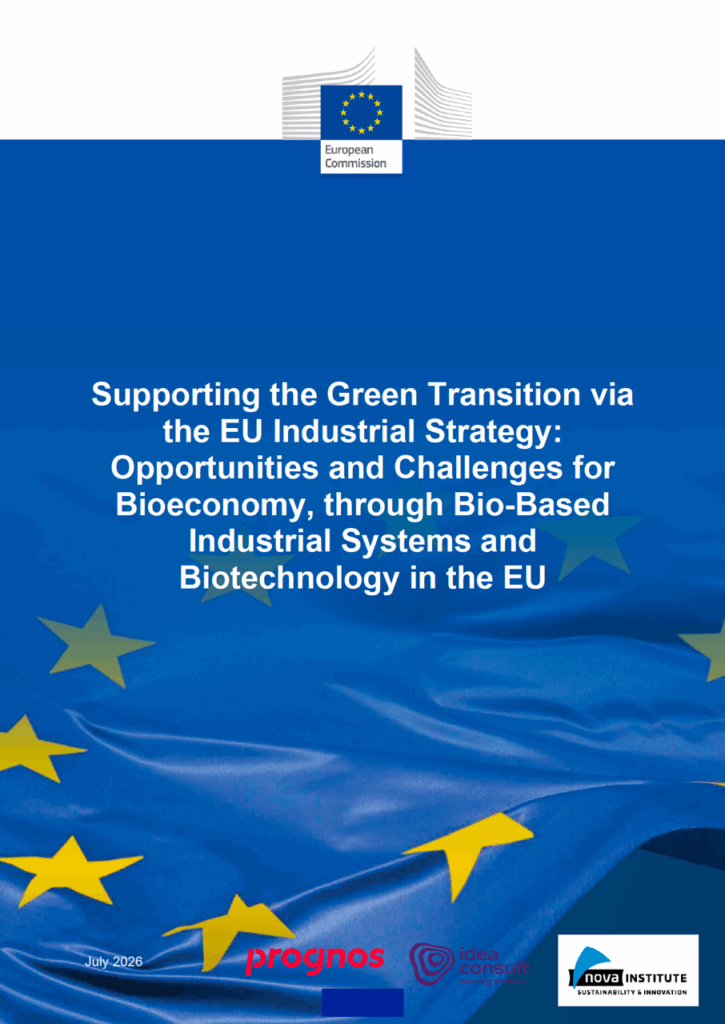
The new study commissioned by the European Commission provides a comprehensive assessment of how bio-based industrial systems and biotechnology can contribute to Europe’s green transition, industrial competitiveness and strategic autonomy.
The analysis covers over 150 bio-based industrial systems and includes 22 detailed case studies of successful business models to illustrate best practices and factors for success. It also assesses the availability of biomass and examines future supply and demand dynamics, as well as trade dependencies. It also identifies opportunities and challenges for biotechnology and biological manufacturing and examines 16 promising application areas, including PEF, PLA, lignin composites and enzymatic CO₂ conversion, demonstrate robust environmental performance and growth prospects.
The findings demonstrate the considerable economic importance of the European bioeconomy, as well as its potential for further growth. In 2022, the EU bioeconomy generated around €812 billion in added value. However, bio-based industries still face significant barriers to investment and expansion, including high capital costs, financing gaps, skills shortages, regulatory fragmentation, and insufficient market demand for bio-based products.
A central finding from nova’s perspective concerns feedstock availability, which is a key issue for the industry. It finds that waste and residues alone will not be sufficient to meet the growing demand of an expanding bioeconomy. Therefore, sustainable primary biomass, including sugar- and starch-rich crops, will continue to play an important role alongside residues and waste streams. While Europe has a stable biomass base, there is considerable potential to increase the sustainable domestic supply, particularly through modern, productive agricultural systems. At the same time, Europe is at a competitive disadvantage due to high raw material costs (e.g. sugar), which could lead to bio-based production moving outside the EU. To address this challenge, the study recommends to strengthen policies to increase sustainable agricultural production, diversify sources and ensure competitive access for EU industries.
The study also reveals structural dependencies in the biomass trade. In 2022, the EU recorded a net import dependency of around 162 million tonnes of biomass, with some strategically important raw materials being sourced from only a few countries. This highlights the urgent need to diversify supply chains, whilst simultaneously strengthening the production of sustainable European biomass, which will be of strategic importance for the resilience of the industry.
However, there is also hope on the horizon. As assessments of new biotechnological applications have confirmed significant opportunities for the green transition in Europe and the region itself. Technologies ranging from polylactic acid (PLA) and lignin-based composites to advanced biorefineries and enzymatic processes demonstrate great potential for reducing greenhouse gas emissions and offering attractive market growth prospects. Nevertheless, Europe is grappling with a persistent ‘double valley of death’: promising technologies encounter challenges in transitioning from the pilot to demonstration scale, and in advancing towards the first commercial plants of their kind.
The study therefore calls for a coherent European policy framework combining secure access to sustainable biomass, stronger demand-pull measures and substantially improved conditions for industrial scale-up. Key recommendations include binding bio-based content targets in relevant product legislation, green public procurement, recognition of cascading biomass use, improved access to growth capital and targeted support for first-of-a-kind facilities. Given the right framework conditions, bio-based industries and biotechnology could become a cornerstone of a competitive, resilient, climate-neutral European industrial system.
The full study can be downloaded here: www.op.europa.eu/en/publication-detail/-/publication/8b961ac8-b0dc-11f1-b9e5-01aa75ed71a1/language-en
Source
nova-Institute, original text, 2026-10-06.
Supplier
European Comission
idea consult (BE)
nova-Institut GmbH
Prognos AG
Share
Renewable Carbon News – Daily Newsletter
Subscribe to our daily email newsletter – the world's leading newsletter on renewable materials and chemicals