The Food and Agriculture Organisation of the United Nations estimates that up to 40% of food crops are lost to plant pests and diseases globally every year[1]. Plant protection products shield crops from these threats, but the widespread use of synthetic chemicals has created serious problems of its own: depletion of soil biodiversity, bioaccumulation in non-target organisms, and contamination of water and soil. Several of these products are now listed by the European Chemicals Agency as substances of very high concern, and in some cases the regulatory clock is already ticking. Farmers are being asked to prepare for a future without tools they currently depend on, before reliable alternatives are ready to replace them.
CROPSAFE is a Horizon Europe research project working to close that gap. Its approach is rooted in the circular bioeconomy: a model that combines two important ideas. 1) The bioeconomy replaces fossil-based inputs with bio-based ones, typically with a reduced carbon footprint. 2) The circular economy eliminates waste by keeping materials and products in use for as long as possible. Together, they create a system where biological feedstocks cascade through multiple uses – from raw material to bioactive compound to field application – with nutrients ultimately returned to the land through biodegradation.
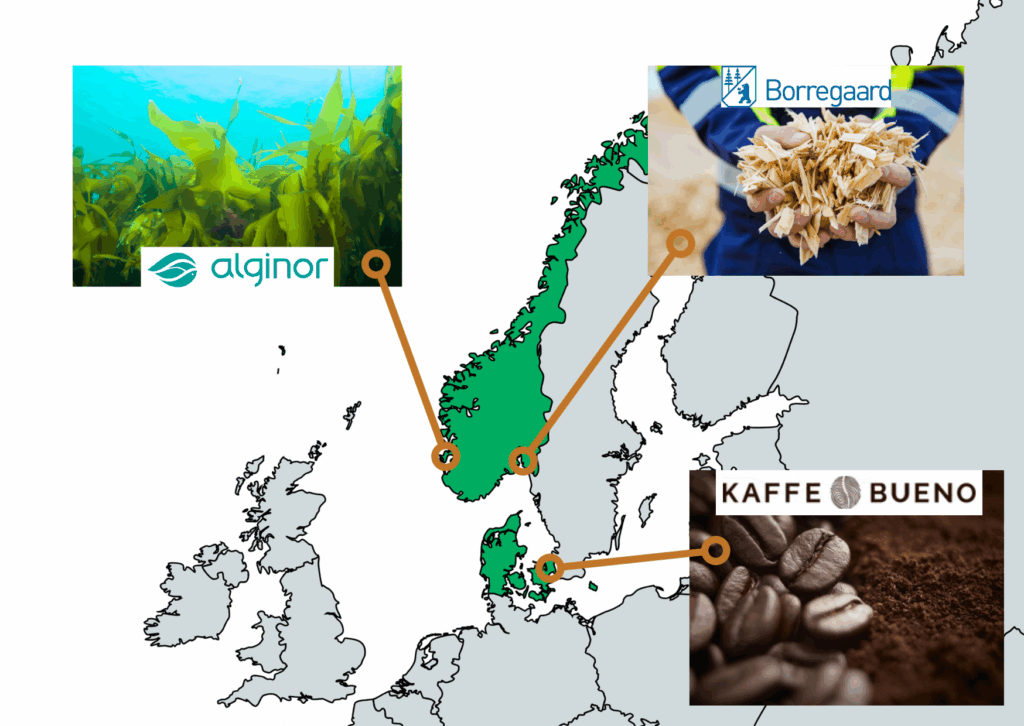
The key enablers of this model are biorefineries: facilities that process biological raw materials in the same way that oil refineries process fossil ones, but with a fundamentally different environmental profile. CROPSAFE brings together three Scandinavian biorefineries, each working with a distinct feedstock and proprietary processing technology, to build a library of bioactive compounds capable of protecting crops against some of Europe’s most pressing agricultural threats: potato cyst nematode, root-knot nematode, banana weevil, and Fusarium fungus.
Borregaard, based in Sarpsborg, Norway, operates one of the world’s most advanced and sustainable wood biorefineries, with roots stretching back more than 130 years to the pulp and paper mill established at the same site. Starting with locally sourced Norway spruce, every component of the wood is separated and refined into five main product classes: lignin and lignosulfonates, speciality cellulose, advanced cellulose fibrils, biovanillin, and bioethanol.
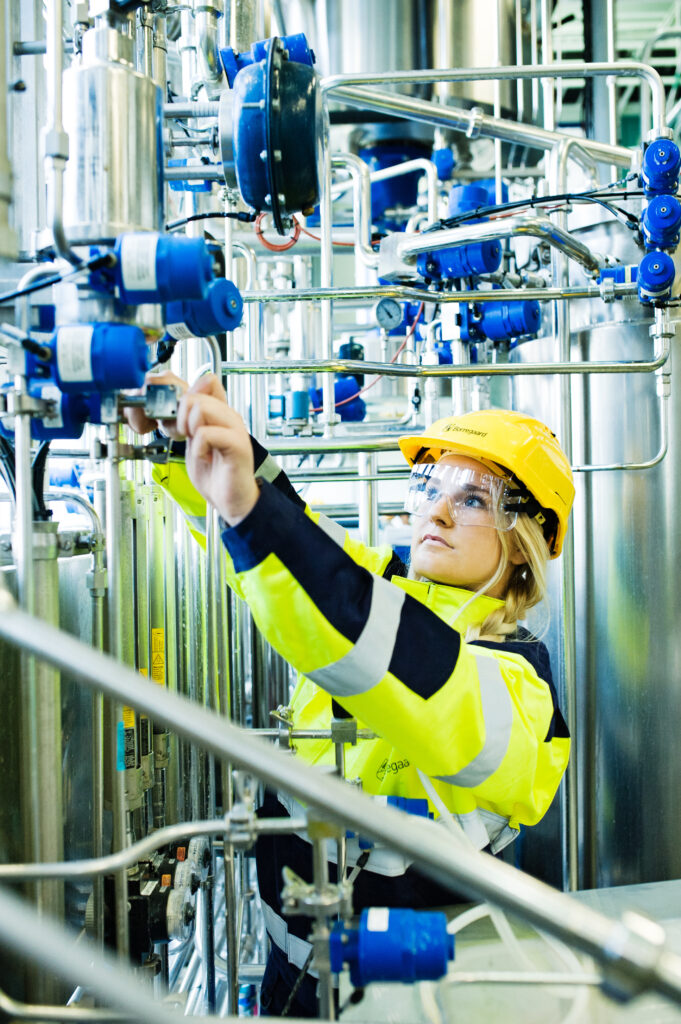
For CROPSAFE, Borregaard is contributing its expertise in lignin – the structural polymer that gives wood its rigidity and plays a role in trees’ own natural defenses against pests. Research has shown that lignin-derived substances carry both anti-nematicidal and anti-fungal properties. Crucially, unlike conventional chemical pesticides, they are non-toxic to plants and animals at effective doses and break down to organic matter in the soil. An internal meta-analysis at Borregaard suggests that lower-molecular-weight lignins are the likely primary source of these biocontrol effects, making bio-based polyphenols a particularly promising group of compounds for agricultural application. Initial trials conducted before the CROPSAFE project began have already produced encouraging results, providing both the scientific foundation and the commercial rationale for joining the consortium.
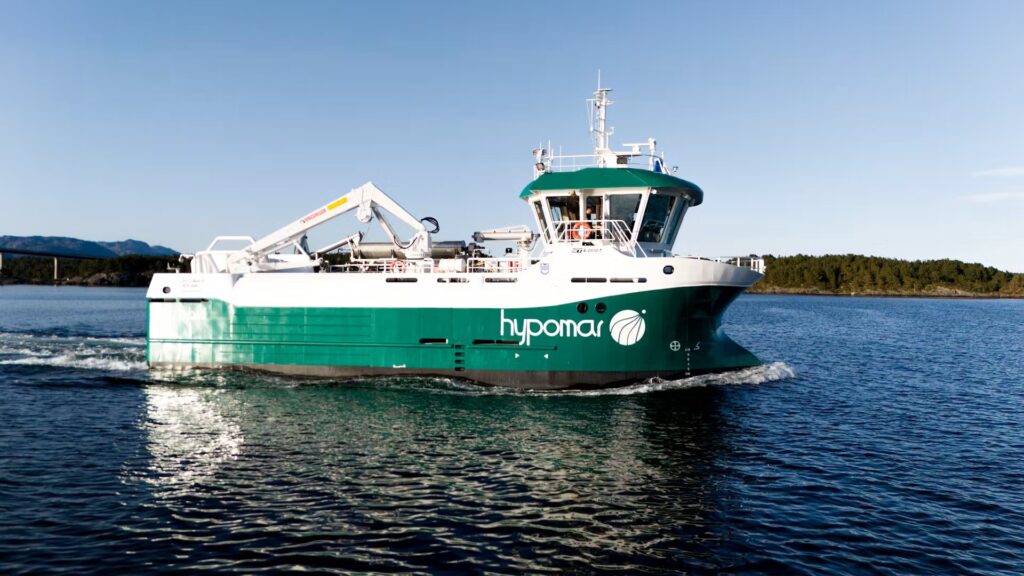
Alginor ASA, also based in Norway, is building a biorefinery around a less obvious raw material: wild-harvested brown seaweed. The species in question, Laminaria hyperborea, is a large kelp common in Norwegian coastal waters. Conventional industrial use of this biomass focuses almost entirely on alginate (a gelling agent widely used in the food industry) which accounts for only around 20% of the total wet biomass. The remaining 80% is often discarded. Alginor’s approach helps to unlock that value. Using cascading filtration technologies, the company extracts and isolates bioactive compounds from the side streams of alginate manufacture, producing multi-component seaweed extracts alongside isolated single-component products such as laminarin, a beta-glucan with known bioactive properties.
What makes Alginor’s approach particularly notable is its commitment to eliminating toxic processing chemicals. Formaldehyde, which is currently used in conventional alginate manufacturing both to preserve the kelp feedstock and as an in-process additive, has no place in Alginor’s operation. By processing fresh kelp aboard its own purpose-built harvesting vessel and applying green chemistry principles throughout its land-based biorefinery, the company achieves a substantially more sustainable process than current industrial practice. The pilot facility has been operating since 2024, with a larger biorefinery project in the works, making CROPSAFE an important route to validating new applications during this critical growth phase.
Kaffe Bueno, operating out of Denmark, brings a very different feedstock: spent coffee grounds. Coffee is one of the world’s most consumed beverages, and its production generates vast quantities of by-products, which are in most cases, sent to landfill or incineration. Kaffe Bueno identified that waste as an opportunity. Using a cascade biorefinery approach, the company upcycles coffee by-products into multiple high-value fractions, including bioactive compounds such as oils and melanoidins. Green extraction technologies minimise energy and solvent use, while step-by-step fractionation of the biomass maximises resource efficiency and preserves the functional properties of each compound.
Kaffe Bueno has been operating its current biorefinery in Denmark since 2024 and is continuously scaling its process from pilot to industrial demonstration – a timeline that aligns closely with CROPSAFE’s own progression from laboratory extraction to validated formulations. The company’s model integrates the principles of industrial symbiosis: connecting waste streams with new value chains, and supporting regional, decentralised production systems that reduce transport emissions and strengthen local bioeconomies.
CROPSAFE is also taking a zero-waste approach to how biomass is used across the project as a whole. Rather than focusing exclusively on bioactive compounds for crop protection, side streams from the extraction processes are being explored as bio-based formulation materials and as substrates for cultivating biocontrol fungi, harnessing natural microbial mechanisms alongside chemical protection to further reduce dependence on conventional pesticides.
This points towards something bigger: the concept of the regional biorefinery cluster. By developing pilot networks that connect biorefineries in the Scandinavian region, CROPSAFE aims to demonstrate how “resource matching” (linking the residues from one process with the needs of another) can accelerate the circular bioeconomy in practice. Despite the differences in feedstocks and end-products, the three biorefinery partners share significant common ground in their technological approaches and innovation philosophies. Bjarte Langhelle of Alginor ASA notes that exchanging knowledge and ideas through collaborative efforts can accelerate both innovation and commercial development across the sector. For partners like Kaffe Bueno, the cluster model also offers a practical route to scale: more efficient local sourcing of biomass, stronger collaboration across the full value chain from feedstock to end-use, and faster commercialisation of bio-based solutions.
“We joined CROPSAFE to demonstrate how bio-waste streams can become a sustainable source of bioactives for agriculture. It’s a unique opportunity to connect circular bioeconomy solutions with real-world farming challenges.” – Keri Aggenbach, Kaffe Bueno.
By the end of the project, the CROPSAFE consortium aims to have a validated library of bioactive crop protection formulations derived from our biomass sources, proven in field trials and ready to enter regulatory approval pathways. Alongside these products, digital decision-support tools and Integrated Pest Management guidance will help farmers understand when and how to deploy them to maximum effect.
The long-term vision is a farming system where soils become healthier over time rather than progressively depleted; where farmers can protect their yields without chemicals that harm the ecosystems their crops depend on; and where the materials applied to the land contribute to its regeneration.
As Kaffe Bueno put it when asked how CROPSAFE could transform European agriculture:
“CROPSAFE has the potential to redefine crop health in Europe by replacing harmful chemicals with bio-based, locally sourced renewable alternatives. It shows that waste streams can become a strategic resource for resilient and sustainable agriculture.” – Keri Aggenbach, Kaffe Bueno.
[1] https://www.fao.org/one-health/highlights/how-plant-diseases-threaten-global-food-security/en accessed 15th June 2026
About CROPSAFE
CROPSAFE is co-funded by the Circular Bio-Based Europe Joint Undertaking (CBE JU) Views and opinions expressed are those of the author(s) only and do not necessarily reflect those of the European Union, CBE-JU or SERI. Neither the European Union, the CBE-JU or SERI can be held responsible for them.
Author
Dr Laura Pilon (Iconiq Innovation)
Source
Iconic Innovation, press release, 2026-07.
Supplier
Alginor
Borregaard
Circular Bio-based Europe Joint Undertaking (CBE JU)
European Chemicals Agency (ECHA)
Food and Agriculture Organization of the United Nations (FAO)
Horizon Europe
Kaffe Bueno
Share
Renewable Carbon News – Daily Newsletter
Subscribe to our daily email newsletter – the world's leading newsletter on renewable materials and chemicals