 The Age of Fossil Fuels Must Come to an End – Renewable Energy and Renewable Carbon Will Take the Lead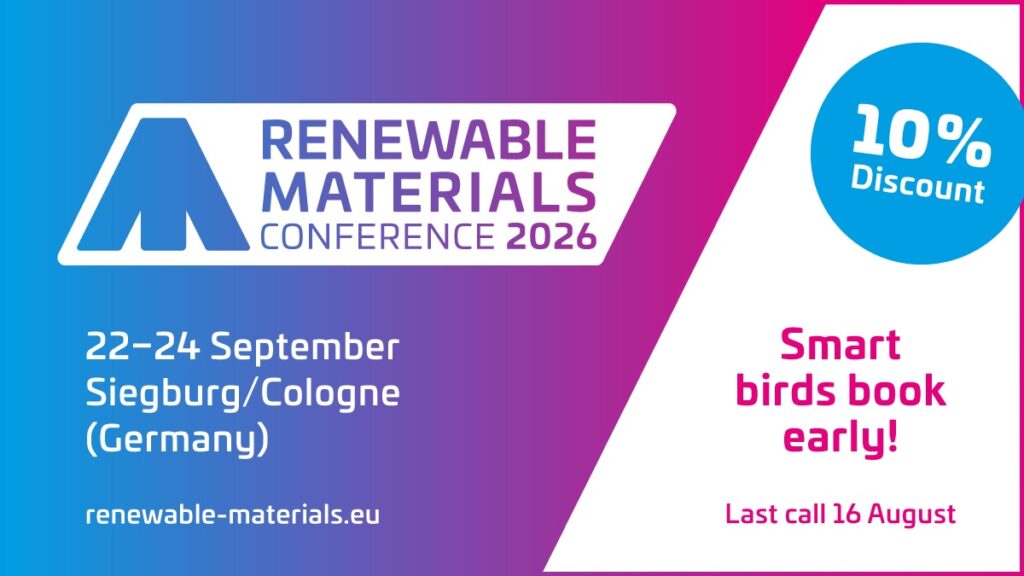
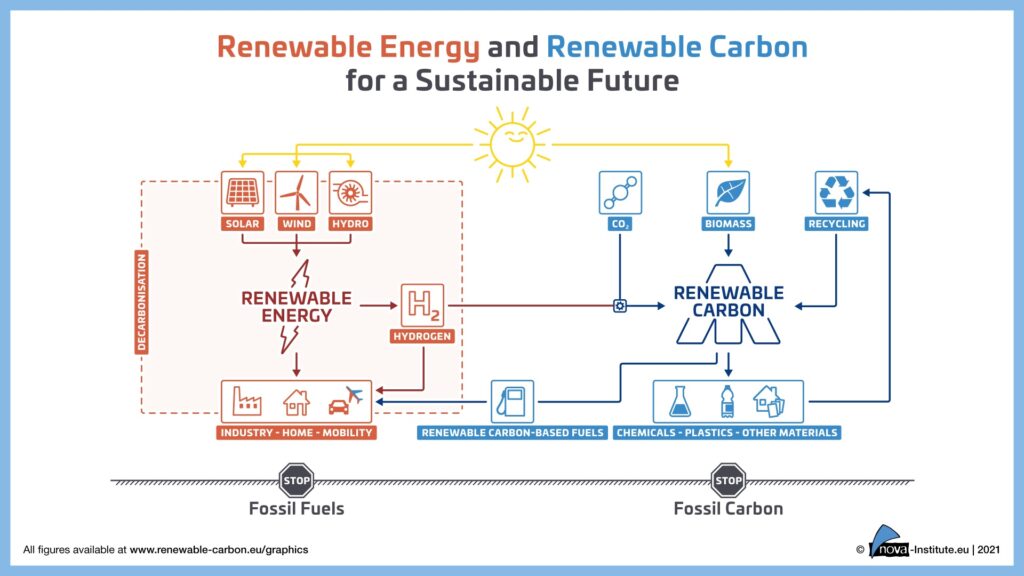
Everybody is familiar with solar and wind energy, which, together with modern batteries and hydrogen, have the potential to replace fossil energy sources and transform the entire energy system. These alternatives to fossil fuels are widely known as renewable energy.
But what does renewable carbon mean, and why can all industries not simply decarbonise in the same way as the energy sector by abandoning fossil fuels?
The reason is that some sectors, including the chemical and plastics industries, depend on carbon as an essential building block for a wide range of everyday products. However, the carbon embedded in these products does not necessarily have to originate from fossil sources. Replacing fossil carbon with renewable carbon derived from biomass, CO₂ or recycling is referred to as “defossilisation”. Decarbonisation of the energy sector and defossilisation of chemical production are sister concepts. Both are essential for achieving a net-zero, circular economy.
Many technologies, renewable chemicals and materials are already available or under development. They could be scaled rapidly if supported by a willing and daring political framework that is open to genuine innovation and does not continue to favour traditional fossil industries simply because they are perceived, often incorrectly, as economically safe.
The bold community currently shaping a future-proof, resilient and growing renewable carbon economy has a recurring global meeting place open to all players from the chemical and plastics industries, brand manufacturers, start-ups and investors, as well as policy makers.
Hosted by nova-Institute, the Renewable Materials Conference (RMC) will take place from 22–24 September 2026 in Siegburg/Cologne, Germany, and online.
Under this year’s motto, “Defossilisation through Innovation”, the conference will provide a platform for expert presentations and discussions on the defossilisation of the chemical industry, fossil-free plastics and the policy framework for renewable carbon, and last but not least, biodegradation. Find more information on the conference here: https://renewable-materials.eu
What is to be expected at this year’s RMC?
75 presentations that will be accompanied by 20 panel discussions, as well as a high-level evening panel at the first day of the conference discussing “Quadruple System Shock as Catalysts for Industrial Transformation”.
Find the final programme here: https://renewable-materials.eu/program/
17 interactive workshops that complement and enhance the conference programme. Due to high demand, for the first time, three workshop rooms allow for discussions on diverse topics ranging from technological innovations and market trends to policy developments, market pull instruments and certification, from lignin valorisation to circularity, and biodegradation of plastics in agriculture and forestry.
The rich workshop programme can be found under: https://renewable-materials.eu/workshops/
41 exhibition booths over two floors and in the vicinity of the two session halls that facilitate networking and interaction with customers.
A few booths are still available – book them here: https://renewable-materials.eu/exhibitors/
The prestigious innovation award “Renewable Material of the Year 2026″, which is sponsored by Covestro. Six nominees will compete for the first place. In ten-minute pitches, they will convince the audience from their material or technology, which is then voted for by the participants.
Extensive networking opportunities with the 400 to 500 expected participants enabled by long breaks during the three conference days, three evening events, several matchmaking rooms, arrangement of meetings via a professional matchmaking software.
Register today and profit from the 10% discount until 16 August: https://renewable-materials.eu/registration/
Thanks to Sponsors and Partners
The nova-Institute would like to thank UPM Biochemicals (FI) for supporting the conference as Platin Sponsor, Celluranics (CN), GS Biomats (CN), IFF (BE), Leaf Biotech (CN), L’Oreal (FR) and VERBIO (DE) as Gold Sponsors, as well as DIN CERTCO (DE), Peterson Solutions (DE) and TÜV Austria Belgium (BE) as Silver Sponsors. The innovation award “Renewable Material of the Year 2026” is sponsored by Covestro (DE). More sponsors are welcome: https://renewable-materials.eu/sponsoring/
The Renewable Materials Conference is supported by industry and trade associations, non-profit organisations, research institutions and interest groups that are thematically linked to the conference: AVK (DE), BCNP (DE), BIC – Bio-based Industries Consortium (EU), BioBase (AT), bündnis mikroplastikfrei (AT), C.A.R.M.E.N.(DE), ChemCologne (DE), ChemieClusterBayern (DE), CLIB (DE), CO2Value Europe (EU), European Bioplastics (EU), FECC – European Association of Chemical Distributors (EU), GO!PHA (International), IBB Netzwerk (DE), INAK (DE), kunststoffland NRW (DE), NRW.Energy4Climate (DE), ÖGUT – Österreichische Gesellschaft für Umwelt und Technik (AT), Plastics Europe (DE), Renewable Carbon Initiative (International).
Source
nova-Institute, press release, 2026-08-03.
Supplier
Covestro AG
DIN CERTCO Gesellschaft für Konformitätsbewertung
GS Biomats
IFF: International Flavors & Fragrances Inc.
Jiangsu Celluranics New Materials
L'Oreal International
Leaf Biotech
nova-Institut GmbH
Peterson Solutions GmbH
TÜV AUSTRIA Belgium
UPM Biochemicals
VERBIO - Vereinigte BioEnergie AG
Share
Renewable Carbon News – Daily Newsletter
Subscribe to our daily email newsletter – the world's leading newsletter on renewable materials and chemicals