At present, there is a wide variety of biodegradable and compostable products available on the market. However, the widespread use of these terms can lead to confusion, making it essential to understand their meaning and differences in detail.
What is a biodegradable product?
A biodegradable product is one that can naturally break down through the action of microorganisms present in the environment, such as bacteria, fungi and algae.
It is important to note that biodegradability always depends on the environment in which it is evaluated (soil, water or compost), as environmental conditions directly influence the process.
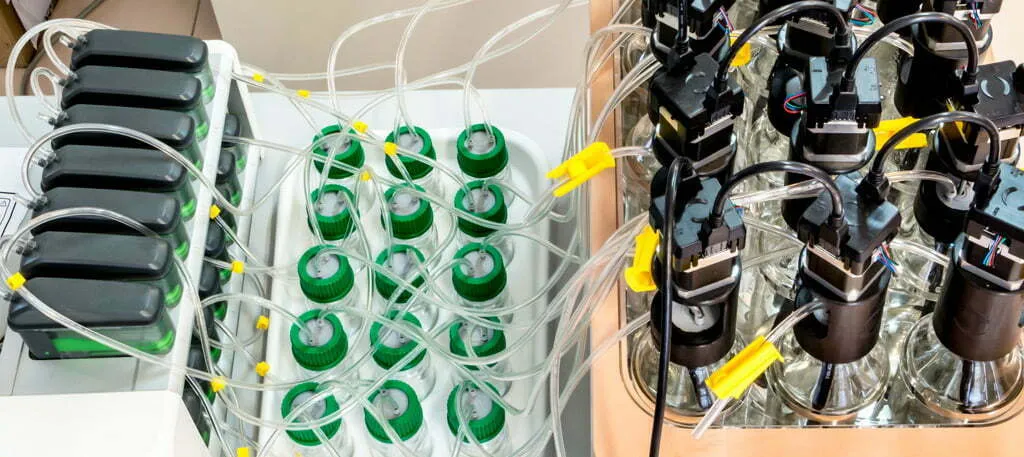
In the case of industrial composting under aerobic conditions (in the presence of oxygen), a material is considered biodegradable when microorganisms transform it into carbon dioxide, water, mineral salts and new biomass. To meet the usual criteria, at least 90% biodegradation must be achieved within a period of 180 days or less, at a controlled temperature of 58 °C ± 2 °C.
There are standardised methods used to verify the biodegradability of products, such as ISO, EN and ASTM standards. Examples include:
- UNE-EN ISO 14855, for assessing biodegradation in composting conditions.
- UNE-EN ISO 17556, for biodegradation in soil, generally at 25 °C and for a maximum duration of up to 2 years.
- UNE-EN ISO 14852, which establishes laboratory conditions for biodegradation in aqueous media, at temperatures between 20 °C and 25 °C, with an approximate duration of 6 months (extendable depending on the case).
- ASTM D6691, which evaluates the biodegradation of plastic materials in marine environments, at a temperature of 30 °C and for an approximate duration of 10 to 90 days (extendable depending on the case).
In summary, in order to claim that a product is biodegradable, it must pass specific laboratory tests in the corresponding environment, following the standards mentioned above.
What is a compostable product?
A compostable product is one that can biologically degrade under composting conditions, transforming into carbon dioxide (CO₂), water, inorganic compounds and biomass. This process must produce high-quality compost, without generating toxic residues and without visually distinguishable fragments of the original material.
Unlike biodegradability, compostability implies not only the decomposition of the material, but also its safe integration into compost, ensuring that it has no negative effects on the environment or on plant growth.
To claim that a product is compostable, it must comply with the requirements established in specific standards. Focusing on the UNE-EN 13432 standard, which defines the general testing scheme applicable to packaging materials, these tests include:
- Chemical characterisation of the material, to verify the absence of hazardous substances.
- Biodegradation under composting conditions (according to ISO 14855), to evaluate the degree of biological degradation.
- Pilot-scale disintegration testing (according to ISO 16929), which analyses the fragmentation of the material during the composting process.
- Ecotoxicity tests on higher plants (according to OECD 208), to ensure that the resulting compost does not negatively affect plant development.
Together, these requirements guarantee that a compostable material not only degrades, but also contributes to the production of safe, high-quality compost.
Difference between biodegradable and compostable plastics
Based on the previous definitions, it can be stated that every compostable product is, by definition, biodegradable. This is because compostability requires compliance with a complete set of tests including chemical characterisation, biodegradation under composting conditions, material disintegration and the absence of toxic effects in the resulting compost.
However, not every biodegradable product is compostable. A biodegradable material has only demonstrated its ability to decompose in a specific environment and under specific conditions, but it does not necessarily meet the additional requirements that guarantee proper disintegration and the quality of the compost produced.
In summary, compostability is a more demanding concept, as it not only involves biodegradation, but also the complete integration of the material into the composting process without generating negative environmental effects.
Compostability certifications
Products certified as OK Compost INDUSTRIAL are designed to be treated in industrial composting plants. Therefore, they must be disposed of in the organic waste bin, where they are managed under controlled conditions to produce high-quality compost.
Meanwhile, the OK Compost HOME certification guarantees that the product can be composted under home composting conditions. Although laboratory tests are similar in both cases, home composting operates at lower temperatures and with longer degradation times.
It is important to emphasise that a biodegradable or compostable product is not designed to be abandoned in the environment (cities, countryside, rivers, lakes or the sea). Biodegradation is only guaranteed under specific and controlled conditions, such as composting. Outside this context, neither proper degradation nor environmental impact can be guaranteed.
In this field, AIMPLAS has been recognised by certification bodies such as TÜV Austria, DIN Certco and Biodegradable Products Institute to carry out these tests.
In addition, these tests are accredited by ENAC, in accordance with compostability schemes based on standards such as UNE-EN 13432, UNE-EN 14995, ISO 18606, ISO 17088 and ASTM D6400. In this way, AIMPLAS provides companies with the necessary tools to certify their products as compostable.
Biodegradability certifications
In the case of biodegradable products, there are specific certifications depending on the environment in which degradation is assessed, such as soil (especially in agricultural applications), freshwater or marine environments. These certifications verify that the material can biodegrade under specific conditions and controlled parameters.
However, the fact that a product is biodegradable in a given environment does not mean that it should intentionally be discarded there. Proper waste management remains essential to ensure the correct functioning of the system and to minimise environmental impact.
Author
María Mozo
Source
AIMPLAS blog, press release, 2026-05-11.
Supplier
AIMPLAS (Asociación de Investigación de Materiales Plásticos y Conexas)
TÜV AUSTRIA Group
Share
Renewable Carbon News – Daily Newsletter
Subscribe to our daily email newsletter – the world's leading newsletter on renewable materials and chemicals