 ZOOM-Interview with Alex Hogan (CEO of Vioneo) by Michael Carus (nova-Institut/RCI), 11 May 2026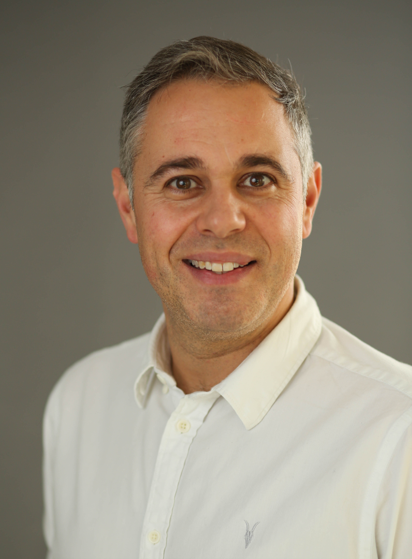
Find the full interview as a download here: https://renewable-carbon.eu/publications/product/zoom-interview-with-alex-hogan-ceo-of-vioneo-by-michael-carus-nova-institut-rci-11-may-2026-pdf/
Vioneo’s Decision to Abandon the Antwerp Investment
“A viable investment requires upfront customer agreements to secure financing and shareholder approval. In a voluntary (non-mandated) market, customers prioritize the lowest price point, making expensive European construction unviable. Europe — and Antwerp specifically — is one of the most expensive places to build. Capital costs are significantly higher than in the US or China. When the project was conceived ~3 years ago, strong methanol supply growth in Europe was anticipated, but it has not materialized so far. Only one potential methanol plant in Spain is expected to be built. The only commercially viable path to 2030 production was importing ~750,000 tonnes of methanol from China — but shipping methanol halfway around the world is prohibitively expensive. Shifting production to China allows shipping 300,000 tonnes of finished plastic instead, dramatically reducing logistics costs and enabling a ~15% price reduction on the final product versus European pricing.”
Summary: The combination of high European capex, absence of local green methanol supply, high logistics costs, and lack of mandatory customer offtake made Antwerp economically unviable. Producing in China and shipping finished plastic is significantly more cost-effective than importing methanol to Europe.
China Investment — Economics and Government Support
„The China-based plant will produce ~200,000 tonnes of PP and ~100,000 tonnes of LDPE (targeting coatings/liquid container markets), with production ready by 2030. The ~15% price reduction compared to European-produced product enables the same return on investment. At €3,000–€4,000/tonne, 15% is a substantial reduction. Pre-FEED engineering is underway, with a first capex estimate expected within ~one month. Vioneo’s plan involves no direct Chinese subsidy. However, the Chinese government is providing 20% equity grants exclusively to bio/green methanol producers (bio, CCU but not coal-based), stimulating the green methanol economy. China could reach up to 30 million tonnes of green methanol production by 2030. Chinese five-year plan commitments are reliably delivered, attracting many renewable producers into green methanol.”
Summary: Vioneo’s China investment proceeds without direct government subsidy but benefits from a favorable green methanol supply ecosystem supported by Chinese policy.
EU Innovation Fund Grant and Commission Engagement
“Vioneo applied for an EU Innovation Fund grant but was initially told the project was approved in principle yet did not score high enough to receive funding. Without the grant, the Antwerp investment was not feasible. Vioneo then began engaging with Chinese provinces (who were already interested as methanol buyers), leading to the China investment concept. Four months after informing the Commission of the likely China pivot, Vioneo was notified it had been successful in receiving the grant — but by then, the economics and customer dynamics had already shifted decisively toward China. Even with the grant, the absence of legislation defining and mandating fossil-free plastics means customers cannot justify signing long-term binding contracts. Vioneo has engaged with Commissioner Hoekstra, his staff, DG Environment, and other DGs. All meetings were positive, but concrete action is slow.”
Summary: The EU grant came too late and is insufficient on its own without accompanying mandatory policy for fossil-free plastics. Regulatory fragmentation and slow legislative processes are a fundamental barrier to European green chemistry investment.
Policy Barriers — Fossil-Free Plastics Definition and Mandatory Targets
„There is no EU definition of “fossil-free plastics” despite industry efforts. Without a definition, fossil-free plastics are treated identically to fossil-based plastics under EPR, PPWR, and other regulations. Customers consistently say they love the project but cannot sign 10-year binding contracts without legislative certainty on exemptions or mandatory targets.Two conditions would drive customer contracts: (1) sufficiently low price, or (2) mandatory targets/quotas. A bio-based plastics framework could work, but the key issue is whether fossil-free plastics would be treated differently from fossil waste under existing and upcoming regulations. Vioneo, as a European company, wants to build in Europe — but firm policy (e.g., mandatory fossil-free or bio-based plastics quotas) is the prerequisite.”
Summary: Mandatory EU legislation (quotas, definitions, regulatory differentiation) is the single most important enabler for Vioneo — and similar companies — to invest in Europe. Without it, the market remains voluntary, price-driven, and commercially unviable for premium fossil-free products.
Green Methanol Market and IMO/Shipping Sector
“The shipping industry was expected to be a major green methanol customer, but IMO negotiations on green fuels have stalled, partly due to US political pressure under the current administration blocking a global agreement. Shipping deal announcements have slowed noticeably over the past year. A future administration change in the US could revive the fuel market for green methanol.”
Automotive Sector as a Key Customer Segment
“The automotive sector is showing strong demand and interest. Mercedes has a dedicated fossil-free plastics department — unusual compared to most companies that only have a sustainability manager. Automotive procurement cycles are long; agreements take considerable time to finalize. The automotive sector is interested in End of Life Vehicle regulation, which originally included bio-based plastics (though possibly removed in later drafts). The sector may be pivoting from green steel to bio-based/fossil-free plastics as a CO2 abatement strategy. Automotive OEMs have provided Vioneo with tier-1 supplier contacts for potential drop-in substitution of PP, though extensive testing is still required.
Summary: The automotive sector is a priority target market. Drop-in compatibility of Vioneo’s PP is an advantage, but long qualification cycles mean 2030 production timing aligns well with future vehicle platform launches.

Final take away by Michael Carus
What is holding companies back from investing in renewable chemistry and plastics in the EU? On the one hand, as is well known, it is the costs and the slowness of decision-making. However, what seems to be even more decisive is that there is no viable vision or strategy in Europe for where the green journey should lead. Whilst China, for example, is going full steam ahead in building a green methanol economy to trigger further investment in the future of chemistry, Europe is still debating whether this is the right path. Whilst innovations developed in the EU are being scaled up in the US or Asia, Europe has spent years tinkering with the framework conditions and dithering. As Europe is a more expensive production location than the US or Asia, the only way forward – as Alex Hogan makes clear – is to create clear, strong and lasting framework conditions in Europe to generate robust demand for renewable chemistry and plastics, as well as to build the infrastructure that makes production in the EU possible. These framework conditions are indeed being discussed and are planned, but it is not certain whether they will actually materialise, in what form, or when. But who invests in hopes and announcements?
And China can deliver both: low prices and swift decision-making, and framework conditions that support the transition to renewable chemistry. An irresistible package.
European companies would prefer to invest in Europe, and they will return as soon as there is a firm policy here for the green transition – for example, in the form of quotas for packaging, the automotive sector and consumer goods – which would provide an off-take guarantee and convince investors.
Author
Michael Carus
Source
nova-Institute, original text, 2026-05-11.
Share
Renewable Carbon News – Daily Newsletter
Subscribe to our daily email newsletter – the world's leading newsletter on renewable materials and chemicals