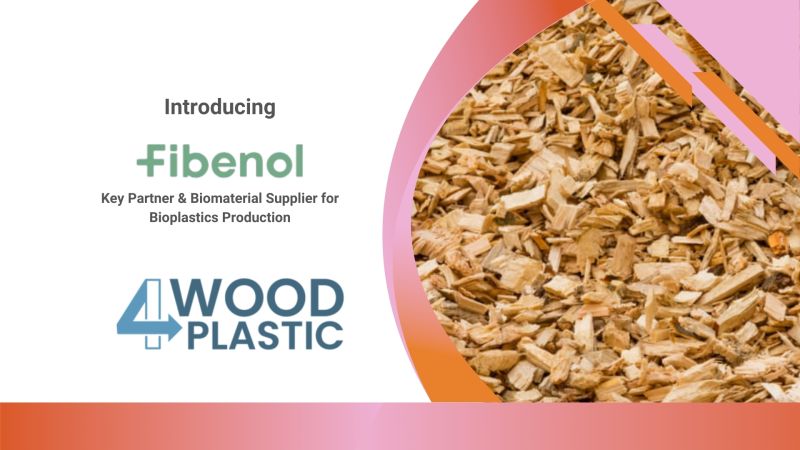
Fibenol is driving innovation in biobased plastics by developing new uses for lignin and second-generation wood sugars. Our work in the Wood4Plastic project is setting new standards for more sustainable, high-performance biomaterials.
Why we are rethinking plastics now?
The world is searching for alternatives to fossil-based plastics. While bioplastics have made significant progress, most still rely on “first-generation” sugars from food crops. At Fibenol, we believe there is a better way: transforming underused woody residues into valuable, renewable materials.
From lower-qrade hardwood to bioplastic solution
Fibenol is proud to partner the European LIFE-funded Wood4Plastic project, which aims to scale up industrially compostable, biobased plastics for everyday applications such as food packaging and collection bags. Our contribution centers on two breakthroughs:
Second-Generation (2G) wood sugars powering bioplastic innovation:
Most bioplastics are currently made from sugars derived from food crops. Fibenol is pioneering the use of second-generation sugars sourced from hardwood residues, which do not compete with food production. Through advanced refining, these 2G sugars reach the quality needed to produce 1,4-butanediol (1,4-BDO), a key ingredient in renewable bioplastics. This 1,4-BDO will soon be used to produce blown films for compostable biowaste bags, enabling a shift from food-based to truly sustainable, circular materials.
LIGNOVA™ lignin as a functional additive:
Lignin, a natural polymer we extract from low-grade hardwood biomass, offers unique potential to improve bioplastics. In Wood4Plastic, we are testing blends of PLA (polylactic acid,a widely used bioplastic) with different ratios of LIGNOVA™ lignin (10%, 20%, and 30%). The goal: enhance performance while further reducing the carbon footprint of bioplastics.
“The next step is injection molding to evaluate processability and mechanical strength. This will help us understand how much lignin can be used without compromising the final product,”
says Kait Kaarel Puss, Application Development Manager at Fibenol.
These trials are essential for assessing whether PLA-lignin blends can match or outperform conventional plastics in selected applications, potentially lowering CO₂ emissions and resource use.
Innovation That Matters
At Fibenol, our focus is on practical, science-led innovation. By exploring the functional roles of lignin in PLA blends and pioneering non-food-based sugar streams, we are setting the stage for more sustainable, high-performing plastics. Our goal is to provide industry with real, scalable alternatives to fossil-derived materialsand make the circular bioeconomy a reality.
Wood4Plastic is funded by the European Commission under the LIFE 2023 program, with Grant Agreement number 101148460. The project aims to develop a solution that contributes with the reduction of the impact of the fossil-based plastics providing new biobased ones and enhancing the recycling of waste across Europe.
Learn more about the Wood4Plastic project at wood4plastic.eu
Source
Fibenol, press release, 2025-07-14.
Supplier
European Commission
Fibenol
Wood4Plastic EU-project
Share
Renewable Carbon News – Daily Newsletter
Subscribe to our daily email newsletter – the world's leading newsletter on renewable materials and chemicals