 From Loops and Learnings: The Role of AI in a Circular Future
As we push towards a more sustainable and resource-efficient economy, circularity has emerged as a guiding principle in the transition to circular material systems, which is being accelerated by artificial intelligence. However, closing material loops on a large scale remains a significant challenge requiring better infrastructure, regulation and smarter systems, from smarter recycling to renewable carbon strategies.
This is where artificial intelligence (AI) comes in. AI is not just a tool for automation; it is also driving transformation across the chemical and materials industries. It is doing this by optimising recycling processes, enabling precision bioengineering, improving lifecycle assessments, and powering digital twins of supply chains and materials. This article explores the growing intersection between AI and the principles of the circular economy, and explains why this convergence could transform the industrial landscape.
There are already many practical examples for the use of AI to enhance circular processes: Covestro, BASF and Evonik are demonstrating the transformative potential of artificial intelligence in increasing efficiency and driving innovation throughout the chemical industry. Covestro operates a fully AI-controlled pilot plant, which enables autonomous process optimisation and real-time decision-making. BASF uses neural networks for predictive quality assurance and dynamic energy management in complex production systems. Meanwhile, Evonik, in collaboration with IBM, leverages neural networks to accelerate the formulation of high-performance polymers, significantly reducing development time and increasing R&D productivity.
Growing Demand for Machine Learning
AI is far beyond automation; it is becoming a transformative enabler across the entire value chain. Machine learning models can simulate the behaviour of new materials, optimising them for recyclability, durability and energy efficiency. This shortens development cycles and reduces the need for resource-intensive testing. AI can also facilitate more efficient selection of materials for circular applications by analysing large datasets to determine environmental performance and reuse potential.
Time Saving and Quality Control in Production and Manufacturing
In production and manufacturing, AI supports dynamic process optimisation. Smart sensors and learning algorithms minimise material waste, reduce energy use and emissions, and enable predictive maintenance that extends equipment lifespan while lowering resource consumption. AI-driven quality control systems can detect defects in real time, reducing the need for rework and improving product consistency. Additionally, autonomous robotics and adaptive scheduling help streamline operations, increasing throughput and responsiveness to changing demand.
New Opportunities in Product Design and Lifecycle Management
AI is also transforming product design and lifecycle management. Algorithms are being used to optimise durability, repairability and recyclability, thereby aligning with circular design principles. Predictive analytics forecast product wear and tear, enabling preventive maintenance and extending usage cycles. In upstream sectors such as agriculture and raw materials, AI improves input efficiency, reducing the demand for water, fertiliser and energy in line with regenerative goals.
Applied Resource Conservation through Waste Management and Resource Recovery
Perhaps most visibly of all, AI is transforming waste management and resource recovery. Computer vision and robotics are boosting the accuracy of waste sorting and recycling, while AI-driven logistics are improving collection routes and capacity utilisation. At a systems level, AI promotes industrial symbiosis by identifying cross-sector synergies and connecting waste outputs with new input opportunities.
Revolutionary Flexibility in Policy Making possible
In terms of policy, AI provides dynamic tools for simulating the impact of regulations and modelling the flow of materials, emissions and economic outcomes. Real-time data allows for more agile and adaptive policymaking to support circular objectives. Policies can become more flexible, adjusting dynamically to emerging trends or challenges, such as shifts in consumer behaviour or supply chain disruptions.
Uncover the Full Potential of Artificial Intelligence in a Circular Economy
Looking ahead, the role of AI in circularity is set to expand significantly, ultimately driving the emergence of completely new technologies – especially as data ecosystems mature and cross-industry integration intensifies. However, this progress must be accompanied by ethical safeguards to ensure transparency, avoid algorithmic bias and align technological development with social and environmental values. With the right frameworks, collaboration and investment, AI could become a cornerstone of a regenerative circular economy by accelerating the potential of upscaling, increasing efficiency, and automation processes.
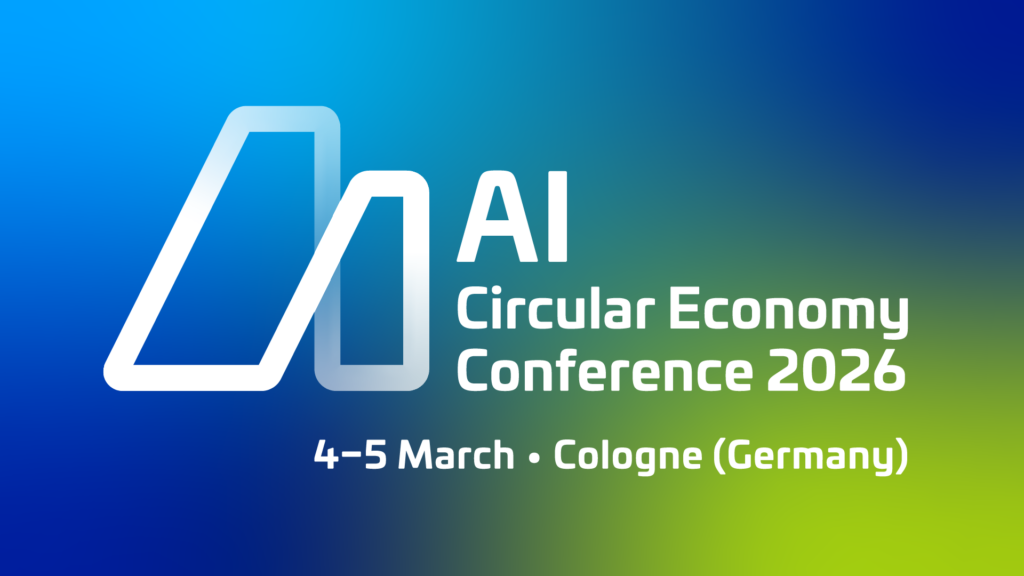
Recognising this strategic shift, the nova-Institute is launching a dedicated, independent conference focused on AI in the Circular Economy as there is a clear need in the chemicals and materials sector to create a truly circular economy and to drive defossilisation through the use of biomass, recycling, and carbon capture and utilisation (CCU). This new platform aims to bring together industry leaders, technology providers, and policymakers to drive cross-sector innovation and collaboration.
The conference will spotlight real-world applications of AI that support circularity and defossilsation, while also addressing regulatory, technical, and operational challenges. Participants will gain insights into emerging business models, forge partnerships, and contribute to shaping a more sustainable, resilient industry.
By creating this space for focused dialogue and knowledge exchange, nova-Institute aims to accelerate the transformation of the sector toward an AI-enabled circular future. Join the AI Circular Economy Conference 2026, 4-5 March in Cologne, Germany (https://ai-circulareconomy.eu).
Do you have insights to share about AI in the circular economy? Abstract submission is open until 5 September 2025: https://ai-circulareconomy.eu/call-for-abstracts/
Source
nova-Institute, original text, 2025-07-31.
Supplier
BASF SE
Covestro AG
Evonik Industries AG
IBM Research
nova-Institut GmbH
Share
Renewable Carbon News – Daily Newsletter
Subscribe to our daily email newsletter – the world's leading newsletter on renewable materials and chemicals