Biocementation was one of the subjects at the 19th International Architecture Exhibition of La Biennale di Venezia 2025. Researchers from ETH Zurich and École polytechnique fédérale de Lausanne (EPFL) unveiled it. Their living installation explores how architecture can be grown — rather than built — by using a combination of biology, robotics, and waste-based materials. It offers exciting possibilities for architects, interior and landscape designers, and product developers interested in sustainable and regenerative material systems.
Geological Microbial Formations explores biocementation. This is a radical approach, that transforms construction waste into architectural materials. At the center of the installation, a robotic arm performs a continuous layering process using sand, microbial cultures, and mineral-binding. Each layer is deposited through a two-step spray sequence: a microbial suspension of Sporosarcina pasteurii and a calcium-rich solution that initiates the biocementation reaction. This triggers the formation of MICP (microbial-induced calcite precipitation); this is a natural process that binds granulates into stone-like formations under ambient conditions, without the need for heat, cement, or synthetic glue.
Historic imitation
The principle of this process was demonstrated historically by the slow geological formation of stromatolites; mineral structures that have grown over millennia by microbial communities. The robotic system at the heart of the process imitates and accelerates this geological process. Throughout the Venetian Biennale, the robotic system cultivates a living geological formation. It grows new links between biology and architecture.
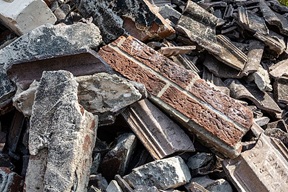
Around this active biocementation core, the installation also displays material samples created from different types and sizes of aggregates; from recycled sand and sawdust to coarse rubble and mineral waste streams. This wide amount of resources testifies to the technique’s adaptability, and it’s potential to bind a wide range of materials into solid forms; thereby rethinking waste as raw material for growth. This approach highlights how circularity can be built into the design process. Rather than extracting new raw materials, the system cultivates structures from what already exists. It demonstrates a low-carbon alternative to conventional building methods.
Minute interactions
An accompanying video reveals the microscopic dynamics behind this transformation. Fluorescence and scanning electron microscope footage highlight bacteria motility, crystal formation, and the minute interactions that bind minerals at the grain scale. The installation is not just a static display; it unfolds as a temporal factory – part building site, part microbial lab, part evolving architectural artifact.
This is not just a construction method; this microbial fabrication technique offers possibilities for regenerative repair. If we target biocemention sprays, this could seal cracks and fissures in existing architectural surfaces; and this could support healing processes through recalcification, turning building skins into sites of biological activity. than extracting new raw materials, the system cultivates structures from what already exists. It demonstrates a low-carbon alternative to conventional building methods.
FRICKS
Related to this is FRICKS, short for Foamed Recycled Bricks; an innovative building material developed by the Institute for Advanced Architecture of Catalonia (IAAC). The project transforms construction and demolition waste (CDW) into sustainable, high-performance bricks. The FRICKS project reuses brick and ceramic waste to produce new bricks. These bricks are lightweight, thermally insulating, and contain up to 95% less embodied energy than conventional fired clay bricks. Unlike traditional bricks, FRICKS bricks do not require firing or artificial drying. They cure at room temperature.
FRICKS can be produced in a wide range of shapes, from standard to complex forms. Therefore, the process is suitable for restoration projects, contemporary architecture, and experimental design. FRICKS offers more than a new material; it proposes a new way to build. By reusing waste and cutting energy use, it aligns with global efforts to reduce construction’s environmental impact. It is a scalable, adaptable solution that supports the future of low-carbon, circular design.
More than a construction method
Likewise, Geological Microbial Formations is more than a construction method; it’s a new way of thinking about materials. By combining biology, robotics and design, the project shows how we can create structures that grow, adapt, and even heal themselves. For designers working in architecture, landscaping, or product development, it shifts the focus from industrial extraction to organic cultivation, reshaping how we imagine the built environment.
Geological Microbial Formations and FRICKS are ongoing, interdisciplinary research projects at the intersection of architecture, microbiology, and digital fabrication. They propose a material thinking based not on extraction but on cultivation and growth. Structures are not merely assembled but grown. They link through biocementation, from waste to resource, through processes of bonding, adaptation, and mineral emergence.
Source
Bio Based Press, 2025
Supplier
Ecole Polytechnique Fédérale de Lausanne (EPFL)
Eidgenössische Technische Hochschule Zürich (ETH Zürich)
Share
Renewable Carbon News – Daily Newsletter
Subscribe to our daily email newsletter – the world's leading newsletter on renewable materials and chemicals