Showing 1–20 of 158
-
130 Downloads
2026-02
FREE
Free Shipping130
DownloadsBased on internal assessment of RCI member companies and joint analysis, this report reveals existing EU legislation which creates several roadblocks for the shift from fossil to renewable carbon, The report identifies ten concrete policy barriers across seven EU frameworks, including the ETS, REDIII, PPWR and SUPD.
Key findings show regulatory misalignment (creating non-level playing fields and regulatory uncertainty), outdated definitions and misleading classifications (excluding innovative, climate-friendly products from incentives and market access) and impractical administrative bureaucracy (often conflicting with industrial realities). The biggest barrier is not identified in a single regulation, but identified as the lack of coherent support for renewable carbon in the chemicals and derived materials economy.
The report provides practical suggestions to amend and fine-tune regulations in upcoming legislative revisions. It complements RCI’s policy proposal study published in 2025.
-
Case Studies Based on Peer-reviewed Life Cycle Assessments: Carbon Footprints of Different Renewable Carbon-Based Chemicals and Materials (2nd, Extended Version) – RCI Report (PDF)
NewSustainability & Health
67 Pages
427 Downloads
427 Downloads
2026-01
FREE
Free Shipping427
DownloadsThis report broadens the scope of the brochure “Case studies based on peer-reviewed Life Cycle Assessments – Carbon Footprints of Different Carbon-Based Chemicals and Materials”, published in November 2023. The initial brochure presented five peer-reviewed studies that drew strong interest from experts, policymakers, and industry leaders for their insights into the carbon footprints of various carbon-based chemicals and materials.
This second, extended version includes seven peer-reviewed LCAs from participating member companies: Braskem, Econic, Fibenol, LanzaTech, Lenzing (update), Peter Greven and Primient Covation.
These expanded contributions will deepen understanding of carbon footprints and further support RCI’s commitment to
data-driven sustainability.DOI No.: https://doi.org/10.52548/HRPM7087
-
Recycling Becomes Feedstock for Europe – Let’s Dare More Autonomy (PDF)
NewPolicy
65 Pages
326 Downloads
326 Downloads
2026-01
FREE
Free Shipping326
DownloadsThe paper shows how this goal of transformation or defossilisation can be implemented step by step and how legal areas can be better integrated at EU level, which will result in new priorities for both sectors. For example, in waste management, much of what does not contribute to the carbon supply of the chemical industry can be phased out gradually. It also includes enabling all recycling technologies, from mechanical and physical to chemical processes and even incineration with CO₂ capture and utilisation, since all processes are needed in the transformation for the different waste fractions and target products. Overall, the ten proposals derived and analysed in the paper also lead to a significant reduction in bureaucracy.
There are some important proposals that build on instruments already introduced by the EU, such as substitution quotas for selected plastics sectors. The authors also specify proposals that are under discussion or being raised by Member States. However, there are also proposals to phase out existing regulations. It is important that the proposals build on each other and are implemented in a coordinated manner as part of a self-contained, phased overall package.
Fortunately, greater autonomy is becoming mainstream in the EU and is also one of the cornerstones of the new EU Council Presidency. However, unless it becomes practical, greater autonomy and resilience will remain nothing more than a narrative. And the path to achieving this will be fraught with difficulties.
DOI No.: https://doi.org/10.52548/LFPX3960
-
RCI Webinar: Success Stories RCI 2025 and Outlook to 2026 – Project Results and Position Papers (PDF)
Policy, Sustainability & Health
59 Pages
91 Downloads
91 Downloads
2025-12
FREE
Free Shipping91
DownloadsThe free RCI webinar on 9 December 2025 presented the RCI Success Stories 2025 and offered an Outlook to 2026. It showcased RCI’s policy impact at EU, national and international levels, highlighted key publications and scientific results (including the biomass study, Policy Proposals, LCA methodologies, sustainability criteria paper, and analysis of recent updates to methane and fossil CO2 emissions data in Life-Cycle Inventories (LCI)), and summarised member activities such as expert groups, roundtables, and survey insights. The webinar also introduced RCI’s ongoing and upcoming projects for 2026, including biodiversity, policy barriers, carbon flows, LCA case studies, and awareness-building initiatives.
-
15 Downloads
2025-12
FREE
Free Shipping15
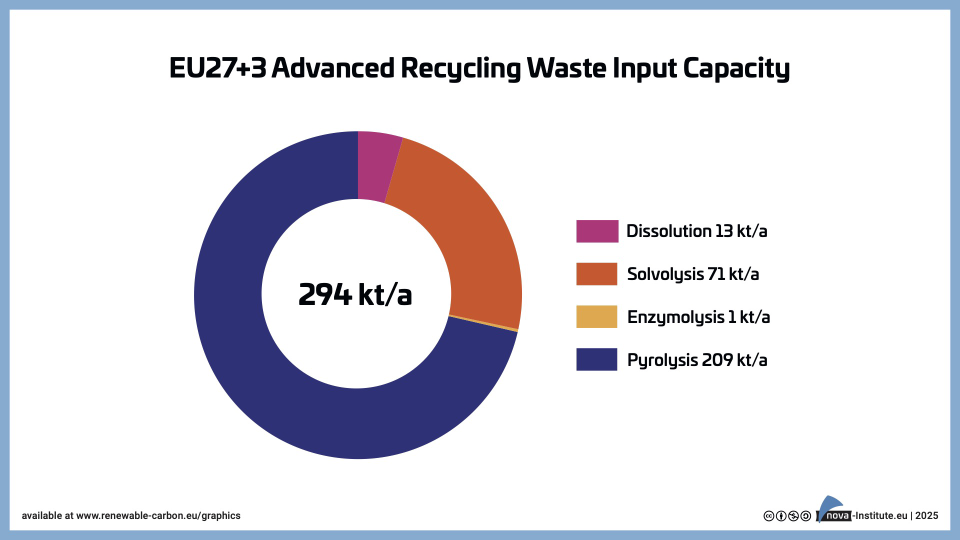
DownloadsInstalled input capacities for different advanced recycling technologies in EU27+3 for the year 2024.
-
11 Downloads
2025-12
FREE
Free Shipping11
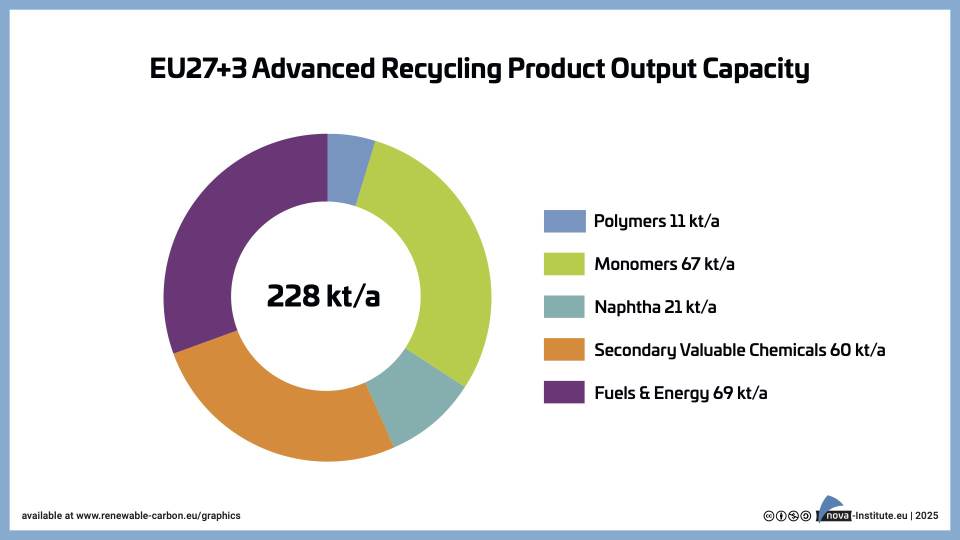
DownloadsInstalled advanced recycling output capacities for different products in EU27+3 for the year 2024.
-
Installed and Future Advanced Recycling Production Capacities between 2018-2031 for EU27+3 (JPG)
Technology
1 Page
20 Downloads
20 Downloads
2025-12
FREE
Free Shipping20
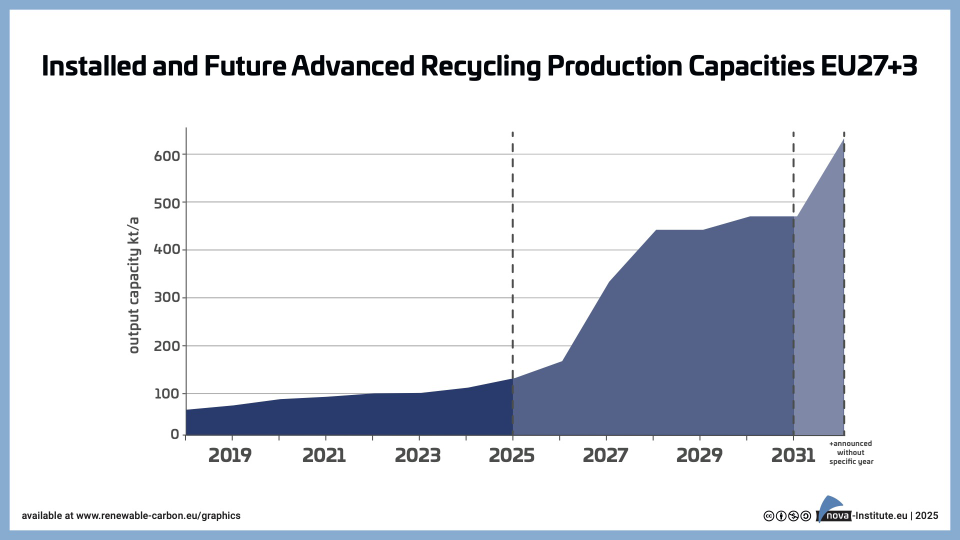
DownloadsInstalled and future production capacities for advanced recycling of products in the EU27+3 that can be used to produce new polymers and plastics.
-
Number of advanced recycling facilities installed in the EU-27+3 in 2024 (JPG)
Technology
1 Page
11 Downloads
11 Downloads
2025-12
FREE
Free Shipping11
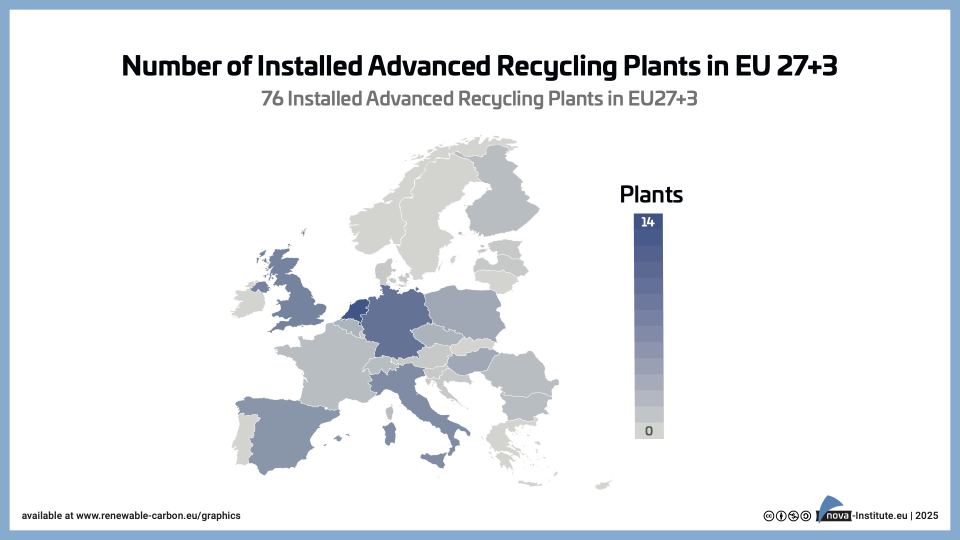
DownloadsOverview showing all installed and running advanced recycling plants in the EU27+3 in 2024.
-
Advanced Recycling Conference 2025 (Proceedings, PDF)
Markets & Economy, Policy, Sustainability & Health, Technology
2025-12
150 € ex. tax
Plus 19% MwSt.Press
release Add to
cartThe proceedings of the Advanced Recycling Conference 2025 (19-20 November, https://advanced-recycling.eu) contain 41 conference presentations, the conference journal, sponsor documents and the press release.
-
Mapping of Global Advanced Plastic Recycling Capacities (PDF)
NewMarkets & Economy, Policy, Technology
35 Pages
2025-11
500 € – 1,000 €Price range: 500 € through 1,000 € ex. tax
Plus 19% MwSt.Press
release Select
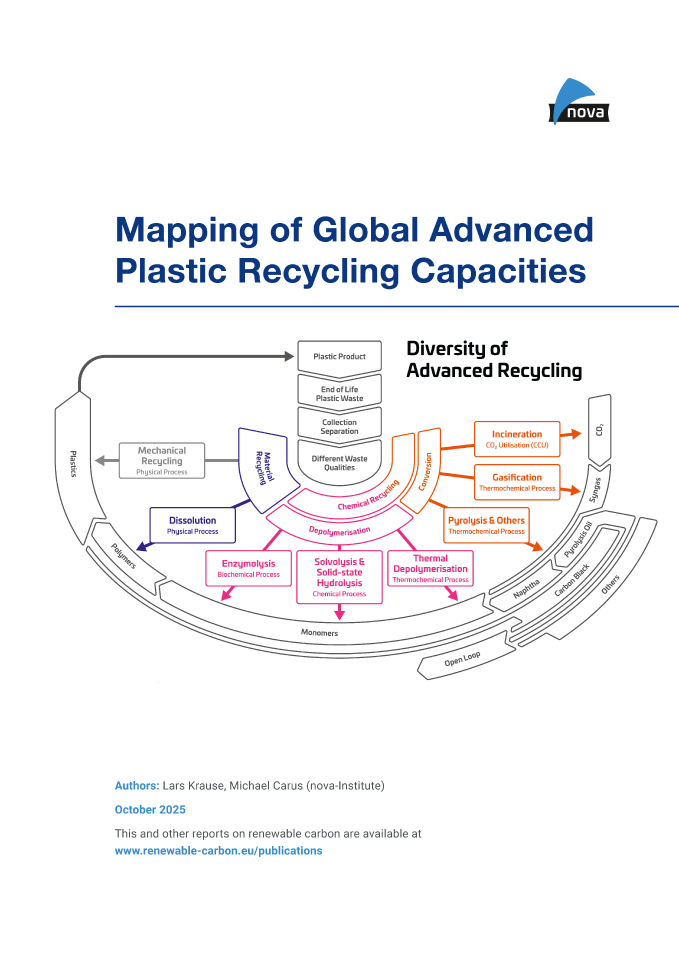
licenceChemical and physical recycling are essential to keeping carbon in the loop and fully establishing a circular economy. Despite delays in policy regulations and investment, experts foresee a bright future for new capacity, both globally and in Europe.
The development of advanced recycling technologies is very dynamic and at a fast pace, with new players constantly appearing on the market, from start-ups to chemistry giants and everything in between. New plants are being built, and new capacities are being achieved. Due to these dynamic developments, it is difficult to keep track of everything. The nova report “Mapping of global advanced plastic recycling capacities” aims to clear up this jungle of information. A comprehensive evaluation of the global input and output capacities was carried out for which 390 planned as well as installed and operating plants including their specific product yields were mapped to provide an overview about global advanced recycling capacities in the past, present, and future.
Further information: The new report represents a short study updating the current and future Advanced Recycling input- and output-capacities for the year 2024-2031. The report does not include any technology- or company-profiles which are published in another study (https://doi.org/10.52548/WQHT8696).
DOI No.: https://doi.org/10.52548/YKWB6074
-
Renewable Materials Conference 2025 (Proceedings, PDF)
Markets & Economy, Policy, Sustainability & Health, Technology
2025-10
200 € ex. tax
Plus 19% MwSt.Press
release Add to
cartThe proceedings of the Renewable Materials Conference 2025 (22-24 September 2025, https://renewable-materials.eu) contain all released 68 presentations, the conference journal and the press release of the three winners of the Innovation Award “Renewable Material of the Year 2025″.
-
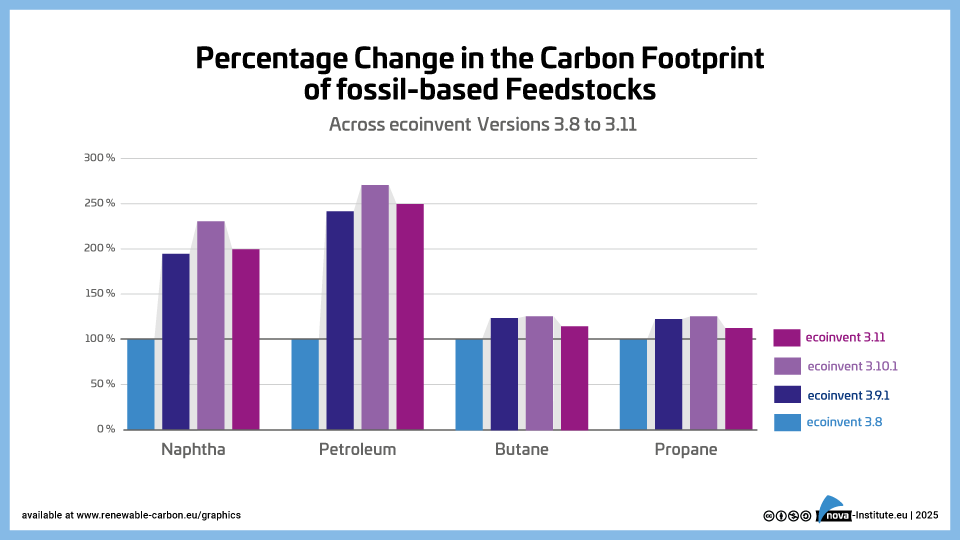
Percentage Change in the Carbon Footprint of fossil-based Feedstocks (PNG)
Sustainability & Health
1 Page
29 Downloads
29 Downloads
2025-10
FREE
Free Shipping29
Downloads -
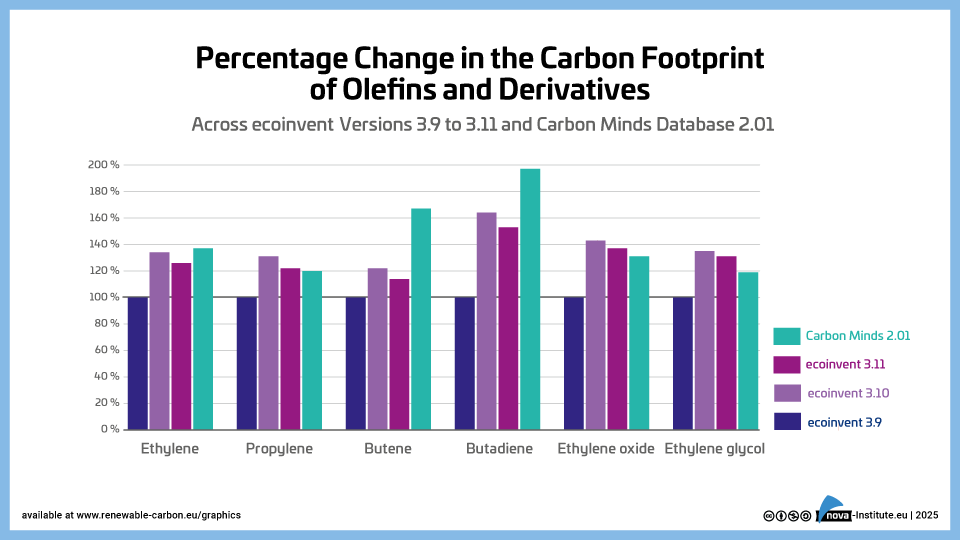
Percentage Change in the Carbon Footprint of Olefins and Derivatives (PNG)
Sustainability & Health
1 Page
13 Downloads
13 Downloads
2025-10
FREE
Free Shipping13
Downloads -
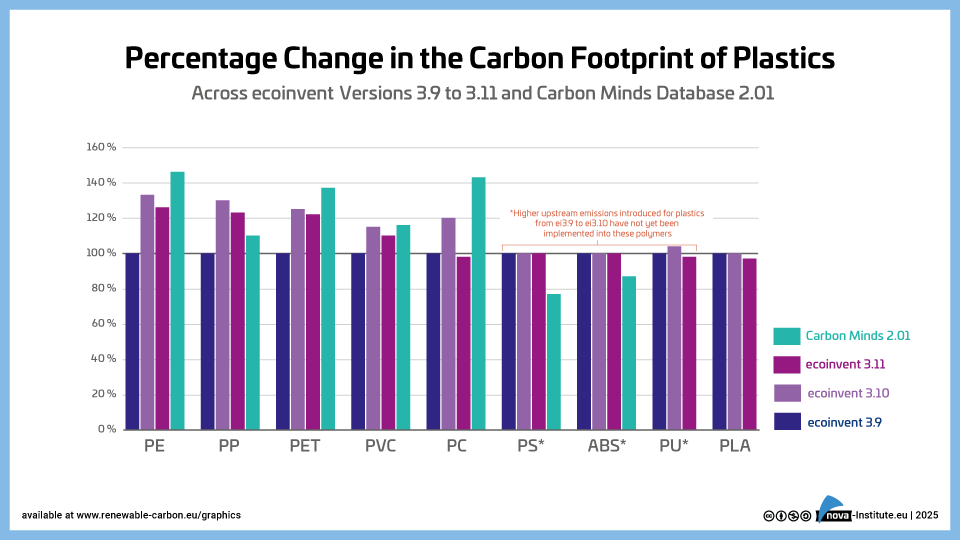
Percentage Change in the Carbon Footprint of Plastics (PNG)
Sustainability & Health
1 Page
38 Downloads
38 Downloads
2025-10
FREE
Free Shipping38
Downloads -
Increased Methane Emissions in Crude Oil and Natural Gas Supply: Implications for the Carbon Footprint of Petrochemicals – An RCI report (PDF)
Sustainability & Health
39 Pages
428 Downloads
428 Downloads
2025-10
FREE
Free Shipping428
DownloadsThis scientific background report by RCI shows that recent updates to leading LCI databases (ecoinvent 3.9–3.11) reveal a major underestimation of methane emissions from oil and gas supply chains. Enhanced satellite data on flaring, venting, and leaks highlight large inconsistencies compared to sources such as IEA, IOGP, and the World Bank. For instance, IEA now reports oil-related methane emissions up to 15 times higher than IOGP, with extreme differences for Russia (10-fold) and Saudi Arabia (40-fold). These revisions sharply increase the carbon footprint of fossil feedstocks, with naphtha nearly tenfold higher and significant rises for ethylene, propylene, and ethylene glycol. As a consequence, plastics such as PE, PP, and PET show 20–30% higher footprints. By contrast, renewable carbon alternatives gain ground: bio-based plastics now appear 12–27% more climate-friendly, with even greater advantages when biogenic carbon uptake is included.
The RCI report urges policymakers to rapidly integrate methane regulation and updated LCI data into climate strategies. Key recommendations include regular database updates, expanded emissions tracking, harmonized reporting, and stronger support for renewable carbon solutions.
-
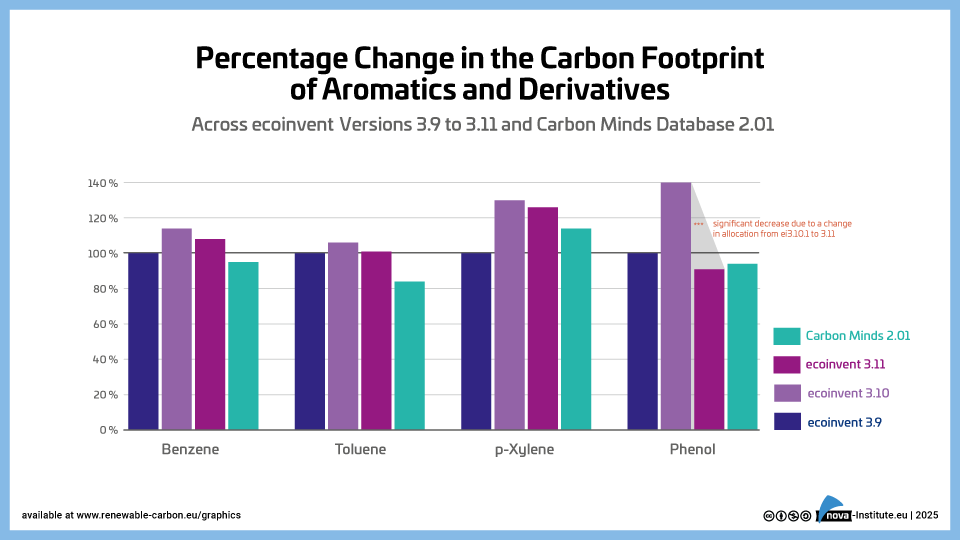
Percentage Change in the Carbon Footprint of Aromatics and Derivatives (PNG)
Sustainability & Health
1 Page
13 Downloads
13 Downloads
2025-10
FREE
Free Shipping13
Downloads -
198 Downloads
2025-09
FREE
198
Downloads -
2025-08
500 € – 1,000 €Price range: 500 € through 1,000 € ex. tax
Plus 19% MwSt.Press
release Select
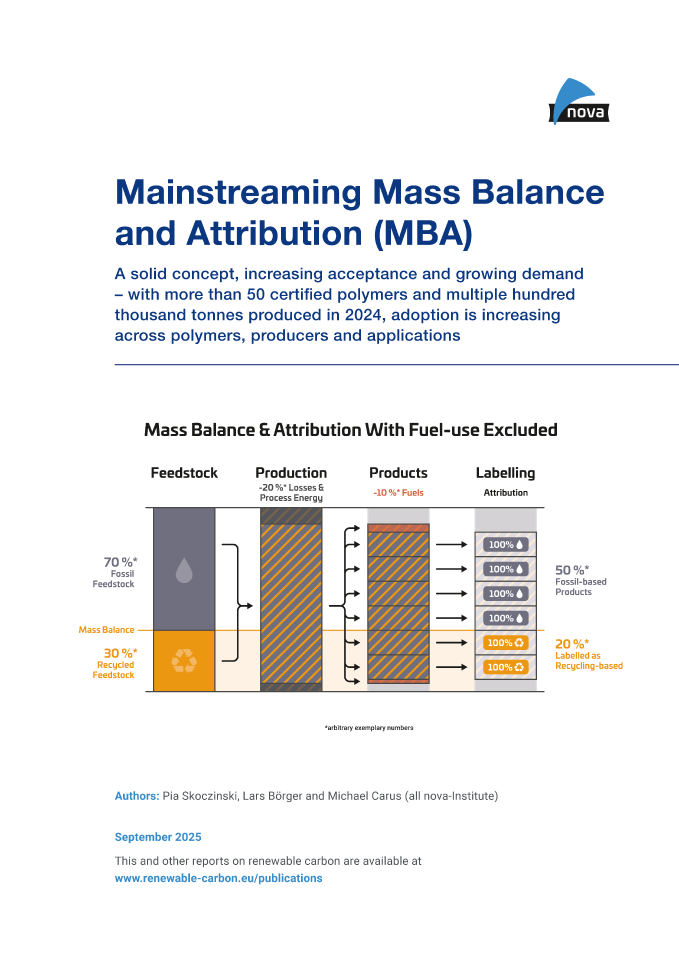
licenceA solid concept, increasing acceptance and growing demand – with more than 50 certified polymers and multiple hundred thousands of kilotonnes produced in 2024, adoption is increasing across polymers, producers and applications
The acceptance and accessibility of mass balanced attributed (MBA) chemicals, building blocks and polymers is a major issue for the chemical and plastics sectors, as well as for brand owners. MBA products could provide more options, better availability and reduced costs for the defossilisation compared to dedicated bio-based solutions.
However, both the MBA concept and the political regulations are crucial for scaling up, but difficult to understand. Furthermore, discussions about potentially misleading communication on the concept are confusing stakeholders. In addition, no production volumes are available.The new report “Mainstreaming Mass Balance and Attribution (MBA): A solid concept, increasing acceptance and growing demand – with more than 50 certified polymers and multiple hundred thousand tonnes produced in 2024, adoption is increasing across polymers, producers and applications” highlights this evolving landscape.
The first part of the report covers terminology, the historical development, the rationale and acceptance, and the latest regulatory environment in Brussels. The second part is dedicated to the underlying data.It covers feedstock used for certified MBA products, as well as the most frequently produced MBA chemicals and polymers (PE is No. 1). The leading producers (BASF is No. 1) and regions are identified, with 60 % of demand from Europe, and the largest share stemming from Germany, Belgium and France.
DOI No.: https://doi.org/10.52548/VDRG6920
-
RCI’s Position Paper: Mass Balance and Attribution (MBA) – Update 2025 (PDF)
Markets & Economy, Policy
5 Pages
253 Downloads
253 Downloads
2025-08
FREE
Free Shipping253
DownloadsThis position paper highlights the importance of mass balance and attribution “MBA” as one possible way to incentivise the transformation of the chemical sector away from fossil and on towards renewable carbon.
The term “mass balance” has become established to describe systems in which biomass, CO2 and secondary materials are used as a feedstock, but is not or not fully physically traced to the end product. Using the MBA approach makes it possible to substitute large quantities of fossil raw materials and attractive renewable content shares can be attributed to desired materials or products for which demand on the market exists. Through this, chemistry can stepwise, but continuously, increase the shares of renewable carbon
However, the term “mass balance” is somewhat unfortunate because it is too general, and does not mention the essence of the method: the free attribution of the bio-based, CO2-based or chemically recycled share in the feedstock mix to certain selected end products. Without this attribution, a pure mass balance makes no sense, and in practice, with several hundred products and intermediate products that have been certified accordingly, attribution is frequently carried out globally. The RCI recommends to only speak of “mass balance and attribution (MBA)” as this is transparent and honest, building trust from customers, end consumers and society in general. Both, mass balance and the free attribution are based on solid and established certifications.
Besides terminology, there is still a need for regulatory harmonisation between the schemes of the existing certification systems. MBA cannot only be applied for bio-based feedstock, but also for CO/CO2 or feedstock from chemical recycling, both will gain strongly in importance in the coming years. Every MBA scheme should cover these three renewable feedstocks: biomass, CO/CO2 and recycling.
This 2025 update now includes a brief overview and figure of MBA as defined at EU level, via the SUPD Implementing Decision on the recycling of a single-use plastics bottle- This establishes overall regulatory support for MBA in the EU as well as an applicable methodological framework for MBA in practice.
-
Summary of RCI Scientific Background Report “RCI Policy Proposals for Facilitating the Transition to Renewable Carbon” (PDF)
Markets & Economy, Sustainability & Health
3 Pages
287 Downloads
287 Downloads
2025-06
FREE
Free Shipping287
DownloadsHow to defossilise the chemical industry – policy proposals
This is a summary of the RCI Scientific Background Report “RCI Policy Proposals for Facilitating the Transition to Renewable Carbon” published by the Renewable Carbon Plastics | bioplastics MAGAZINE [03/25] Vol. 20.


![Renewable Materials Conference 2025 (Proceedings, PDF) [Digital]](https://renewable-carbon.eu/publications/wp-content/uploads/2020/05/21-01-07_RC-Publications-Cover-Proceedings_RMC-100x141.png)