Skip to content
Renewable Carbon Publications - LogoRenewable Carbon Publications - Logo
  • Publications
  • Contact
1
  • Renewable Materials Conference 2025 (Proceedings, PDF) [Digital]Renewable Materials Conference 2025 (Proceedings, PDF) [Digital] 1 × 200 €
    Plus 19% MwSt.

Subtotal: 200 €

CartCheckout

  • Renewable Carbon
    • Renewable Carbon
    • Events
    • Publications
    • Graphics
    • News
    • Business Directory
    • Newsletter
    • nova-Institute
  • Publications
  • Contact

Renewable Carbon Publications - LogoRenewable Carbon Publications - Logo
1
  • Renewable Materials Conference 2025 (Proceedings, PDF) [Digital]Renewable Materials Conference 2025 (Proceedings, PDF) [Digital] 1 × 200 €
    Plus 19% MwSt.

Subtotal: 200 €

CartCheckout

  • Renewable Carbon Publications
  • Renewable Carbon Types
  • Recycling
Grid view List view
“Renewable Materials Conference 2025 (Proceedings, PDF)” has been added to your cart. View cart

Showing 1–20 of 150

  • Download Statistics
  • Add to
    cart
    New22 11 28 rc publications cover proceedings arc

    Advanced Recycling Conference 2025 (Proceedings, PDF)

    Markets & Economy, Policy, Sustainability & Health, Technology


    2025-12

    150 € ex. tax

    Plus 19% MwSt.
    Press
    release
    Add to
    cart

    The proceedings of the Advanced Recycling Conference 2025 (19-20 November, https://advanced-recycling.eu) contain 41 conference presentations, the conference journal, sponsor documents and the press release.

  • Select
    licence
    Newmapping of global advanced plastic recycling capacities (pdf)

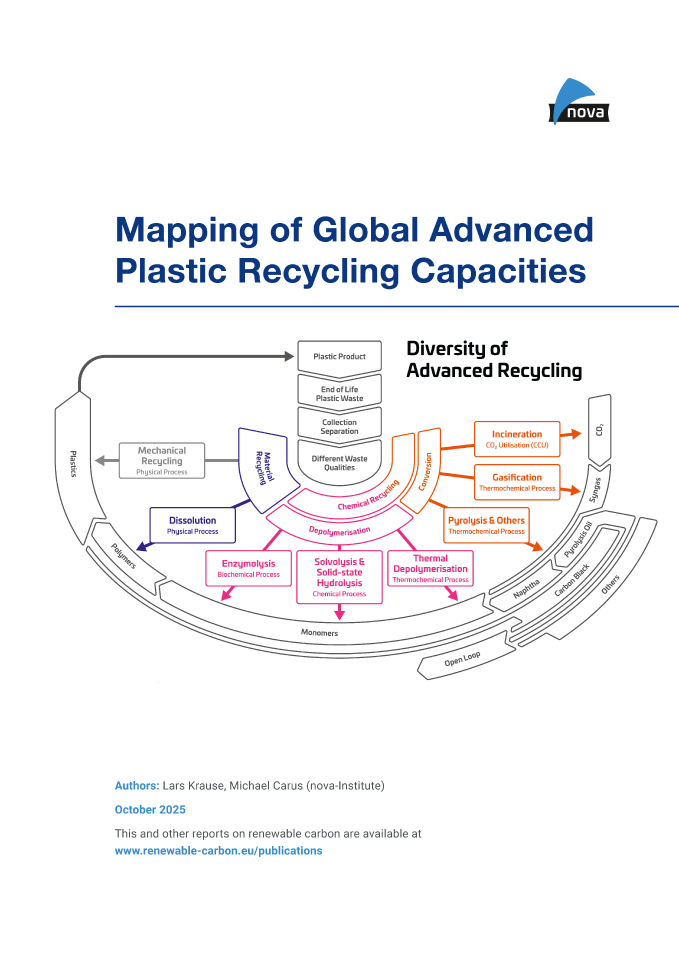
    Mapping of Global Advanced Plastic Recycling Capacities (PDF)

    New

    Markets & Economy, Policy, Technology

    35 Pages


    2025-11

    500 € – 1,000 €Price range: 500 € through 1,000 € ex. tax

    Plus 19% MwSt.
    Press
    release
    Select
    licence

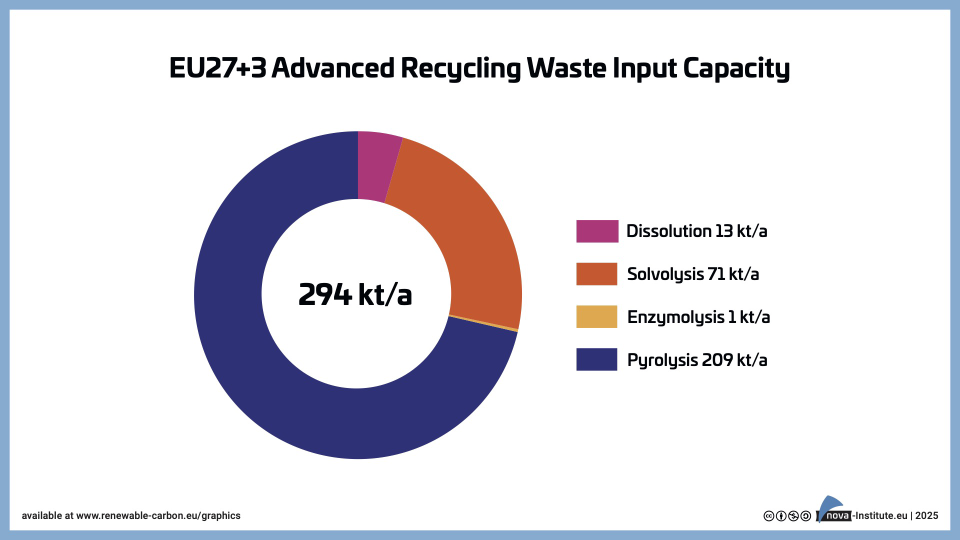
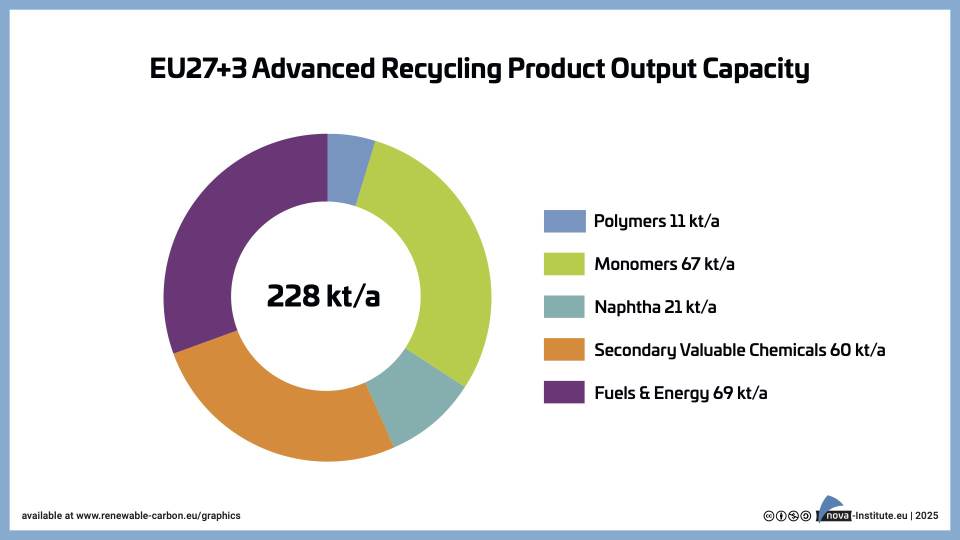
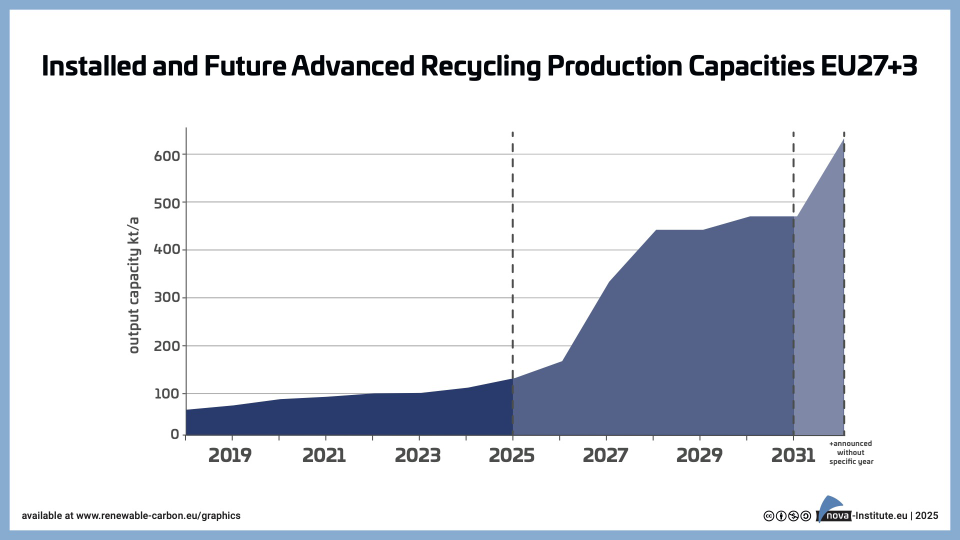
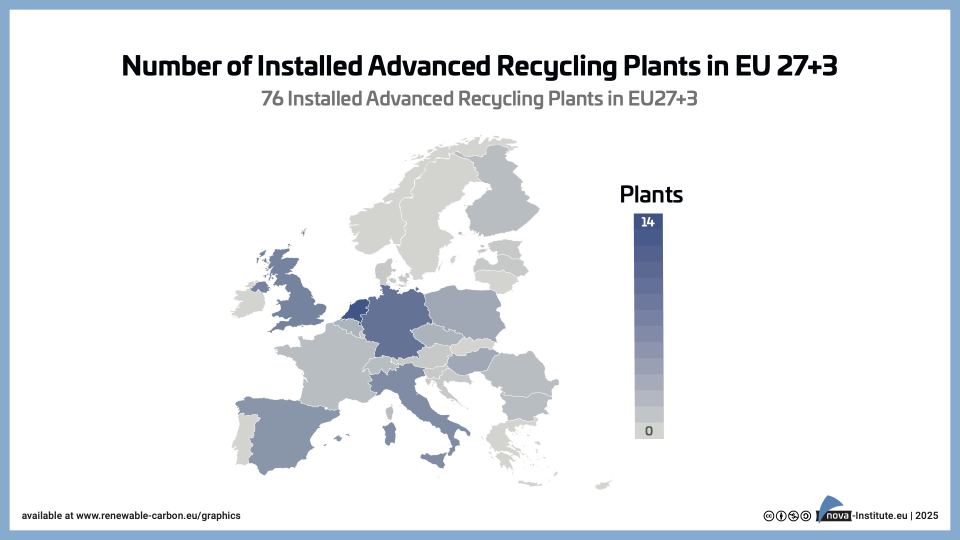
    Chemical and physical recycling are essential to keeping carbon in the loop and fully establishing a circular economy. Despite delays in policy regulations and investment, experts foresee a bright future for new capacity, both globally and in Europe.

    The development of advanced recycling technologies is very dynamic and at a fast pace, with new players constantly appearing on the market, from start-ups to chemistry giants and everything in between. New plants are being built, and new capacities are being achieved. Due to these dynamic developments, it is difficult to keep track of everything. The nova report “Mapping of global advanced plastic recycling capacities” aims to clear up this jungle of information. A comprehensive evaluation of the global input and output capacities was carried out for which 390 planned as well as installed and operating plants including their specific product yields were mapped to provide an overview about global advanced recycling capacities in the past, present, and future.

    Further information: The new report represents a short study updating the current and future Advanced Recycling input- and output-capacities for the year 2024-2031. The report does not include any technology- or company-profiles which are published in another study (https://doi.org/10.52548/WQHT8696).

    DOI No.: https://doi.org/10.52548/YKWB6074

  • Add to
    cart
    Renewable Materials Conference 2025 (Proceedings, PDF) [Digital]

    Renewable Materials Conference 2025 (Proceedings, PDF)

    Markets & Economy, Policy, Sustainability & Health, Technology


    2025-10

    200 € ex. tax

    Plus 19% MwSt.
    Press
    release
    Add to
    cart

    The proceedings of the Renewable Materials Conference 2025 (22-24 September 2025, https://renewable-materials.eu) contain all released 68 presentations, the conference journal and the press release of the three winners of the Innovation Award “Renewable Material of the Year 2025″.

    Download Conference journal (PDF)

  • Direct Download
    percentage change in the carbon footprint of fossil based feedstocks (png) (copy)

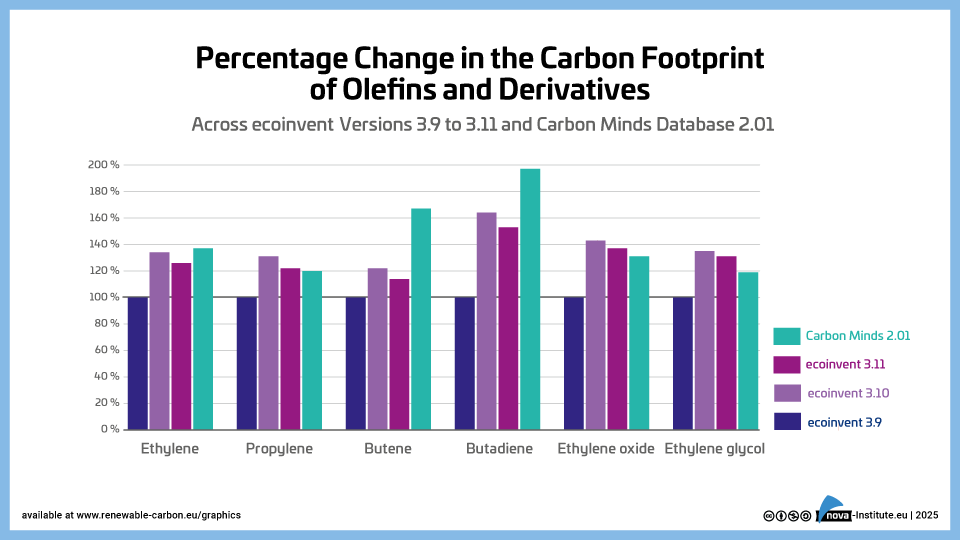
    Percentage Change in the Carbon Footprint of Olefins and Derivatives (PNG)

    Sustainability & Health

    1 Page
    8 Downloads

    8 Downloads  

    2025-10

    FREE

    Free Shipping
     

    8
    Downloads

    Direct Download
  • Direct Download
    percentage change in the carbon footprint of olefins and derivatives (png) (copy)

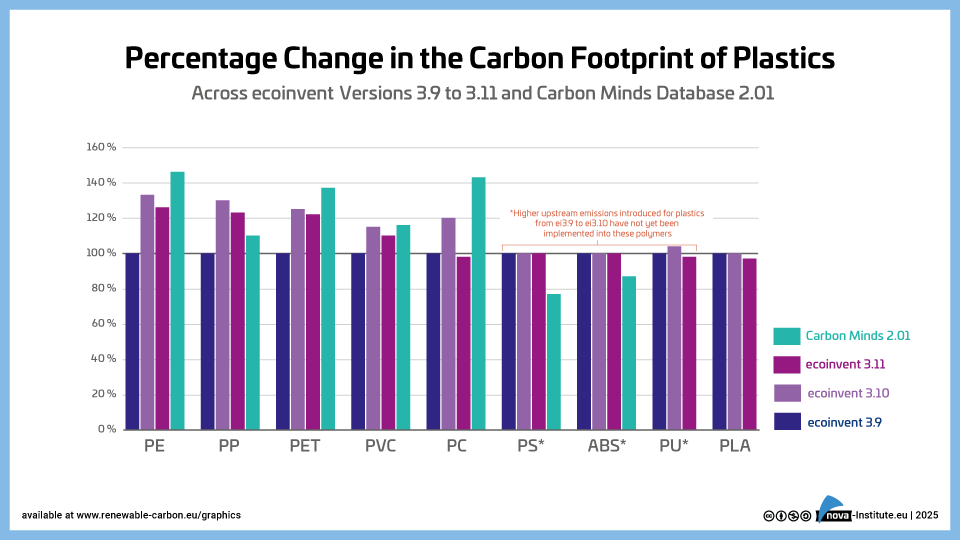
    Percentage Change in the Carbon Footprint of Plastics (PNG)

    Sustainability & Health

    1 Page
    28 Downloads

    28 Downloads  

    2025-10

    FREE

    Free Shipping
     

    28
    Downloads

    Direct Download
  • Direct Download
    increased methane emissions in crude oil and natural gas supply: implications for the carbon footprint of petrochemicals – an rci report (pdf)

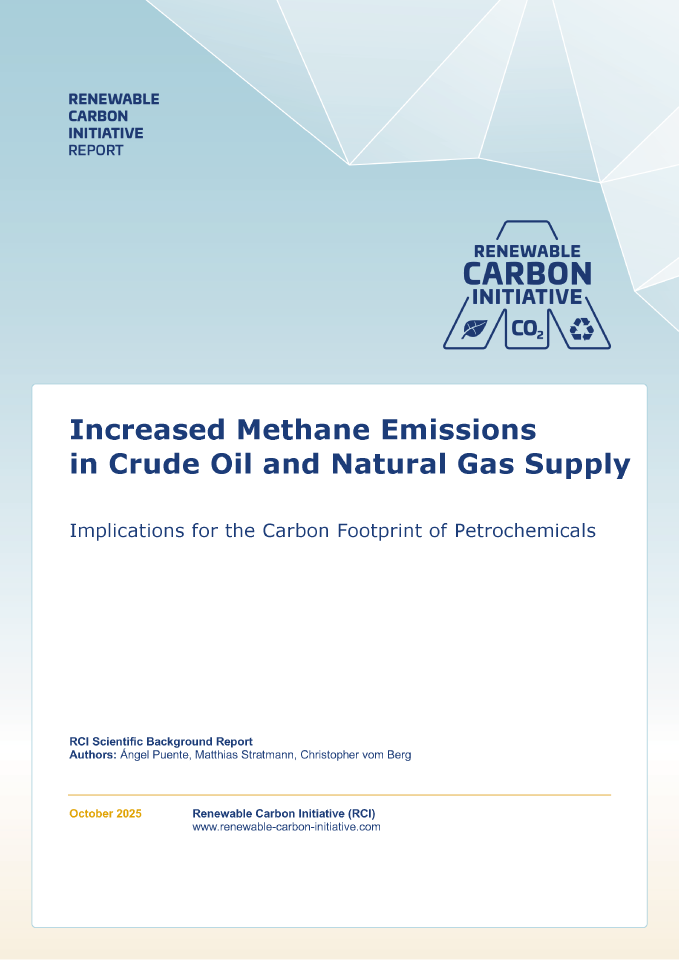
    Increased Methane Emissions in Crude Oil and Natural Gas Supply: Implications for the Carbon Footprint of Petrochemicals – An RCI report (PDF)

    Sustainability & Health

    39 Pages
    333 Downloads

    333 Downloads  

    2025-10

    FREE

    Free Shipping
     

    333
    Downloads

    Direct Download

    This scientific background report by RCI shows that recent updates to leading LCI databases (ecoinvent 3.9–3.11) reveal a major underestimation of methane emissions from oil and gas supply chains. Enhanced satellite data on flaring, venting, and leaks highlight large inconsistencies compared to sources such as IEA, IOGP, and the World Bank. For instance, IEA now reports oil-related methane emissions up to 15 times higher than IOGP, with extreme differences for Russia (10-fold) and Saudi Arabia (40-fold). These revisions sharply increase the carbon footprint of fossil feedstocks, with naphtha nearly tenfold higher and significant rises for ethylene, propylene, and ethylene glycol. As a consequence, plastics such as PE, PP, and PET show 20–30% higher footprints. By contrast, renewable carbon alternatives gain ground: bio-based plastics now appear 12–27% more climate-friendly, with even greater advantages when biogenic carbon uptake is included.

    The RCI report urges policymakers to rapidly integrate methane regulation and updated LCI data into climate strategies. Key recommendations include regular database updates, expanded emissions tracking, harmonized reporting, and stronger support for renewable carbon solutions.


  • Direct Download
    percentage change in the carbon footprint of aromatics and derivatives (png)

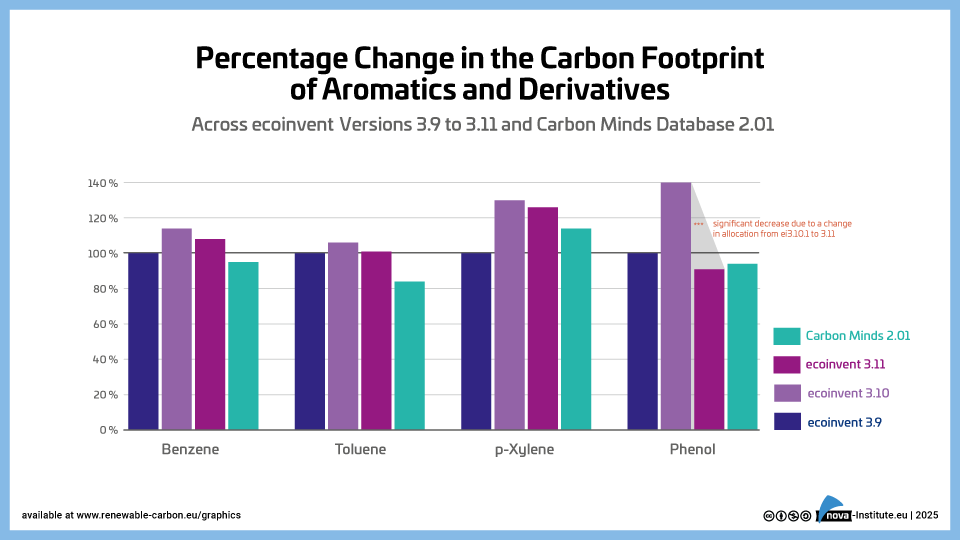
    Percentage Change in the Carbon Footprint of Aromatics and Derivatives (PNG)

    Sustainability & Health

    1 Page
    9 Downloads

    9 Downloads  

    2025-10

    FREE

    Free Shipping
     

    9
    Downloads

    Direct Download
  • Direct Download
    percentage change in the carbon footprint of aromatics and derivatives (png) (copy)

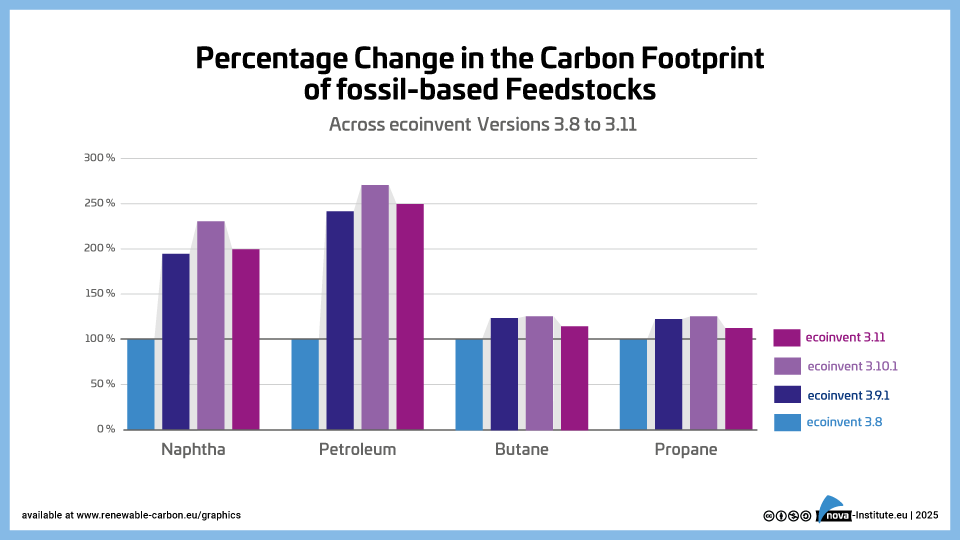
    Percentage Change in the Carbon Footprint of fossil-based Feedstocks (PNG)

    Sustainability & Health

    1 Page
    18 Downloads

    18 Downloads  

    2025-10

    FREE

    Free Shipping
     

    18
    Downloads

    Direct Download
  • Direct Download
    nova institut networking and knowledge (pdf)

    nova-Institut Networking and Knowledge (PDF)

    4 Pages
    190 Downloads

    190 Downloads  

    2025-09

    FREE


    190
    Downloads

    Direct Download
  • Select
    licence
    mainstreaming mass balance and attribution (mba) (pdf)

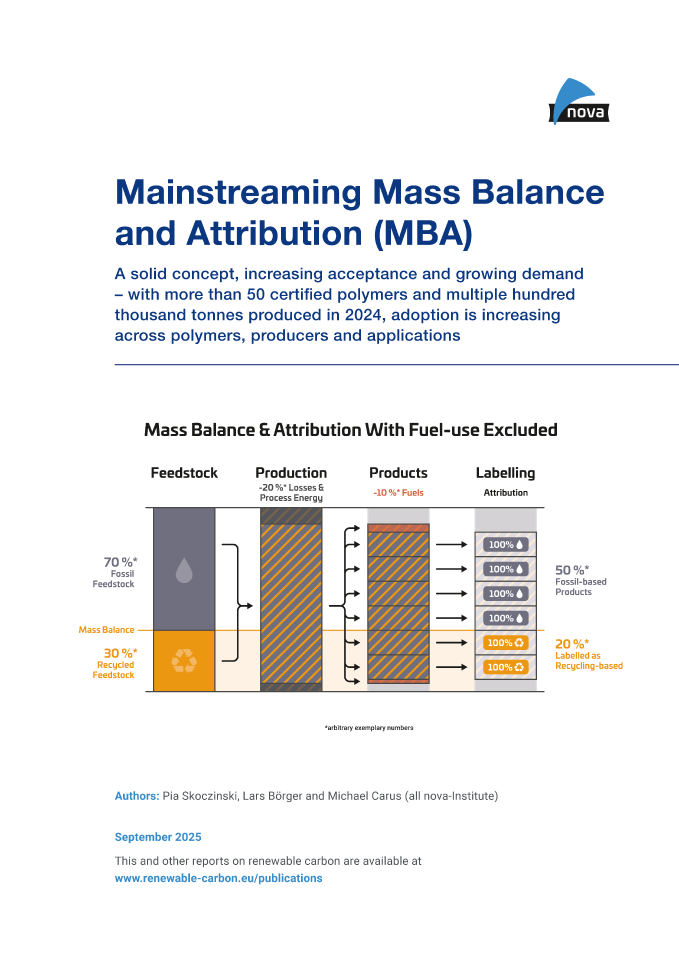
    Mainstreaming Mass Balance and Attribution (MBA) (PDF)

    New

    Markets & Economy

    22 Pages


    2025-08

    500 € – 1,000 €Price range: 500 € through 1,000 € ex. tax

    Plus 19% MwSt.
    Press
    release
    Select
    licence

    A solid concept, increasing acceptance and growing demand – with more than 50 certified polymers and multiple hundred thousands of kilotonnes produced in 2024, adoption is increasing across polymers, producers and applications

    The acceptance and accessibility of mass balanced attributed (MBA) chemicals, building blocks and polymers is a major issue for the chemical and plastics sectors, as well as for brand owners. MBA products could provide more options, better availability and reduced costs for the defossilisation compared to dedicated bio-based solutions.
    However, both the MBA concept and the political regulations are crucial for scaling up, but difficult to understand. Furthermore, discussions about potentially misleading communication on the concept are confusing stakeholders. In addition, no production volumes are available.

    The new report “Mainstreaming Mass Balance and Attribution (MBA): A solid concept, increasing acceptance and growing demand – with more than 50 certified polymers and multiple hundred thousand tonnes produced in 2024, adoption is increasing across polymers, producers and applications” highlights this evolving landscape.
    The first part of the report covers terminology, the historical development, the rationale and acceptance, and the latest regulatory environment in Brussels. The second part is dedicated to the underlying data.

    It covers feedstock used for certified MBA products, as well as the most frequently produced MBA chemicals and polymers (PE is No. 1). The leading producers (BASF is No. 1) and regions are identified, with 60 % of demand from Europe, and the largest share stemming from Germany, Belgium and France.

    DOI No.: https://doi.org/10.52548/VDRG6920

  • Direct Download
    Thumbnail - RCI's position paper: mass balance and attribution (mba) – update 2025

    RCI’s Position Paper: Mass Balance and Attribution (MBA) – Update 2025 (PDF)

    Markets & Economy, Policy

    5 Pages
    217 Downloads

    217 Downloads  

    2025-08

    FREE

    Free Shipping
     

    217
    Downloads

    Direct Download

    This position paper highlights the importance of mass balance and attribution “MBA” as one possible way to incentivise the transformation of the chemical sector away from fossil and on towards renewable carbon.

    The term “mass balance” has become established to describe systems in which biomass, CO2 and secondary materials are used as a feedstock, but is not or not fully physically traced to the end product. Using the MBA approach makes it possible to substitute large quantities of fossil raw materials and attractive renewable content shares can be attributed to desired materials or products for which demand on the market exists. Through this, chemistry can stepwise, but continuously, increase the shares of renewable carbon

    However, the term “mass balance” is somewhat unfortunate because it is too general, and does not mention the essence of the method: the free attribution of the bio-based, CO2-based or chemically recycled share in the feedstock mix to certain selected end products. Without this attribution, a pure mass balance makes no sense, and in practice, with several hundred products and intermediate products that have been certified accordingly, attribution is frequently carried out globally. The RCI recommends to only speak of “mass balance and attribution (MBA)” as this is transparent and honest, building trust from customers, end consumers and society in general. Both, mass balance and the free attribution are based on solid and established certifications.

    Besides terminology, there is still a need for regulatory harmonisation between the schemes of the existing certification systems. MBA cannot only be applied for bio-based feedstock, but also for CO/CO2 or feedstock from chemical recycling, both will gain strongly in importance in the coming years. Every MBA scheme should cover these three renewable feedstocks: biomass, CO/CO2 and recycling.

    This 2025 update now includes a brief overview and figure of MBA as defined at EU level, via the SUPD Implementing Decision on the recycling of a single-use plastics bottle- This establishes overall regulatory support for MBA in the EU as well as an applicable methodological framework for MBA in practice.

  • Direct Download
    summary of rci scientific background report "rci policy proposals for facilitating the transition to renewable carbon" (pdf)

    Summary of RCI Scientific Background Report “RCI Policy Proposals for Facilitating the Transition to Renewable Carbon” (PDF)

    Markets & Economy, Sustainability & Health

    3 Pages
    215 Downloads

    215 Downloads  

    2025-06

    FREE

    Free Shipping
     

    215
    Downloads

    Direct Download

    How to defossilise the chemical industry – policy proposals

    This is a summary of the RCI Scientific Background Report “RCI Policy Proposals for Facilitating the Transition to Renewable Carbon” published by the Renewable Carbon Plastics | bioplastics MAGAZINE [03/25] Vol. 20.

  • Direct Download
    renewable carbon refinery (png)

    Renewable Carbon Refinery (PNG)

    Technology

    1 Page
    2128 Downloads

    2128 Downloads  

    2025-06

    FREE


    2128
    Downloads

    Direct Download

    What will refineries of the future look like. Can the commodities of chemistry also be produced without crude oil or natural gas? The graphic shows options for fully meeting the needs of today’s large-scale chemical industry even with biomass, CO2 and recycled raw materials. Updated version 2025; feedback is welcome. Please mail to michael.carus@nova-institut.de

  • Direct Download
    ok renewable label (pdf)

    OK renewable Label (PDF)

    Markets & Economy, Sustainability & Health

    8 Pages
    329 Downloads

    329 Downloads  

    2025-06

    FREE

    Free Shipping
     

    329
    Downloads

    Direct Download

    This short document explains the OK renewable label, developed by RCI, nova and TÜV Austria and launched on 1 April 2025. The OK renewable label provides a clear, trustworthy way to identify products whose carbon content is derived from non‑fossil sources.

    The Renewable Carbon Share (RCS) metric quantifies the proportion of a product’s renewable carbon that originates from the biosphere, atmosphere or technosphere but not the geosphere on a five‑tier scale from 20% to 100 %. Products earn an RCS classification based either on their actual renewable carbon content or through documented substitution of fossil‑based feedstock with renewable alternatives.

  • Direct Download
    summary of bic/rci report food and feed supply not at risk – biomass can meet 20 % of carbon demand in the chemicals sector by 2050 without compromising food and feed supply (pdf) (copy)

    Summary of RCI Scientific Background Report “Evaluating LCA Approaches and Methodoloies for Renewable Carbon Sources” (PDF)

    Sustainability & Health

    3 Pages
    376 Downloads

    376 Downloads  

    2025-05

    FREE

    Free Shipping
     

    376
    Downloads

    Direct Download

    How leading LCA standards address renewable carbon: An RCI study

    This is a summary of the RCI Scientific Background Report “Evaluating LCA Approaches and Methodologies for Renewable Carbon Sources” published by the Renewable Carbon Plastics | bioplastics MAGAZINE [02/25] Vol. 20.

  • Direct Download
    rci webinar: lca approaches and methodologies for renewable carbon (pdf)

    RCI Webinar: LCA Approaches and Methodologies for Renewable Carbon (PDF)

    Sustainability & Health

    54 Pages
    494 Downloads

    494 Downloads  

    2025-05

    FREE

    Free Shipping
     

    494
    Downloads

    Direct Download

    This webinar presentation is based on the key findings of the RCI Scientific Background Report “Evaluating LCA Approaches and Methodologies for Renewable Carbon Sources” and was held on 7 May 2025 by Ferdinand Kähler (nova-Institute). The session examined how major LCA and carbon footprint standards address renewable carbon sources.

    Topics covered include:

    • Comparison of ISO standards (14040, 14044, 14067), PEF, TfS, Pact Pathfinder, GHG Protocol, and EPDs
    • Areas of consistency, such as biogenic carbon and recycling approaches
    • Key divergences, including allocation methods and co-product substitution credits

    This deck is a useful reference for sustainability teams, LCA practitioners and anyone working with carbon accounting and renewable materials.

  • Direct Download
    renewable energy and defossilisation (png)

    Renewable Energy and Defossilisation (PNG)

    Markets & Economy, Policy, Sustainability & Health, Technology

    1 Page
    35 Downloads

    35 Downloads  

    2025-04

    FREE

    Free Shipping
     

    35
    Downloads

    Direct Download
  • Direct Download
    trackling the european implementation gap for renewable carbon solutions (png)

    Trackling the European Implementation Gap for Renewable Carbon Solutions (PNG)

    Markets & Economy, Policy, Sustainability & Health, Technology

    1 Page
    42 Downloads

    42 Downloads  

    2025-04

    FREE

    Free Shipping
     

    42
    Downloads

    Direct Download
  • Direct Download
    policy proposals for facilitating the transition to renewable carbon (pdf)

    RCI Policy Proposals for Facilitating the Transition to Renewable Carbon (PDF)

    Markets & Economy, Policy, Sustainability & Health, Technology

    70 Pages
    1043 Downloads

    1043 Downloads  

    2025-04

    FREE

    Free Shipping
     

    1043
    Downloads

    Direct Download

    The report outlines a strategic roadmap for transforming Europe’s chemical industry by transitioning from fossil-based to renewable carbon sources. It highlights the industry’s current crisis which is driven by global competition, high energy costs, and regulatory pressure, and stresses the urgency of reducing dependence on fossil feedstocks. The report aruges that the transition to renewable carbon is not just about environmental sustainability; it is about securing Europe’s industrial future and maintaining its global competitiveness in a rapidly changing world. By pioneering renewable carbon technologies, the EU can unlock economic benefits and unleash its innovation potential while advancing climate neutrality ambitions.

    The Renewable Carbon Initiative (RCI) proposes ten comprehensive policy measures including mandatory renewable carbon targets, adaptation of emissions trading systems, and financial support mechanisms. These proposals aim to create market demand, drive innovation and build industrial resilience. Key enablers include harmonised standards, robust certification, infrastructure development, and stakeholder engagement.

    DOI No.: https://doi.org/10.52548/DZRU4577


  • Direct Download
    overview of rcis policy proposals (png)

    Overview of RCIs Policy Proposals (PNG)

    Markets & Economy, Policy, Sustainability & Health, Technology

    1 Page
    44 Downloads

    44 Downloads  

    2025-04

    FREE

    Free Shipping
     

    44
    Downloads

    Direct Download

Renewable Carbon Types

Publications

Topics

  • 1
  • 2
  • 3
  • …
  • 8

nova-Logo
contact@nova-institut.de
www.nova-institute.eu

nova-Institut GmbH
Leyboldstr. 16
50354 Hürth / Germany

  • Renewable Carbon
  • Events
  • Publications
  • Graphics
  • News
  • Business Directory
  • Newsletter
  • nova-Institute
  • My account
  • Legal Information
  • Terms and Conditions
  • Data protection regulation
© 2025 nova-Institut GmbH
Renewable Carbon Publications - Logo

Login

Lost your password?