Skip to content
Renewable Carbon Publications - LogoRenewable Carbon Publications - Logo
  • Publications
  • Contact
0

No products in the cart.

  • Renewable Carbon
    • Renewable Carbon
    • Events
    • Publications
    • Graphics
    • News
    • Business Directory
    • Newsletter
    • nova-Institute
  • Publications
  • Contact

Renewable Carbon Publications - LogoRenewable Carbon Publications - Logo
0

No products in the cart.

  • Renewable Carbon Publications
  • Publication types
  • Reports
  • RCI-Papers
  • Page 2
Grid view List view

Showing 21–40 of 60

  • Download Statistics
  • Direct Download
    eu and global: biomass demand for transport fuels, aviation and shipping up to 2050 and implications for biomass supply to the chemical sector (pdf)

    EU and Global: Biomass Demand for Transport Fuels, Aviation and Shipping up to 2050 and Implications for Biomass Supply to the Chemical Sector (PDF)

    Markets & Economy, Policy, Sustainability & Health

    44 Pages
    1288 Downloads

    1288 Downloads  

    2025-01

    FREE

    Free Shipping
     

    1288
    Downloads

    Direct Download

    The Renewable Carbon Initiative’s Scientific Background Report explores three potential future scenarios for carbon-based fuel demand up to 2050 under current policy frameworks. It predicts a sharp rise in the demand for second-generation biomass biofuels, driven primarily by increasing quotas for aviation and shipping fuels. This growth raises concerns about ecological and resource sustainability and creates challenges for sectors like chemicals and materials, which rely on renewable carbon to reduce fossil dependency. Without similar regulatory incentives, these sectors may face limited access to critical feedstocks like biomass and captured carbon.

    The report highlights that while bio-based and synthetic fuel production could indirectly benefit the chemical industry through by-products, competition with the fuel sector poses significant obstacles.The report includes 11 tables, 9 graphics, and a detailed overview of EU fuel regulations. Though focused on Europe, it also provides global insights, making it a valuable resource for stakeholders in biomass and CO2 utilisation sectors.

    DOI: https://doi.org/10.52548/GXVG4189

  • Direct Download
    rci position paper on chemical and physical recycling (pdf) (copy)

    Evaluation of Recent Reports on the Future of a Net-Zero Chemical Industry in 2050 (PDF)

    Markets & Economy, Policy, Sustainability & Health

    20 Pages
    1851 Downloads

    1851 Downloads  

    2024-11

    FREE

    Free Shipping
     

    1851
    Downloads

    Direct Download

    The Renewable Carbon Initiative’s Scientific Background Report assesses 24 scenarios from 15 studies to envision a net-zero chemical industry by 2050. The analysis anticipates continued growth in chemical production, projecting a 2.4-fold increase in global feedstock demand by 2050 compared to 2020 levels, with most expansion expected outside Europe while European feedstock volumes remain stable. To achieve net-zero emissions, the industry is projected to undergo a significant shift in feedstocks, with key renewable carbon sources identified as biomass (22%), carbon capture and utilisation (33%), and recycling (20%), while the remaining 24% comes from fossil sources with carbon capture and storage. For plastics specifically, recycling is expected to play an even larger role, accounting for 42% of feedstocks on average. This transition will require continued innovation and investment in renewable carbon technologies to meet ambitious defossilisation goals.

    The report provides invaluable insights for industry leaders, policymakers, and researchers, highlighting the urgent need for action to achieve a net-zero future in the chemical sector by 2050.

    DOI No.: https://doi.org/10.52548/SXWV6083

  • Direct Download
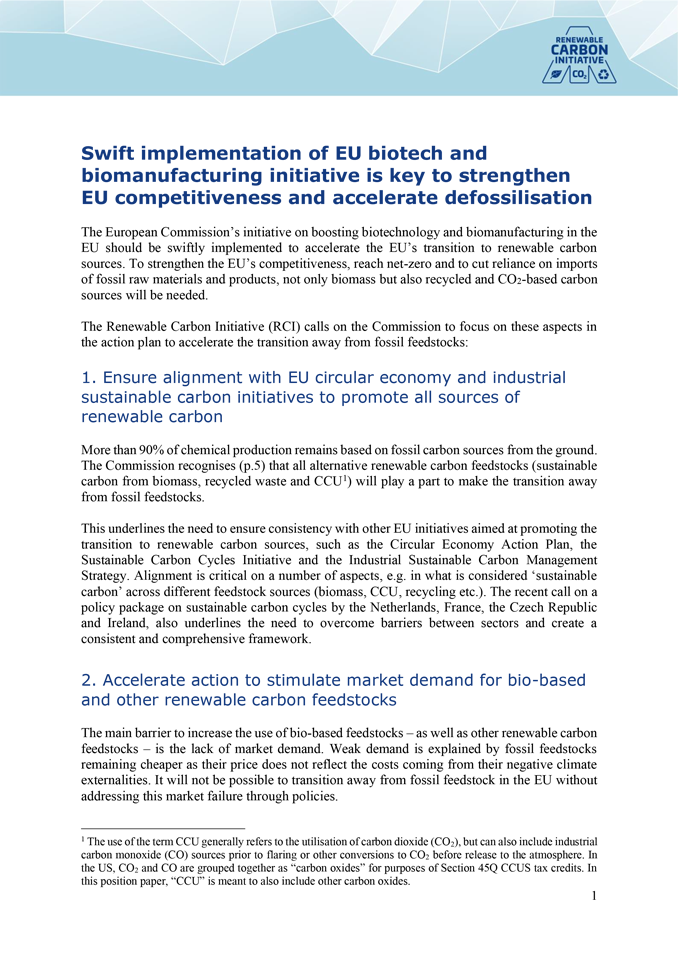
    swift implementation of eu biotech and biomanufacturing initiative is key to strengthen eu competitiveness and accelerate defossilisation (pdf)

    RCI’s position paper: “Swift implementation of EU biotech and biomanufacturing initiative is key to strengthen EU competitiveness and accelerate defossilisation (PDF)”

    Markets & Economy, Policy, Sustainability & Health

    3 Pages
    474 Downloads

    474 Downloads  

    2024-09

    FREE

    Free Shipping
     

    474
    Downloads

    Direct Download

    The Renewable Carbon Initiative’s position paper emphasizes that the EU must swiftly implement its biotechnology and biomanufacturing initiative to accelerate the shift from fossil carbon to renewable sources and boost competitiveness. The Renewable Carbon Initiative (RCI) highlights three key actions:

    1.) Align with Circular Economy Policies: Ensure consistency across EU initiatives to promote renewable carbon from biomass, recycling, and CCU.

    2.) Boost Market Demand: Address the lack of demand for renewable feedstocks by implementing policies to make fossil alternatives less competitive.

    3.) Enable Fossil-to-Renewable Transition: Repurposing current fossil-based manufacturing to use renewable feedstocks. Clear sustainability criteria, access to various biomass sources, and broader definitions of biomanufacturing processes are essential to achieving this transition.

    These actions are vital for achieving net-zero goals and strengthening EU industry.

  • Direct Download
    renewable carbon initiative (rci) webinar slides – july 2024 (pdf)

    Renewable Carbon Initiative (RCI) Webinar slides – July 2024 (PDF)

    Policy, Sustainability & Health, Technology

    60 Pages
    509 Downloads

    509 Downloads  

    2024-07

    FREE

    Free Shipping
     

    509
    Downloads

    Direct Download

    This document contains a generic set of slides to introduce the concept of renewable carbon and the Renewable Carbon Initiative. The focus of this webinar is the work and impact of the RCI. Moreover, Arndt Scheidgen, Head of Product Stewardship at Henkel Consumer Brands joined the webinar to give insights as an industry leader.

  • Direct Download
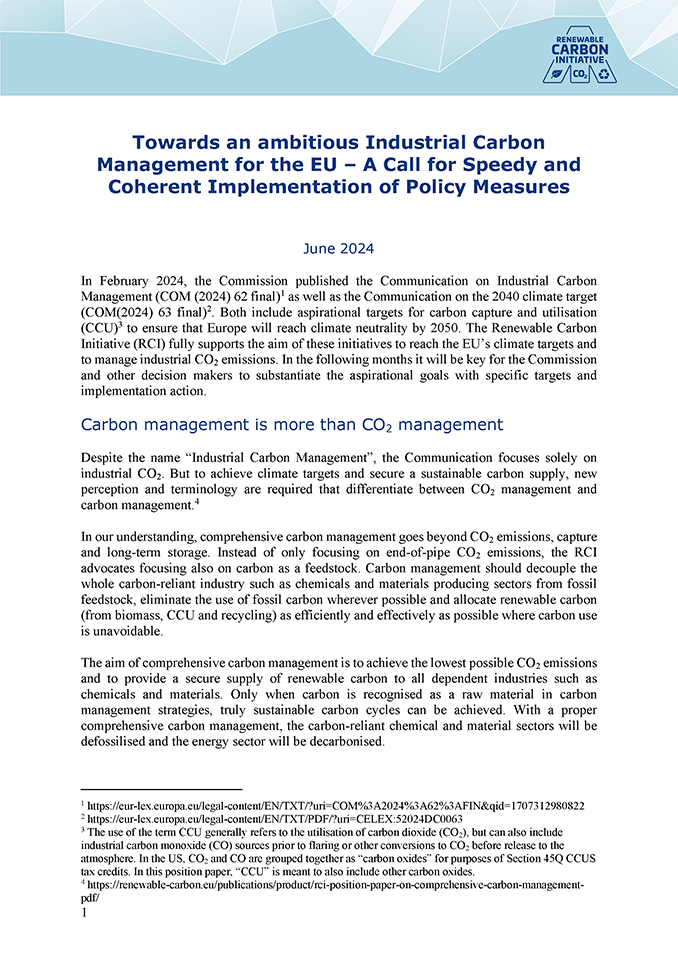
    towards an ambitious industrial carbon management for the eu – a call for speedy and coherent implementation of policy measures (pdf)

    RCI’s position paper: “Towards an ambitious Industrial Carbon Management for the EU – A Call for Speedy and Coherent Implementation of Policy Measures (PDF)”

    Markets & Economy, Policy, Sustainability & Health

    3 Pages
    497 Downloads

    497 Downloads  

    2024-07

    FREE


    497
    Downloads

    Direct Download

    The Renewable Carbon Initiative’s position paper emphasizes the need for a comprehensive industrial carbon management strategy in the EU that goes beyond CO2 emissions to include all carbon sources, promoting the use of renewable carbon from biomass, CCU, and recycling. It calls for the establishment of a regulatory framework with specific sub-targets and incentives by 2025 to accelerate the adoption of circular carbon technologies and reduce dependence on fossil feedstocks. The paper argues that recognising carbon as a raw material is essential for achieving sustainable carbon cycles and meeting the EU’s climate neutrality goals by 2050.


  • Direct Download
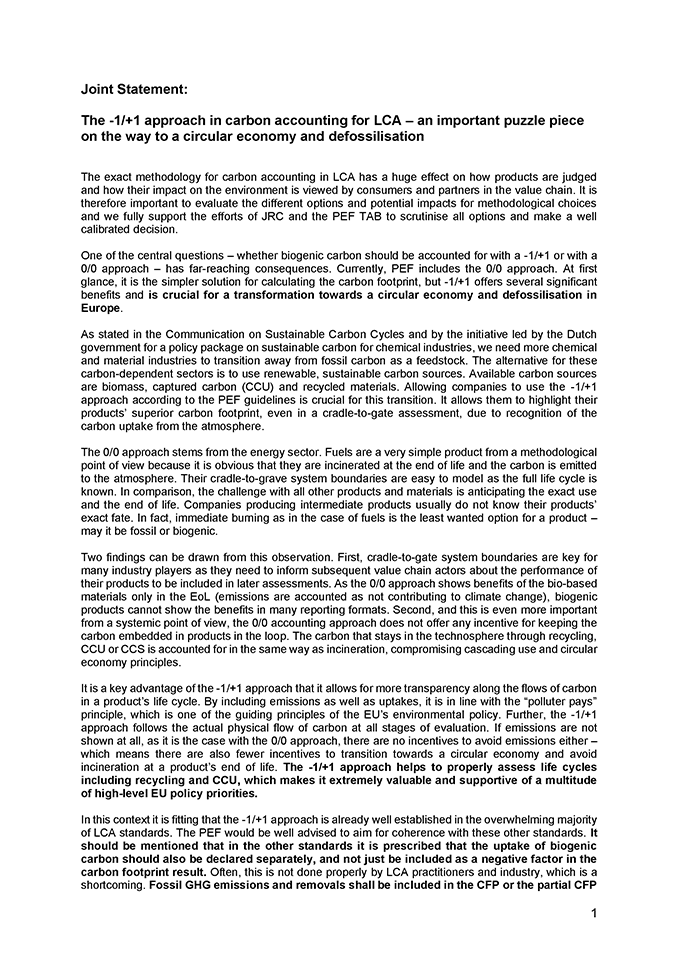
    24-06-25_Joint-Statement-Biogenic-Carbon-Modelling-PEF-TAB_thumbnail.

    Joint Statement PEF TAB – biogenic carbon modelling (PDF)

    Markets & Economy, Policy, Sustainability & Health

    4 Pages
    502 Downloads

    502 Downloads  

    2024-06

    FREE


    502
    Downloads

    Direct Download

    The RCI along with the organisations APAG Oleochemicals Europe, Bio-based Industries Consortium, BioChem Europe, EuropaBio, GO!PHA, IKT Kunststofftechnik Stuttgart and Plastics Europe submitted this Joint Statement to the members of the Technical Advisory Boyard of the Product Environmental Footprint (PEF TAB). The purpose of this submission is to address the ongoing discussions on carbon modelling in the EF, which have been frequently discussed in recent PEF TAB meetings. With this joint statement we advocate for enabling -1/+1 accounting of biogenic and atmospheric carbon in the LCA methodology.

  • Direct Download
    (pdf)

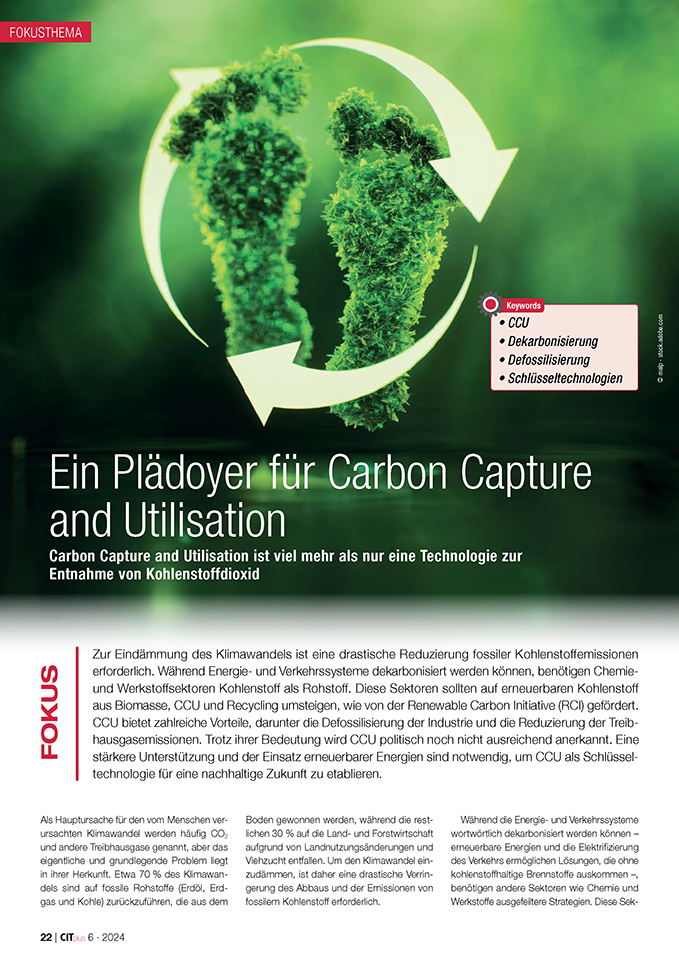
    Ein Plädoyer für Carbon Capture and Utilisation – Carbon Capture and Utilisation ist viel mehr als nur eine Technologie zur Entnahme von Kohlenstoffdioxid (PDF)

    Markets & Economy, Policy, Sustainability & Health

    4 Pages
    401 Downloads

    401 Downloads  

    2024-06

    FREE


    401
    Downloads

    Direct Download

    Zur Eindämmung des Klimawandels ist eine drastische Reduzierung fossiler Kohlenstoffemissionen erforderlich. Während Energie- und Verkehrssysteme dekarbonisiert werden können, benötigen Chemie- und Werkstoffsektoren Kohlenstoff als Rohstoff. Diese Sektoren sollten auf erneuerbaren Kohlenstoff aus Biomasse, CCU und Recycling umsteigen, wie von der Renewable Carbon Initiative (RCI) gefördert.

    CCU bietet zahlreiche Vorteile, darunter die Defossilisierung der Industrie und die Reduzierung der Treibhausgasemissionen.

    Trotz ihrer Bedeutung wird CCU politisch noch nicht ausreichend anerkannt. Eine stärkere Unterstützung und der Einsatz erneuerbarer Energien sind notwendig, um CCU als Schlüssel- technologie für eine nachhaltige Zukunft zu etablieren.

    Weitere Informationen:

    https://www.chemanager-online.com/news/ein-plaedoyer-fuer-carbon-capture-and-utilisation


  • Direct Download
    call for member states to support an eu sustainable carbon policy package as a part of a future green eu industrial deal (pdf)

    Breaking news – Milestone for the Transition to Sustainable Carbon in the European Chemical Industry (PDF)

    Policy

    4 Pages
    110 Downloads

    110 Downloads  

    2024-05

    FREE

    Free Shipping
     

    110
    Downloads

    Direct Download

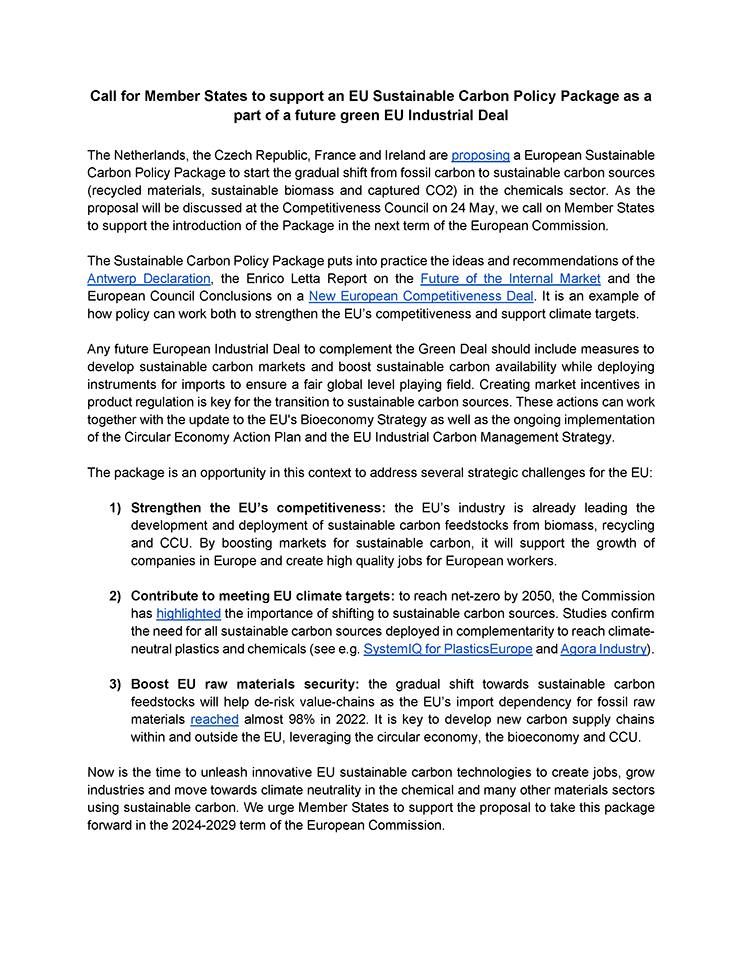
    On 16 April 2024, a major milestone was reached in the European chemical industry’s transition to sustainable carbon.

    A group of four EU member states – the Netherlands, France, Ireland and the Czech Republic – are proposing an overarching long-term European policy framework to the European Commissioner for Climate Action, Wopke Hoekstra, who has warmly welcomed the initiative. The joint statement aims to achieve a transition from fossil to sustainable carbon feedstocks in the chemical industry.

    More supportive Member States are expected to join this proposal soon, as it provides a clear pathway without alternative to ensure the transition towards a modern and globally competitive chemical industry in Europe – which at the same time can also achieve sustainability and net-zero targets. The Joint Statement is a milestone and a significant opportunity to limit Europe’s external dependencies while moving closer to our European climate and environmental goals.

  • Direct Download
    breaking news – milestone for the transition to sustainable carbon in the european chemical industry (pdf)

    Call for Member States to support an EU Sustainable Carbon Policy Package as a part of a future green EU Industrial Deal (PDF)

    Markets & Economy, Policy, Sustainability & Health

    2 Pages
    418 Downloads

    418 Downloads  

    2024-05

    FREE

    Free Shipping
     

    418
    Downloads

    Direct Download

    The signatories of this proposal urge Member States to support the EU Sustainable Carbon Policy Package for the 2024-2029 term of the European Commission.

    The Netherlands, the Czech Republic, France, and Ireland are advocating for an EU Sustainable Carbon Policy Package to transition the chemicals sector from fossil carbon to sustainable sources. This proposal, to be discussed at the Competitiveness Council on May 24, aims to enhance EU competitiveness, achieve climate targets, and secure raw material supplies by developing sustainable carbon markets and promoting innovative technologies. The initiative aligns with the Antwerp Declaration, the Enrico Letta Report, and the European Council Conclusions, and seeks to support job creation, industry growth, and climate neutrality.

  • Direct Download
    rci position paper on chemical and physical recycling (pdf)

    RCI Position Paper on Chemical and Physical Recycling (PDF)

    Policy, Technology

    4 Pages
    988 Downloads

    988 Downloads  

    2024-05

    FREE

    Free Shipping
     

    988
    Downloads

    Direct Download

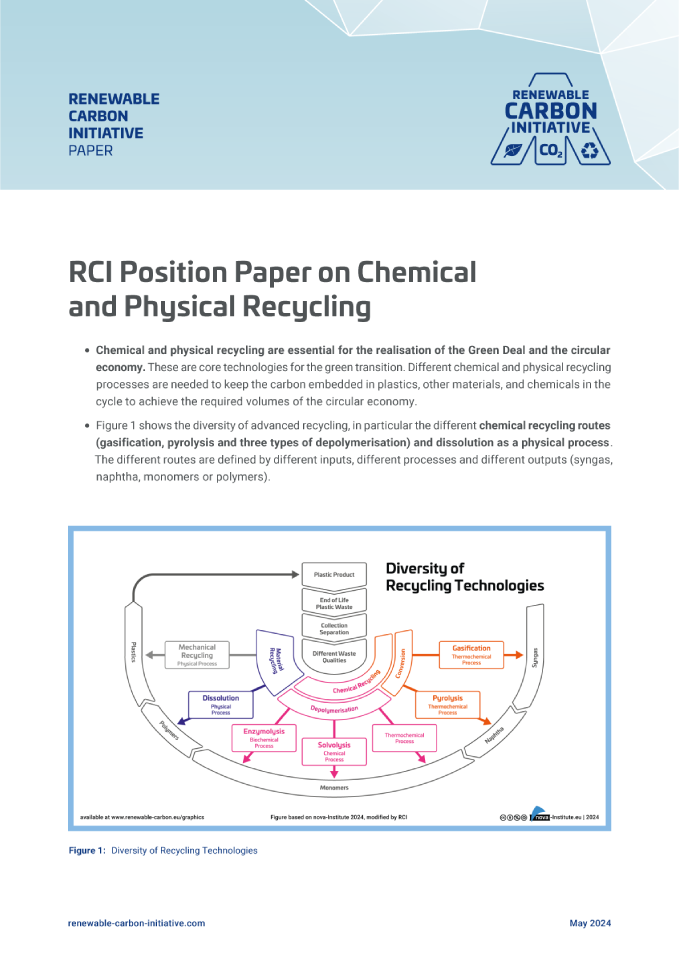
    In this position paper, the RCI describes that chemical and physical recycling play essential roles in realising the objectives of the Green Deal and advancing the circular economy. These technologies are indispensable for the green transition.

    This position paper identifies eleven requirements to create secure demand, drive investment and further improve the technology field. These include general acceptance of the technology; mandatory recycled content for all polymers/plastics in all applications; recognition and clarification of rules for the calculation of recycling rates; full acceptance of mass balance & attribution with fuel-use excluded; accelerated approval of new chemical and physical recycling facilities; expansion of recycling infrastructure for all sectors beyond packaging; and the extension of CO2 pricing for waste incineration in the ETS combined with a landfill ban.

    Additionally, RCI advocates for a pragmatic approach, emphasising that while closed-loop recycling is a noble goal for sectors such as packaging, textiles and automobiles, it should not be approached too dogmatically. Flexibility is essential to prevent environmental and economic inefficiencies. If the waste stream of one sector can be better used in another, this should be possible.

  • Direct Download
    renewable carbon initiative (rci) webinar slides – april 2024 (pdf)

    Renewable Carbon Initiative (RCI) Webinar slides – April 2024 (PDF)

    Markets & Economy, Policy, Technology

    43 Pages
    212 Downloads

    212 Downloads  

    2024-05

    FREE

    Free Shipping
     

    212
    Downloads

    Direct Download

    This document contains a generic set of slides to introduce the concept of renewable carbon and the Renewable Carbon Initiative. The focus of this webinar was the upcoming position paper on Chemical and Physical Recycling.

  • Direct Download
    renewable carbon initiative (rci) webinar slides – february 2024 (pdf)

    Renewable Carbon Initiative (RCI) Webinar slides – February 2024 (PDF)

    Policy, Sustainability & Health

    61 Pages
    1768 Downloads

    1768 Downloads  

    2024-02

    FREE

    Free Shipping
     

    1768
    Downloads

    Direct Download

    This document contains a generic set of slides to introduce the concept of renewable carbon and the Renewable Carbon Initiative. The focus of this webinar was the latest scientific background report: “Non-level Playing Field for Renewable Materials vs. Fossil in Life Cycle Assessments – Critical aspects of the JRC Plastics LCA methodology and its policy implications”.

    In addition, three RCI member companies shared their expertise on renewable carbon, defossilisation and sustainable carbon cycles.

    AllocNow (speaker: Daniel Bochnitschek) talked about how the increasing demand for sustainable and low carbon products is driving the need for specific and comprehensive information on product carbon footprints. AllocNow discussed why standardisation of sustainability accounting methodologies is critical and how a data-driven approach can help create transparency at scale.

    Econic Technologies Ltd. (speaker: Liz Manning) spoke about the opportunities and challenges of quantifying the sustainability impact of key products in complex manufacturing supply chains.

    SCS Global Services (speakers: Miguel Ruiz and Jéssica Marcon Bressanin) highlighted its certification activities, focusing on biofuels and circular materials schemes, as well as greenhouse gas accounting methodologies.

    More information at https://renewable-carbon-initiative.com/media/library

  • Direct Download
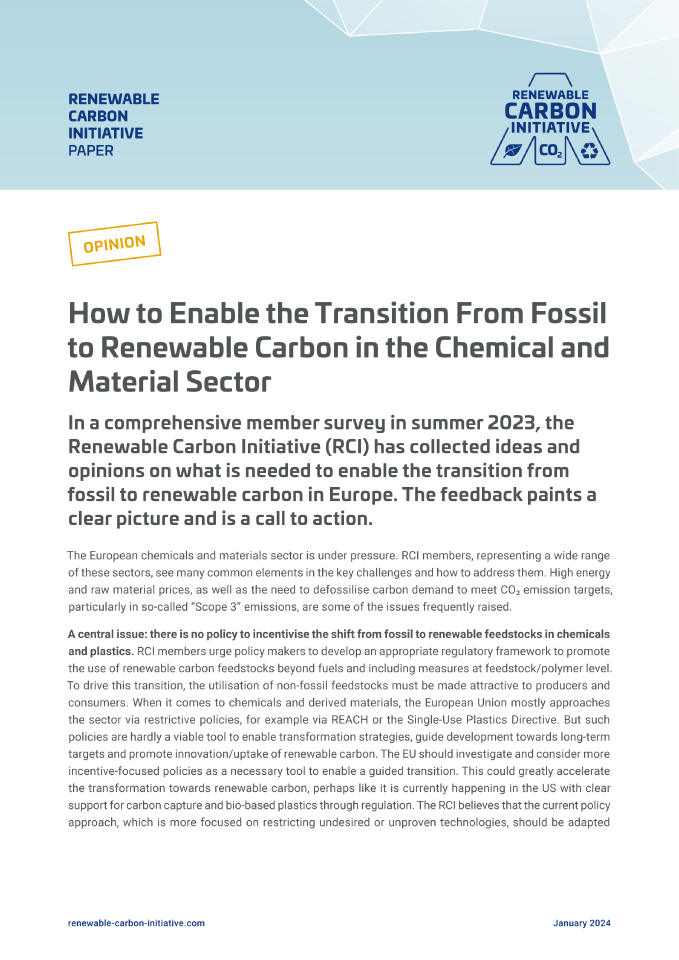
    rci’s internal survey: „how to enable the transition from fossil to renewable carbon in the chemical and material sector“ (january 2024)

    RCI’s Internal Survey: „How to enable the transition from fossil to renewable carbon in the chemical and material sector“ (January 2024)

    Policy, Sustainability & Health

    3 Pages
    665 Downloads

    665 Downloads  

    2024-01

    FREE


    665
    Downloads

    Direct Download

    In a comprehensive member survey in summer 2023, the Renewable Carbon Initiative (RCI) has collected ideas and opinions on what is needed to enable the transition from fossil to renewable carbon in Europe. The feedback paints a clear picture and is a call to action.

    The European chemicals and materials sector is under pressure. RCI members, representing a wide range of these sectors, see many common elements in the key challenges and how to address them. High energy and raw material prices, as well as the need to defossilise carbon demand to meet CO2 emission targets, particularly in so-called “Scope 3” emissions, are some of the issues frequently raised.

  • Direct Download
    21 04 22 rc comic slides shop preview

    Nora and her flyphone on renewable carbon

    Policy, Sustainability & Health

    11 Pages
    1303 Downloads

    1303 Downloads  

    2024-01

    FREE


    1303
    Downloads

    Direct Download
  • Direct Download
    21 04 22 rc comic din a4 shop preview

    Nora and her flyphone on renewable carbon (Comic)

    Policy, Sustainability & Health

    2 Pages
    856 Downloads

    856 Downloads  

    2024-01

    FREE


    856
    Downloads

    Direct Download
  • Direct Download
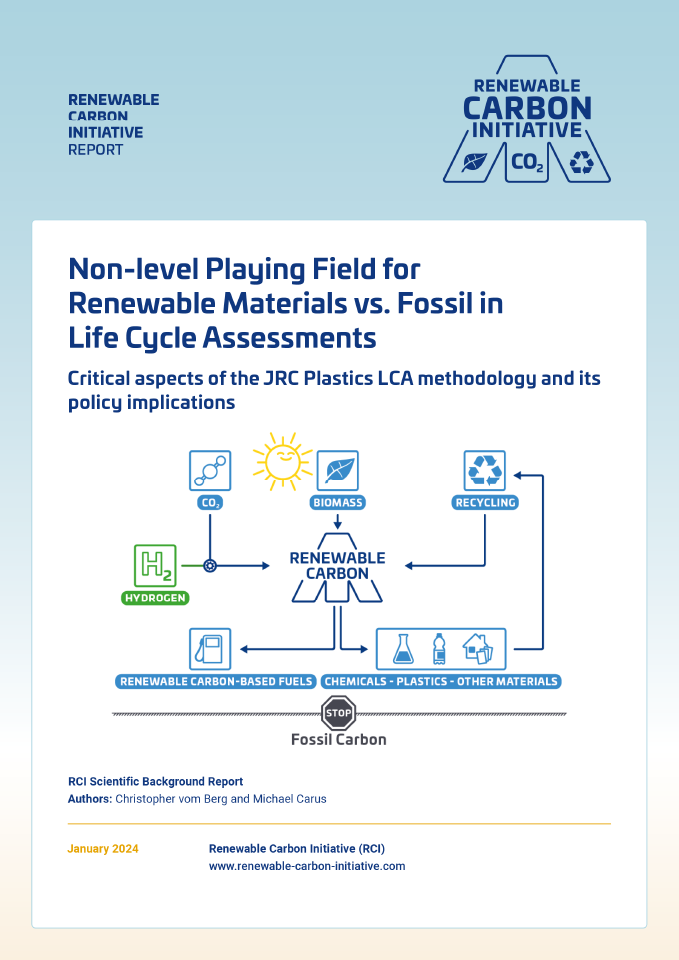
    rci: non level playing field for renewable materials vs. fossil in life cycle assessments

    RCI’s scientific background report: “Non-level playing field for renewable materials vs. fossil in Life Cycle Assessments” (January 2024)

    Policy, Sustainability & Health

    44 Pages
    1550 Downloads

    1550 Downloads  

    2024-01

    FREE


    1550
    Downloads

    Direct Download

    Critical aspects of the JRC Plastics LCA methodology and its policy implications

    This RCI Scientific Background Report was mainly motivated by a study published by JRC in 2021 with the title: “LCA of alternative feedstocks for plastic products”, commonly referred to as the JRC Plastics LCA Method (Nessi et al. 2021).

    Alternative feedstocks refer to the same three feedstocks that RCI defines as renewable carbon: biomass, CO2 utilisation and recycling. The study describes a methodology developed by the JRC to compare the environmental performance of alternative feedstocks with fossil-based plastic products. However, the methodology has also been subject to criticism from various stakeholders, mainly from the bio-based sector, eliciting responses from the JRC.

    This RCI report is mainly aiming to provide additional context to highlight issues that might arise with implementation of the JRC Plastics LCA methodology, and dives deeper into five aspects:

    1. The fossil footprint is likely underestimated, not transparent and lacks regional differentiation
    2. Renewable feedstocks are more cirtically evaluated than fossil feedstocks
    3. Methodological inconsistency and different regulatory support between energy and material use of renewable feedstocks
    4. Biogenic/Atmospheric carbon uptake cannot be transparently visualised at factory in PEF / JRC Plastics LCA methodologies
    5. The methodology should acknowledge the wider interface of sustainability assessment, policy design and landscape

    The report contains several recommendations to remedy the above-mentioned aspects.

    DOI No.: https://doi.org/10.52548/KOTY2900

  • Direct Download
    23 06 13 cover food paper short version thumbnail

    RCI’s scientific background report: “The use of food and feed crops for bio-based materials and the related effects on food security – Promoting evidence-based debates and recognising potential benefits” (June 2023) Short Version

    Markets & Economy, Policy, Sustainability & Health, Technology

    2 Pages
    993 Downloads

    993 Downloads  

    2023-11

    FREE


    993
    Downloads

    Direct Download

    Promoting Evidence-based Debates and Recognising Potential Benefits

    This short version of the scientific paper highlights on two pages new insights into a hotly debated topic and urges for careful and evidence-based debates.

    The paper aims to show that the well-known biomass debate is flawed, subjective and not fully based on evidence. What is detrimental to food security are, according to the World Food Programme in 2023, climate change, conflict, extreme inequalities in wealth distribution, heavy dependence on food imports from industrial countries, overconsumption of meat, losses along the value chain and the impact of the COVID pandemic. Competition between biomass uses is not mentioned among the relevant causes.

    The use of biomass for industrial applications, does have the potential to replace fossil feedstocks and thus contribute to the urgently needed reduction of fossil carbon emissions into our atmosphere to mitigate climate change.

    While not denying the dire need to combat world hunger, the authors of the paper argue that using food and feed crops for chemicals and materials will not necessarily exacerbate food insecurity, and in fact has the potential to cause multiple benefits for local and global food security, climate mitigation and other factors:

    1. The climate wins – Bio-based materials are part of the solution to achieve climate change mitigation.
    2. Land productivity wins – The competition between applications is not for the type of crop grown, but for the land.
    3. The environment wins – due to increased resource efficiency and productivity of food and feed crops.
    4. Farmers win – because they have more options for selling stock to different markets.
    5. Market stability wins – due to increased global availability of food and feed crops.
    6. Feed security wins – due to the high value of the protein-rich co-products of food and feed crops.
    7. Food security wins – due to the increased overall availability of edible crops that can be stored and flexibly distributed.
  • Direct Download
    rci scientific background report: case studies baed on peer reviewed life cycle assessments – carbon footprints of different carbon based chemicals and materials (pdf)

    RCI’s scientific background report: “Case studies based on peer-reviewed Life Cycle Assessments – Carbon footprints of different carbon-based chemicals and materials” (November 2023)

    Sustainability & Health

    39 Pages
    2273 Downloads

    2273 Downloads  

    2023-11

    FREE


    2273
    Downloads

    Direct Download

    In this brochure, the RCI (https://renewable-carbon-initiative.com) presents five peer-reviewed LCA case studies – representing the highest possible scientific standard – that examine the carbon footprint of materials and products made from renewable carbon. These case studies are on products from RCI member companies Avantium (NL), BASF (DE), IFF (US), Lenzing (AT), Neste (FI) and all LCAs have been peer-reviewed by external experts. The LCAs have been summarised by experts of nova-Institutes sustainability team.

    The case studies visualise that there are not only competitive materials and products made of renewable carbon already on the market, but that they also come with significantly lower carbon footprints ranging from 30–90%.

    A key aspect of replacing fossil carbon with renewable carbon is the gained circularity of carbon. The less additional fossil carbon is added to our above-ground cycle of atmosphere, biosphere and technosphere, the smaller will be the amount of carbon emissions that have to be balanced out with expensive atmospheric removal and underground storage of carbon.

    It is essential to recognise that the carbon footprint of renewable carbon-based materials is not automatically close to zero for two primary reasons:

    • Fossil energy in the value chain
    • Ongoing innovation and optimisation

    All in all, the here presented materials and products show reduced carbon footprints already today, which lowers the remaining emissions gap so that less CO2 needs to be removed from the atmosphere in the future. At the same time, these materials and products still have significant potential to further reduce emissions in the future.

    DOI No.: https://doi.org/10.52548/YYZY2819

  • Direct Download
    rci position paper on comprehensive carbon management (pdf)

    RCI’s position paper: “Comprehensive carbon management“ (October 2023)

    Policy

    3 Pages
    357 Downloads

    357 Downloads  

    2023-10

    FREE


    357
    Downloads

    Direct Download

    This position paper describes that our understanding that new thinking and terminology are required to achieve climate targets and secure a sustainable carbon supply

    Comprehensive carbon management goes beyond CO2 emissions, capture and long-term storage, to which it is often reduced to. It decouples the whole industry from fossil feedstock, eliminates the use of fossil carbon wherever possible and allocates renewable carbon (from biomass, CO2 and recycling) as efficiently and effectively as possible where carbon use is unavoidable. The aim is to achieve the lowest possible CO2 emissions, reducing the need for Carbon Dioxide Removal to achieve net zero, and to provide a secure supply of renewable carbon to all dependent industries such as chemicals and materials. Only when carbon is recognised as a raw material in carbon management strategies can truly sustainable carbon cycles be achieved. With a proper comprehensive carbon management, the carbon-reliant material and energy sectors will be defossilised and the remaining energy sector will be decarbonised. And only for the remaining share of truly unavoidable emissions, carbon dioxide removal and carbon capture and storage should come into play.

  • Direct Download
    joint letter: carbon capture and utilisation (ccu) should be recognised as a strategic net zero technology in the eu net zero industry act (pdf)

    Joint Letter: Carbon Capture and Utilisation (CCU) should be recognised as a Strategic Net Zero Technology in the EU Net Zero Industry Act (PDF)

    Policy

    2 Pages
    78 Downloads

    78 Downloads  

    2023-10

    FREE


    78
    Downloads

    Direct Download

    A co-signed letter with CO2 Value Europe, Cefic – European Chemical Industry Council, the European Cement Association (CEMBUREAU), The Confederation of European Waste-to-Energy Plants (CEWEP), UPEI – the Voice of Europe’s Independent Fuel Suppliers, eFuel Alliance, Eurogas, The European Steel Association (EUROFER), FuelsEurope, Methanol Institute and the European Confederation of Fuel Distributors (ECFD) that calls on Members of the EU Parliament and EU Member States to take position to include CCU technologies as part – along with CCS – of the list of strategic net-zero technologies in the Net Zero Industry Act (NZIA).


Renewable Carbon Types

Topics

  • 1
  • 2
  • 3

nova-Logo
contact@nova-institut.de
www.nova-institute.eu

nova-Institut GmbH
Leyboldstr. 16
50354 Hürth / Germany

  • Renewable Carbon
  • Events
  • Publications
  • Graphics
  • News
  • Business Directory
  • Newsletter
  • nova-Institute
  • My account
  • Legal Information
  • Terms and Conditions
  • Data protection regulation
© 2026 nova-Institut GmbH
Renewable Carbon Publications - Logo

Login

Lost your password?