Showing 41–60 of 200
-
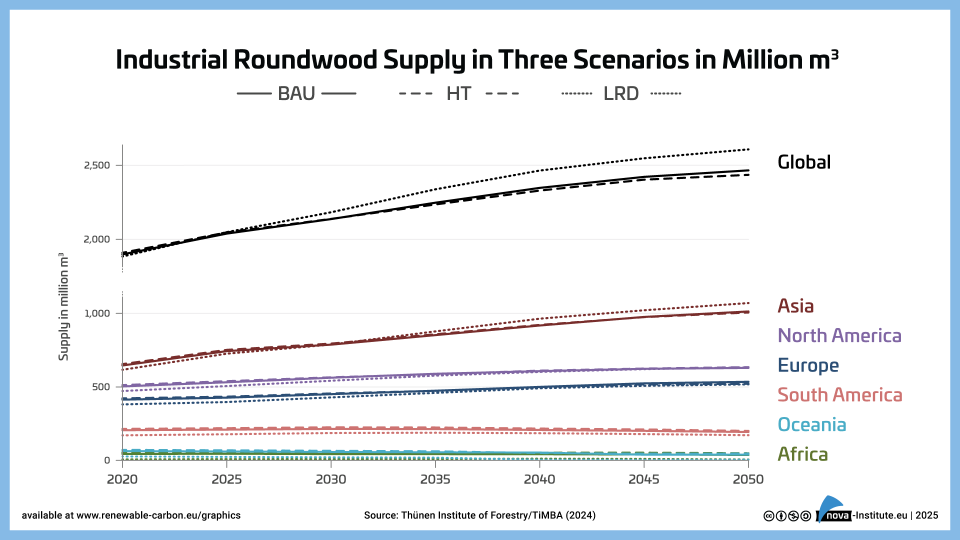
Industrial Roundwood Production in Three Scenarios in Million m3 – Graphic (PNG)
Markets & Economy, Policy, Sustainability & Health
1 Page
7 Downloads
7 Downloads
2025-01
FREE
7
Downloads -
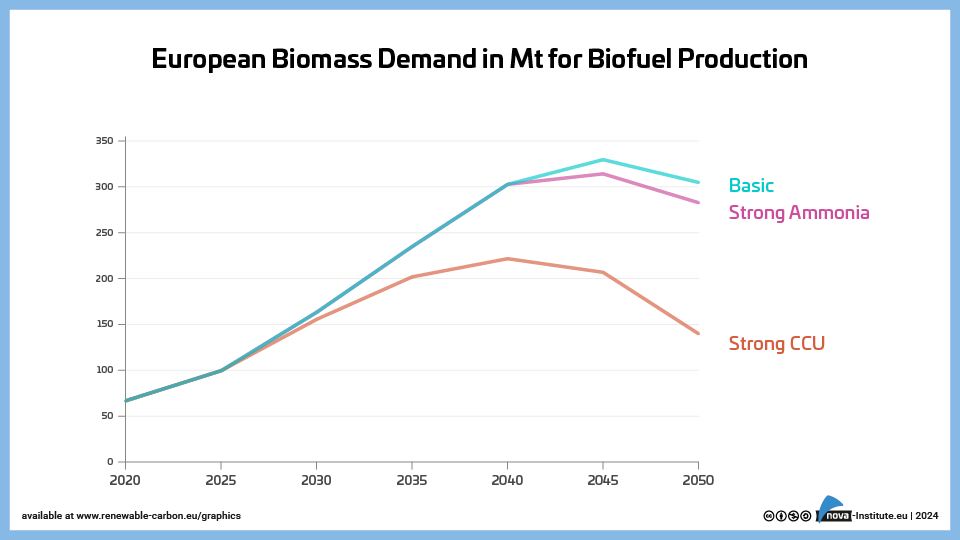
European Biomass Demand in Mt for Biofuel Production – Graphic (PNG)
Markets & Economy, Policy, Sustainability & Health
1 Page
31 Downloads
31 Downloads
2025-01
FREE
31
Downloads -
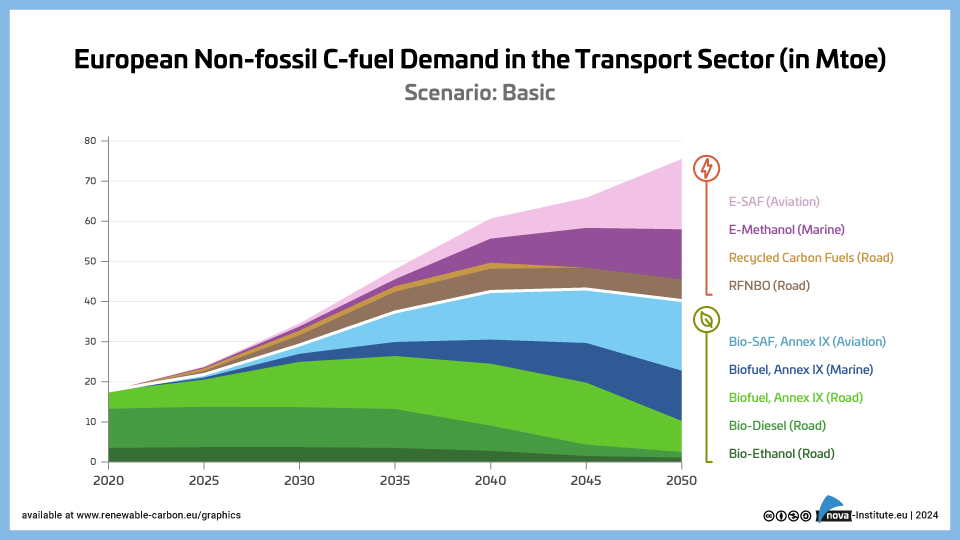
European Non-fossil C-fuel Demand in the Transport Sector – Basic – Graphic (PNG)
Markets & Economy, Policy, Sustainability & Health
1 Page
28 Downloads
28 Downloads
2025-01
FREE
28
Downloads -
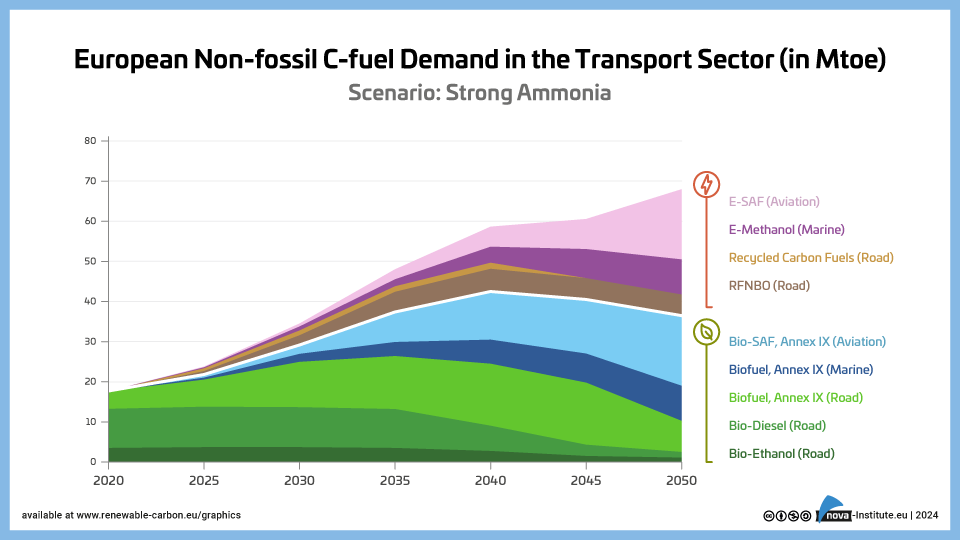
European Non-fossil C-fuel Demand in the Transport Sector – Strong Ammonia – Graphic (PNG)
Markets & Economy, Policy, Sustainability & Health
1 Page
8 Downloads
8 Downloads
2025-01
FREE
8
Downloads -
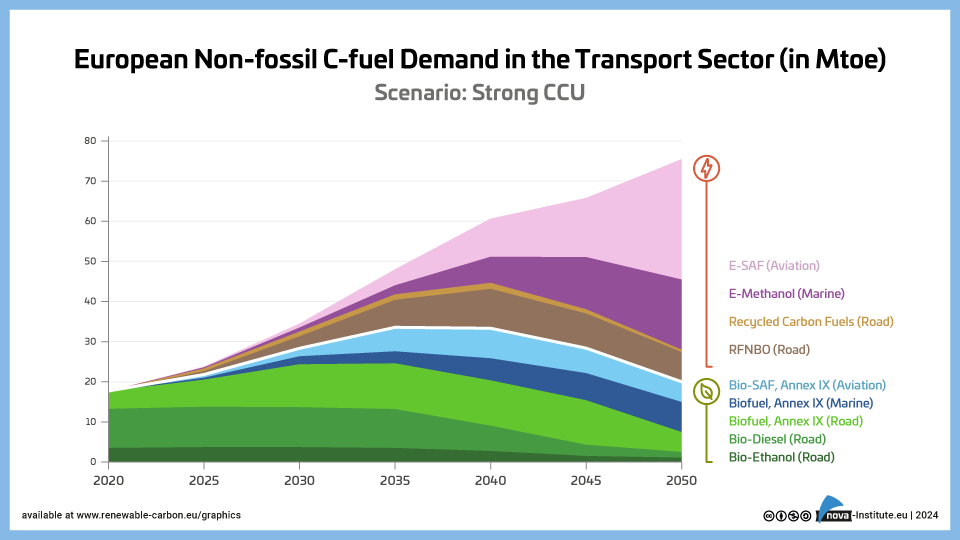
European Non-fossil C-fuel Demand in the Transport Sector – Strong CCU – Graphic (PNG)
Markets & Economy, Policy, Sustainability & Health
1 Page
19 Downloads
19 Downloads
2025-01
FREE
19
Downloads -
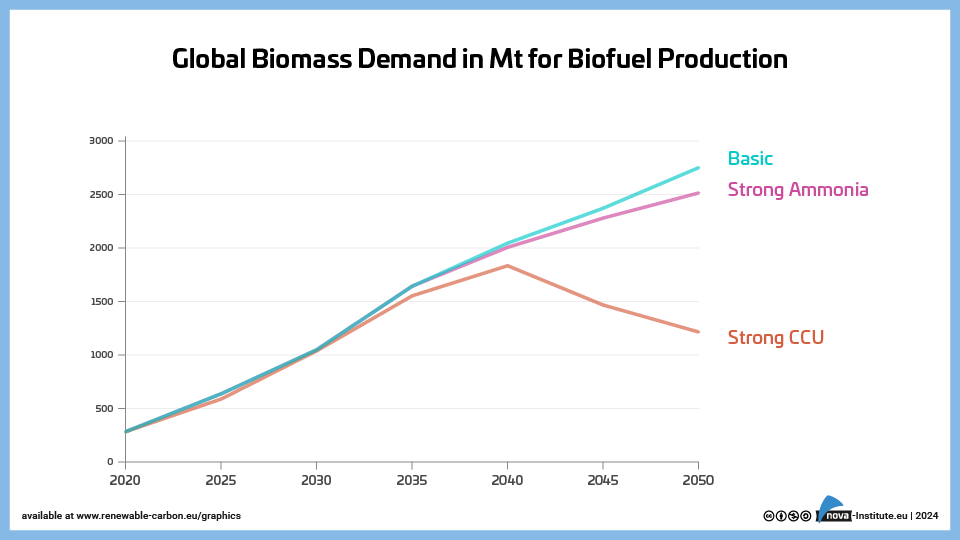
Global Biomass Demand in Mt for Biofuel Production – Graphic (PNG)
Markets & Economy, Policy, Sustainability & Health
1 Page
24 Downloads
24 Downloads
2025-01
FREE
24
Downloads -
Net-Zero Plastics – Evaluation of Feedstock (%) Across 10 Scenarios from 7 Reports 2050 – Graphic (PNG)
Markets & Economy, Policy, Sustainability & Health
1 Page
114 Downloads
114 Downloads
2024-11
FREE
114
DownloadsThe graph illustrates feedstock projections specifically for the plastics sector by 2050, analysing 10 scenarios from 7 reports, where recycling emerges as the dominant feedstock at 42% (combining mechanical and chemical recycling), while biomass (21%), CCU (17%), and fossil with CCS (19%) play supporting roles. The data shows less variation in projections compared to the chemical industry overall, suggesting stronger agreement on the future role of recycling in plastics production.
-
Net-Zero Chemical Industry – Evaluation of Feedstock (%) Across 16 Scenarios from 9 Reports 2050 – Graphic (PNG)
Markets & Economy, Policy, Sustainability & Health
1 Page
95 Downloads
95 Downloads
2024-11
FREE
95
DownloadsThe graph shows the distribution of feedstock sources for the net-zero chemical industry by 2050, based on 16 scenarios from 9 reports, with CCU having the highest mean share at 33%, followed by biomass (22%), recycling (20%, split between mechanical and chemical), and fossil with CCS (24%). The data reveals significant variability across scenarios, particularly for CCU which ranges from near 0% to 90%, while both biomass and recycling show more moderate ranges, indicating a general consensus on their roles in the future chemical industry.
-
Net-Zero Plastics – Mean Feedstock Shares (%) Across 10 Scenarios From 7 Reports – Graphic (PNG)
Markets & Economy, Policy, Sustainability & Health
1 Page
81 Downloads
81 Downloads
2024-11
FREE
81
DownloadsThe graph presents the mean feedstock shares for the 2050 net-zero plastics sector, derived from 10 scenarios across 7 reports. In this projection, recycling dominates with a 42% share, followed by biomass (21%), fossil & CCS (19%), and CCU (17%), highlighting the increased potential for circularity in the plastics industry compared to the broader chemical sector.
-
Net-Zero Chemical Industry – Mean Feedstock Shares (%) Across 16 Scenarios From 9 Reports – Graphic (PNG)
Markets & Economy, Policy, Sustainability & Health
1 Page
61 Downloads
61 Downloads
2024-11
FREE
61
DownloadsThe graph illustrates the mean feedstock shares projected for the 2050 net-zero chemical industry, based on 16 scenarios across 9 reports. The chart shows a diverse mix of feedstocks, with CCU (33%) and recycling (20%) playing significant roles alongside biomass (22%), while fossil & CCS still account for 24% of the feedstock share.
-
273 Downloads
2024-11
FREE
273
DownloadsDas gesamte Spektrum der verfügbaren Recyclingtechnologien, unterteilt nach ihren grundlegenden Funktionsprinzipien und ihren Produkten.
-
707 Downloads
2024-11
FREE
707
DownloadsFull spectrum of available recycling technologies divided by their basic working principles and their products.
-
Biodegradable Polymers in Various Environments According to Established Standards and Certification Schemes – Graphic (PDF, current version)
Sustainability & Health
1 Page
1499 Downloads
1499 Downloads
2024-08
FREE
1499
DownloadsThird update of the well-known poster showing biodegradable polymers in different environments according to established standards and certification schemes.
The expert group met again this year to discuss the latest scientific evidence in the field of biodegradable polymers in order to make meaningful changes to the poster. The generic classification on the poster is only supported by tests performed in the context of certification. Therefore, the expert group decided to include the biodegradability of polycaprolactone (PCL) in additional environments: soil, freshwater, marine and anaerobic conditions. In addition, a new certification for marine biodegradability has been published by DIN CERTCO in 2023, based on ISO 22403, the standard that provides requirements for marine biodegradability, and is now mentioned on the poster. A new poster design and a more precise definition of biodegradation and biodegradability complete the update for this year.
-
Biodegradable Polymers in Various Environments According to Established Standards and Certification Schemes – Graphic (PNG, current version)
Sustainability & Health
1 Page
686 Downloads
686 Downloads
2024-08
FREE
686
DownloadsThird update of the well-known poster showing biodegradable polymers in different environments according to established standards and certification schemes.
The expert group met again this year to discuss the latest scientific evidence in the field of biodegradable polymers in order to make meaningful changes to the poster. The generic classification on the poster is only supported by tests performed in the context of certification. Therefore, the expert group decided to include the biodegradability of polycaprolactone (PCL) in additional environments: soil, freshwater, marine and anaerobic conditions. In addition, a new certification for marine biodegradability has been published by DIN CERTCO in 2023, based on ISO 22403, the standard that provides requirements for marine biodegradability, and is now mentioned on the poster. A new poster design and a more precise definition of biodegradation and biodegradability complete the update for this year.
-
Mass Balance & Attribution With Fuel-use Excluded (PNG)
Markets & Economy, Policy, Sustainability & Health, Technology
1 Page
284 Downloads
284 Downloads
2024-06
FREE
284
DownloadsThe graphic shows the approach of mass balance and attribution with fuel-use excluded which allows to track the fossil and recycled share of feedstock. The recycled content can be attributed to products after deducting lossess and proess energy during production and, if applicable, produced energy carriers (fuel-use excluded). This approach ensures that a transparent amount of fossil feedstock is replaced by recycled feedstock in the production process and that only recycled feedstock that actually ends up in products can be attributed.
-
Bioplastics Production Capacity in China 2019–2026 – Graphic (PNG)
Markets & Economy, Policy, Sustainability & Health
1 Page
47 Downloads
47 Downloads
2024-05
FREE
47
Downloads -
Biodegradable Plastics PLA and PBAT Production Capacity 2021-2025 – Graphic (PNG)
Markets & Economy, Policy, Sustainability & Health
1 Page
39 Downloads
39 Downloads
2024-05
FREE
39
Downloads -
309 Downloads
2024-03
FREE
309
Downloads -
Global Production Capacities of Bio-based Polymers per Region 2022 (PNG)
Markets & Economy
1 Page
158 Downloads
158 Downloads
2024-03
FREE
158
Downloads -
544 Downloads
2024-03
FREE
544
Downloads

nova-Session: “Bio- and CO₂-based Polymers: Production, Trends 2022-2027 and the latest Policy Developments” (Proceedings, PDF) [Digital]