Showing 41–60 of 83
-
7th Conference on CO2 as Feedstock for Fuels, Chemistry and Polymers 2019 Proceedings
Markets & Economy
65 Downloads
65 Downloads
2019-03
FREE
Plus 19% MwSt.Free Shipping65
Downloads -
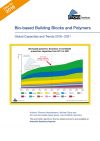
Bio-based Building Blocks and Polymers – Global Capacities and Trends 2018-2023 − Short version
Markets & Economy
16 Pages
3078 Downloads
3078 Downloads
2019-02
FREE
3078
Downloads -
Bio-based Building Blocks and Polymers – Global Capacities and Trends 2018-2023 − Content
Markets & Economy
8 Pages
1100 Downloads
1100 Downloads
2019-02
FREE
1100
Downloads -
Bio-based Building Blocks and Polymers Global Capacities and Trends 2018-2023
Markets & Economy
388 Pages
2019-02
100 € – 500 €Price range: 100 € through 500 € ex. tax
Plus 19% MwSt.Press
release Select
licence2018 was a very good year for bio-based polymers: Several additional capacities were put into operation
The new market and trend report “Bio-based Building Blocks and Polymers – Global Capacities, Production and Trends 2018-2023” from the German nova-Institute shows capacities and for the first time also production data for all bio-based polymers.
In 2018 the total production volume reached 7.5 million tonnes – these are already 2% of the production volume of petrochemical polymers. The potential is much higher, but is currently hampered by low oil prices and a lack of political support.
-
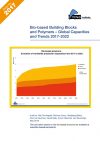
Bio-based Building Blocks and Polymers – Global Capacities and Trends 2017-2022 − Short version
Markets & Economy
16 Pages
3209 Downloads
3209 Downloads
2018-05
FREE
3209
Downloads -
Bio-based Building Blocks and Polymers – Global Capacities and Trends 2017-2022 − Content
Markets & Economy
10 Pages
1234 Downloads
1234 Downloads
2018-05
FREE
1234
Downloads -
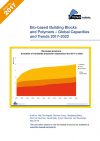
Bio-based Building Blocks and Polymers – Global Capacities and Trends 2017-2022
Markets & Economy
184 Pages
2018-05
100 € – 500 €Price range: 100 € through 500 € ex. tax
Plus 19% MwSt.Press
release Select
licenceStrong growth in bio-based building blocks and moderate growth in bio-based polymers
New comprehensive market and trend report “Bio-based Building Blocks and Polymers – Global Capacities and Trends 2017-2022” published by German nova-Institute
The production capacities of bio-based polymers continue to grow at around 3 to 4% per annum, i.e. at about the same rate as petrochemical polymers. Therefore, the market share of bio-based polymers in the total polymer market remains constant at around 2%. But the individual development of different bio-based polymers varies considerably. While some are virtually collapsing compared to previous forecasts (e.g. bio-PET), many are showing constant or slightly increasing capacities and a few are even showing significant growth (such as PLA). Additionally, for some bio-based polymers such as PHA, PEF, bio-PE and bio-PP, the prospects for the future are quite positive. Overall, the market environment remains challenging with low crude oil prices, little political support and partially underutilized capacities. Until now, the biodegradability of some bio-based polymers has not yet been able to generate a real advantage globally.
The new report is more than just an update, it differs from the previous versions in structure and content. It contains comprehensive information on capacity development from 2011 to 2022, per building block and polymer as well as information on 102 individual polymer producers. A total of 17 bio-based building blocks and 15 polymers are covered in the report. In addition, the new issue includes analyses of market developments per building block and polymer, so that readers can quickly gain an overview of developments that go far beyond capacity figures.
-
Bio-based Building Blocks and Polymers – Global Capacities and Trends 2017-2022 − Graphics
Markets & Economy
604 Downloads
604 Downloads
2018-05
FREE
604
Downloads -
6th Conference on Carbon Dioxide as Feedstock for Fuels, Chemistry and Polymers 2018 Proceedings
Markets & Economy
89 Downloads
89 Downloads
2018-03
FREE
Plus 19% MwSt.Free Shipping89
Downloads -
BIOVERBUNDWERKSTOFFE Naturfaserverstärkte Kunststoffe (NFK) und Holz-Polymer-Werkstoffe (WPC) − Langfassung
Markets & Economy, Technology
56 Pages
935 Downloads
935 Downloads
2017-12
FREE
935
Downloads -
2017-07
100 € – 500 €Price range: 100 € through 500 € ex. tax
Plus 19% MwSt.Press
release Select
licenceCommercialisation and development of novel bio-based building blocks are discussed in detail in nova-Institute’s new trend report
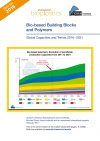
With the many shifts in economic and political trends over the last year, many bio-based investments are focusing on the core of the Bioeconomy: bio-based building blocks and platform chemicals. nova-Institute’s preliminary market study “Bio-based Building Blocks and Polymers – Global Capacities and Trends 2016–2021”, reports on seventeen building blocks with an estimated total production capacity of 2.4 million tons in 2016, expected to reach 3.5 million tons in 2021, and with a CAGR of 8%.
Commercialisation and development of these novel building blocks are discussed in more detail in the new nova Institute trend report, “Commercialisation Updates on Bio-Based Building Blocks”. The rise and wane of the markets for several established bio-based building blocks are also discussed fully including various technology processes, feedstock usage, supply/demand, and pricing whenever available for both incumbent petrochemicals and their bio-based chemical alternatives. -
2017-04
100 € – 500 €Price range: 100 € through 500 € ex. tax
Plus 19% MwSt.Press
release Select
licenceThe comprehensive trend report presents latest developments, producers, drivers and lessons learnt especially for PHA, PLA, PUR/TPU, PA and polymers based on furandicarboxylic acid (FDCA) and succinic acid (SA)
The conversion from hydrocarbons to carbohydrates and CO2 as feedstock to produce chemicals and polymers becomes more significant every year. It is anticipated that bio-based chemicals like adipic acid, butanediol, furandicarboxylic acid, lactic acid and succinic acid will form bio-based chemical platforms worth more than 30 billion € by 2030. Although these chemicals are to a large extent used for polymer production, there are also other polymer related developments focusing on renewable feedstock use.
The comprehensive trend report presents latest developments, producers, drivers and lessons learnt especially for PHA, PLA, PUR/TPU, PA and polymers based on furandicarboxylic acid (FDCA) and succinic acid (SA). -
4385 Downloads
2017-04
FREE
4385
Downloads -
Bio-based Building Blocks and Polymers – Global Capacities and Trends 2016-2021
Markets & Economy
249 Pages
2017-02
100 € – 500 €Price range: 100 € through 500 € ex. tax
Plus 19% MwSt.Press
release Select
licenceIn 2016: 6.6 Million tonnes production capacity, 2% share of all polymers, €13 billion turnover, durable applications are dominating
The worldwide production capacity for bio-based polymers grew by 4% to 6.6 Million tonnes from 2015 to 2016. This represents a share of 2% of the global polymer market. The bio-based polymer turnover was about €13 billion worldwide in 2016 compared to €11 billion in 2014. Production capacity of bio-based polymers is forecasted to increase from 6.6 million tonnes in 2016 to 8.5 million tonnes by 2021.
-
“Bio-based Building Blocks and Polymers – Global Capacities and Trends 2016 – 2021” − Short version
Markets & Economy
24 Pages
2948 Downloads
2948 Downloads
2017-02
FREE
2948
Downloads -
Bio-based Building Blocks and Polymers – Global Capacities and Trends 2016-2021 − Preview
Markets & Economy
13 Pages
432 Downloads
432 Downloads
2017-02
FREE
432
Downloads -
2017-01
100 € – 500 €Price range: 100 € through 500 € ex. tax
Plus 19% MwSt.Press
release Select
licenceIncrease on Asian production capacities for bio-based chemicals, building blocks and polymers
New nova trend report “Asian markets for bio-based chemical building blocks and polymers” shows latest data and development in China, Japan, Malaysia, South Korea, Taiwan and Thailand. A global capacity of 2.4 million tonnes bio-based polymers was established in 2016, from which more than 45% of the most important bio-based polymers are produced in Asia.
-
Asian markets for bio-based chemical building blocks and polymers − Short version
Markets & Economy
5 Pages
1591 Downloads
1591 Downloads
2017-01
FREE
1591
Downloads -
Biobased Polybutylene Succinate (PBS) – An attractive polymer for biopolymer compounds − Full version
Technology
12 Pages
1586 Downloads
1586 Downloads
2016-10
FREE
1586
Downloads -
5th Conference on CO2-based Fuels, Chemistry and Polymers 2016 Proceedings
Markets & Economy
69 Downloads

69 Downloads
2016-06
FREE
69
Downloads