Showing 41–60 of 158
-
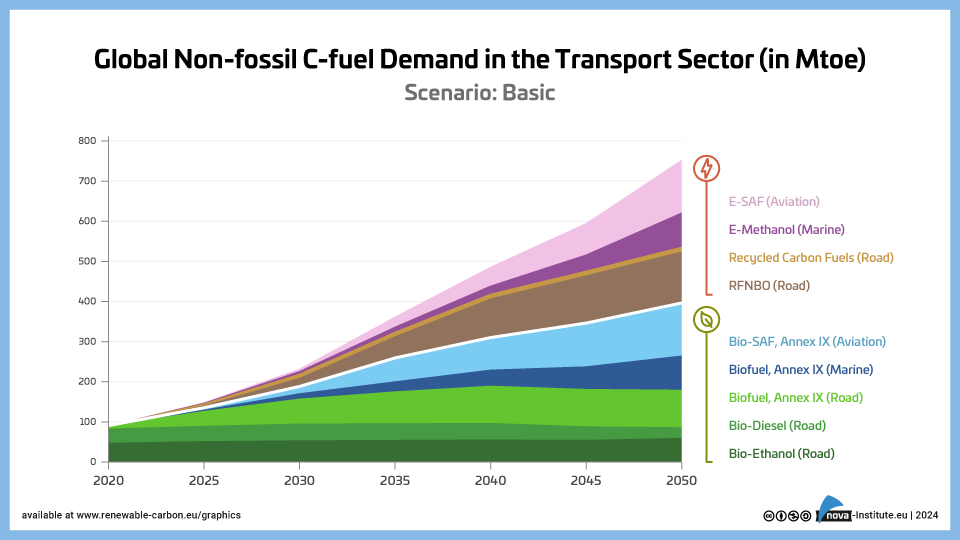
Global Non-fossil C-fuel Demand in the Transport Sector – Basic – Graphic (PNG)
Markets & Economy, Policy, Sustainability & Health
1 Page
28 Downloads
28 Downloads
2025-01
FREE
28
Downloads -
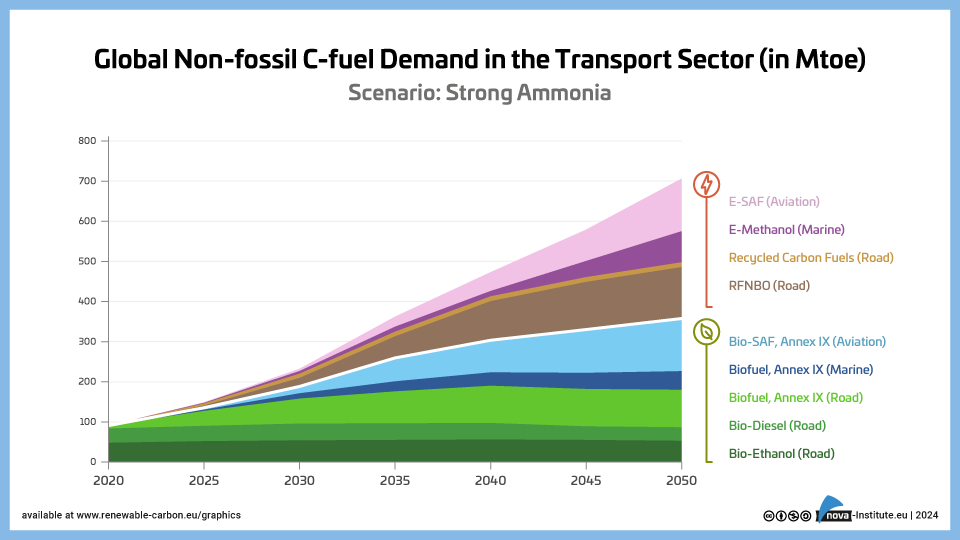
Global Non-fossil C-fuel Demand in the Transport Sector – Strong Ammonia – Graphic (PNG)
Markets & Economy, Policy, Sustainability & Health
1 Page
16 Downloads
16 Downloads
2025-01
FREE
16
Downloads -
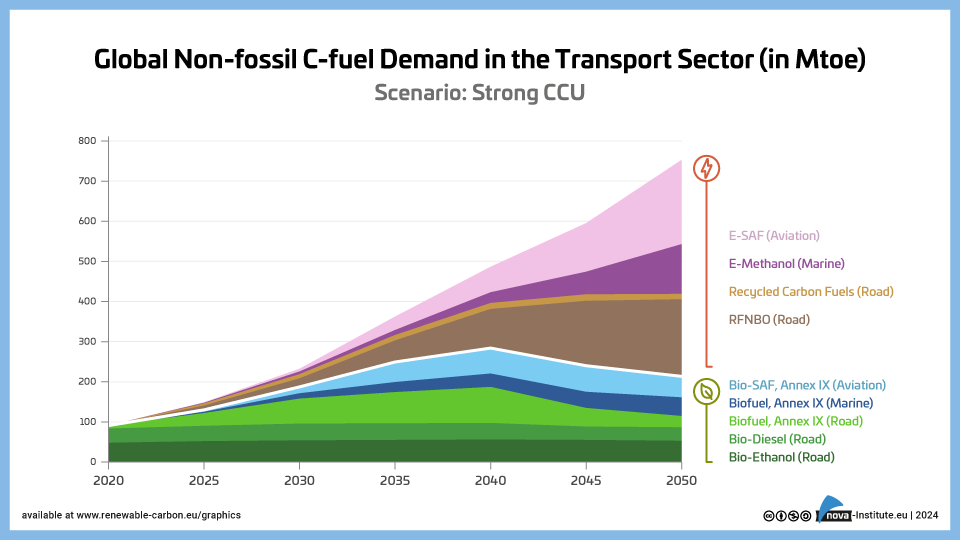
Global Non-fossil C-fuel Demand in the Transport Sector – Strong CCU – Graphic (PNG)
Markets & Economy, Policy, Sustainability & Health
1 Page
655 Downloads
655 Downloads
2025-01
FREE
655
Downloads -
Evaluation of Recent Reports on the Future of a Net-Zero Chemical Industry in 2050 (PDF)
Markets & Economy, Policy, Sustainability & Health
20 Pages
1861 Downloads
1861 Downloads
2024-11
FREE
Free Shipping1861
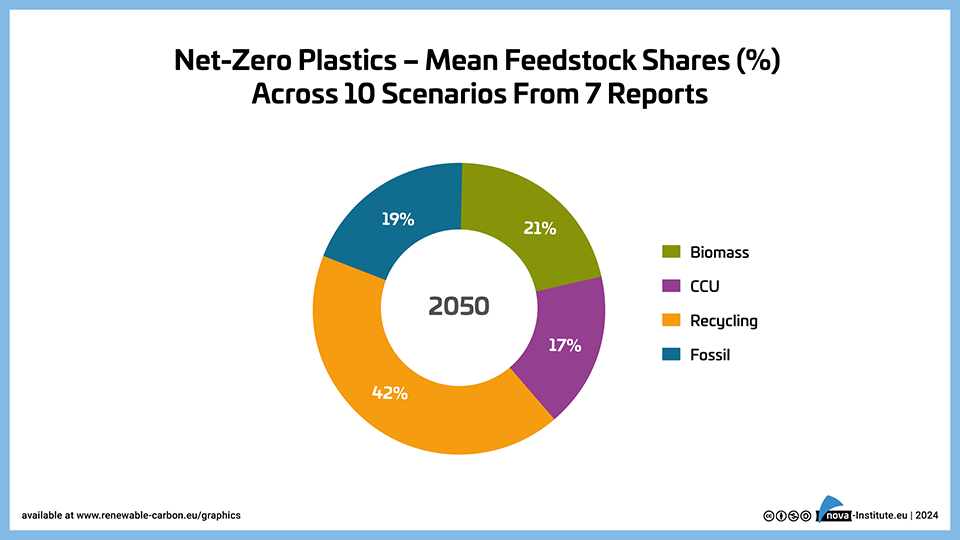
DownloadsThe Renewable Carbon Initiative’s Scientific Background Report assesses 24 scenarios from 15 studies to envision a net-zero chemical industry by 2050. The analysis anticipates continued growth in chemical production, projecting a 2.4-fold increase in global feedstock demand by 2050 compared to 2020 levels, with most expansion expected outside Europe while European feedstock volumes remain stable. To achieve net-zero emissions, the industry is projected to undergo a significant shift in feedstocks, with key renewable carbon sources identified as biomass (22%), carbon capture and utilisation (33%), and recycling (20%), while the remaining 24% comes from fossil sources with carbon capture and storage. For plastics specifically, recycling is expected to play an even larger role, accounting for 42% of feedstocks on average. This transition will require continued innovation and investment in renewable carbon technologies to meet ambitious defossilisation goals.
The report provides invaluable insights for industry leaders, policymakers, and researchers, highlighting the urgent need for action to achieve a net-zero future in the chemical sector by 2050.
DOI No.: https://doi.org/10.52548/SXWV6083
-
Net-Zero Plastics – Evaluation of Feedstock (%) Across 10 Scenarios from 7 Reports 2050 – Graphic (PNG)
Markets & Economy, Policy, Sustainability & Health
1 Page
126 Downloads
126 Downloads
2024-11
FREE
126
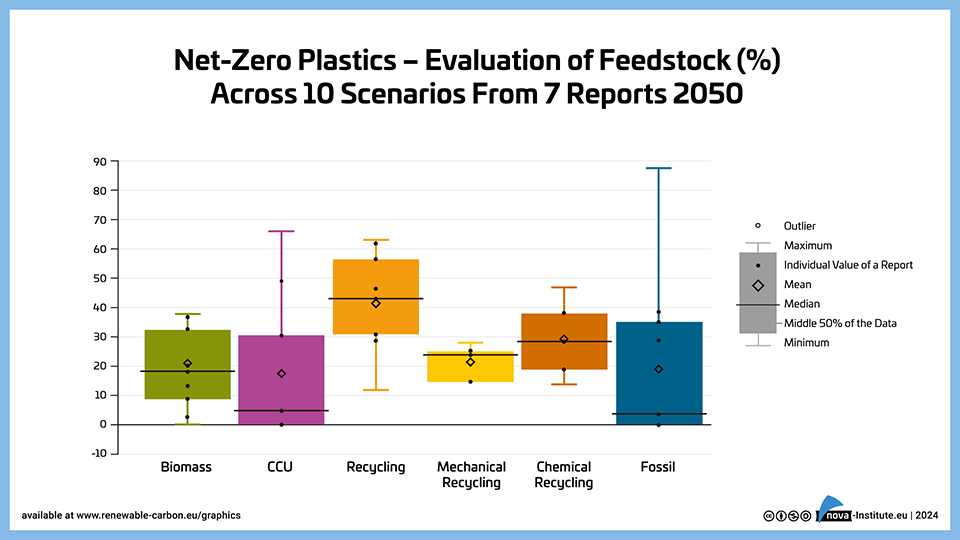
DownloadsThe graph illustrates feedstock projections specifically for the plastics sector by 2050, analysing 10 scenarios from 7 reports, where recycling emerges as the dominant feedstock at 42% (combining mechanical and chemical recycling), while biomass (21%), CCU (17%), and fossil with CCS (19%) play supporting roles. The data shows less variation in projections compared to the chemical industry overall, suggesting stronger agreement on the future role of recycling in plastics production.
-
Net-Zero Chemical Industry – Evaluation of Feedstock (%) Across 16 Scenarios from 9 Reports 2050 – Graphic (PNG)
Markets & Economy, Policy, Sustainability & Health
1 Page
104 Downloads
104 Downloads
2024-11
FREE
104
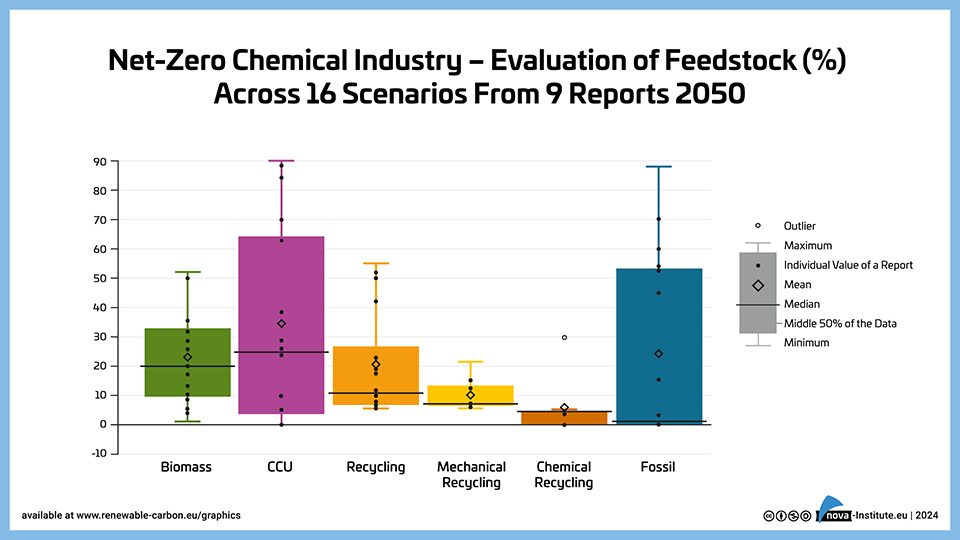
DownloadsThe graph shows the distribution of feedstock sources for the net-zero chemical industry by 2050, based on 16 scenarios from 9 reports, with CCU having the highest mean share at 33%, followed by biomass (22%), recycling (20%, split between mechanical and chemical), and fossil with CCS (24%). The data reveals significant variability across scenarios, particularly for CCU which ranges from near 0% to 90%, while both biomass and recycling show more moderate ranges, indicating a general consensus on their roles in the future chemical industry.
-
Net-Zero Plastics – Mean Feedstock Shares (%) Across 10 Scenarios From 7 Reports – Graphic (PNG)
Markets & Economy, Policy, Sustainability & Health
1 Page
87 Downloads
87 Downloads
2024-11
FREE
87
DownloadsThe graph presents the mean feedstock shares for the 2050 net-zero plastics sector, derived from 10 scenarios across 7 reports. In this projection, recycling dominates with a 42% share, followed by biomass (21%), fossil & CCS (19%), and CCU (17%), highlighting the increased potential for circularity in the plastics industry compared to the broader chemical sector.
-
Net-Zero Chemical Industry – Mean Feedstock Shares (%) Across 16 Scenarios From 9 Reports – Graphic (PNG)
Markets & Economy, Policy, Sustainability & Health
1 Page
66 Downloads
66 Downloads
2024-11
FREE
66
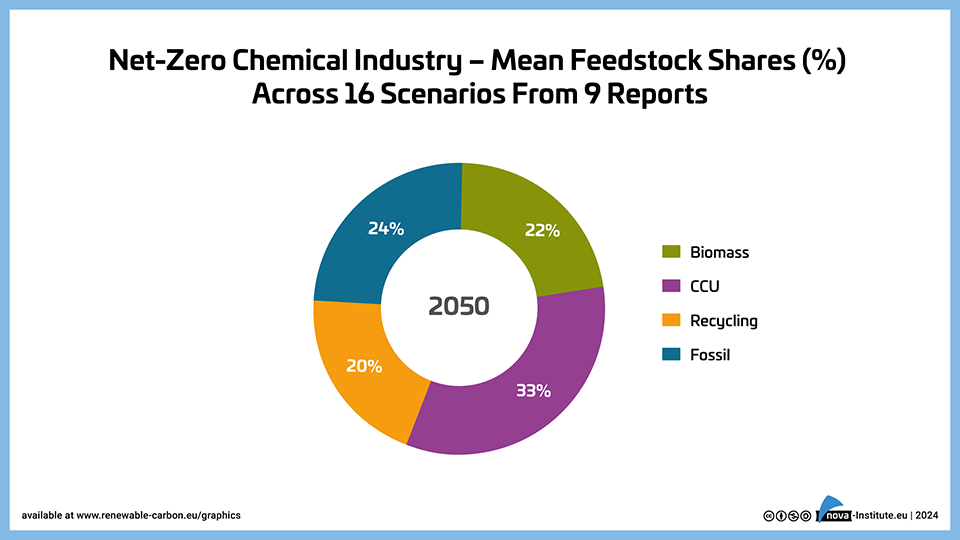
DownloadsThe graph illustrates the mean feedstock shares projected for the 2050 net-zero chemical industry, based on 16 scenarios across 9 reports. The chart shows a diverse mix of feedstocks, with CCU (33%) and recycling (20%) playing significant roles alongside biomass (22%), while fossil & CCS still account for 24% of the feedstock share.
-
289 Downloads
2024-11
FREE
289
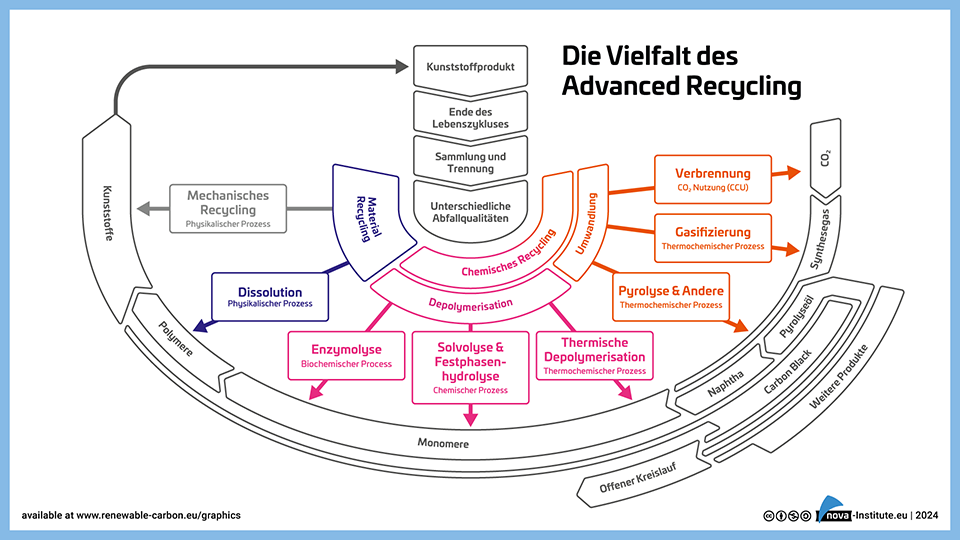
DownloadsDas gesamte Spektrum der verfügbaren Recyclingtechnologien, unterteilt nach ihren grundlegenden Funktionsprinzipien und ihren Produkten.
-
739 Downloads
2024-11
FREE
739
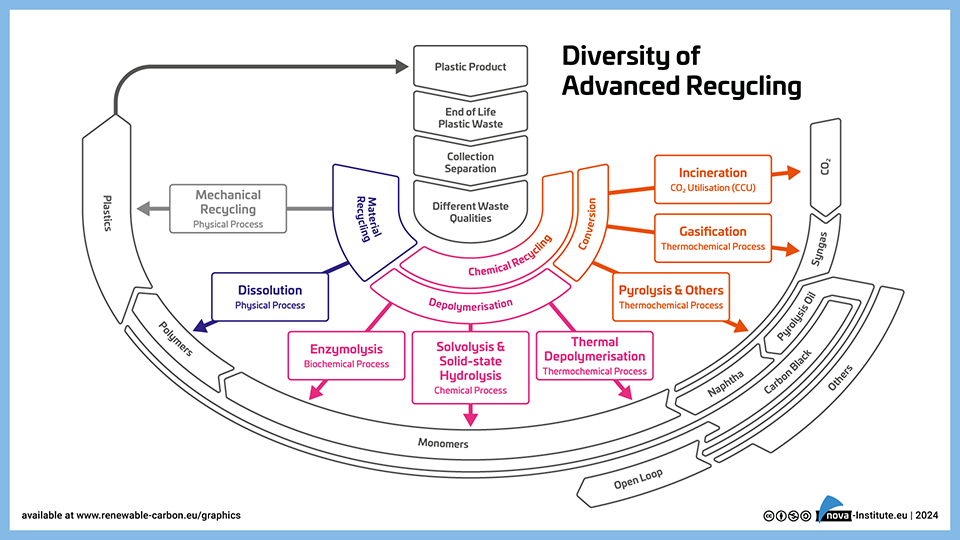
DownloadsFull spectrum of available recycling technologies divided by their basic working principles and their products.
-
Forest-Based Biorefineries: Innovative Bio-Based Products for a clean Transition (PDF)
Markets & Economy, Policy, Technology
8 Pages
394 Downloads
394 Downloads
2024-10
FREE
Free Shipping394
DownloadsA new study conducted by the nova-Institute and commissioned by the Confederation of European Paper Industries (Cepi) unveils a significant surge in the European biorefinery sector, with forest-based biorefineries more than doubling their turnover to €6 billion since 2020. This remarkable growth underscores the rising demand for sustainable, bio-based alternatives to fossil-based products.
The research, focused on the pulp and paper industry that produce additional bio-based products which land on the market beyond pulp and paper, identifies a total of 143 biorefineries across Europe, with 126 currently operational and 17 in development. The largest number of biorefineries is in Sweden, Finland, Germany, Portugal and Austria. The study points to a bright future for biorefineries, with projected annual growth rates of up to 5% until 2050.
The products of these biorefineries provide sustainable solutions across various industries, from aviation to fashion, offering alternatives in materials, chemicals, fuels, food, and pharmaceuticals. Importantly, biorefineries contribute to Europe’s climate targets, with bio-based products already substituting over 3.1 megatons of CO2 emissions that would have been produced by fossil-based industries.The study emphasises that these advancements are not replacing traditional pulp and paper-making activities but are creating new revenue streams and increasing resource efficiency, providing a pathway to sustainable economic growth.
-
Die Zukunft des Recyclings gestalten (PDF)
Markets & Economy, Policy, Sustainability & Health, Technology
2 Pages
575 Downloads
575 Downloads
2024-10
FREE
Free Shipping575
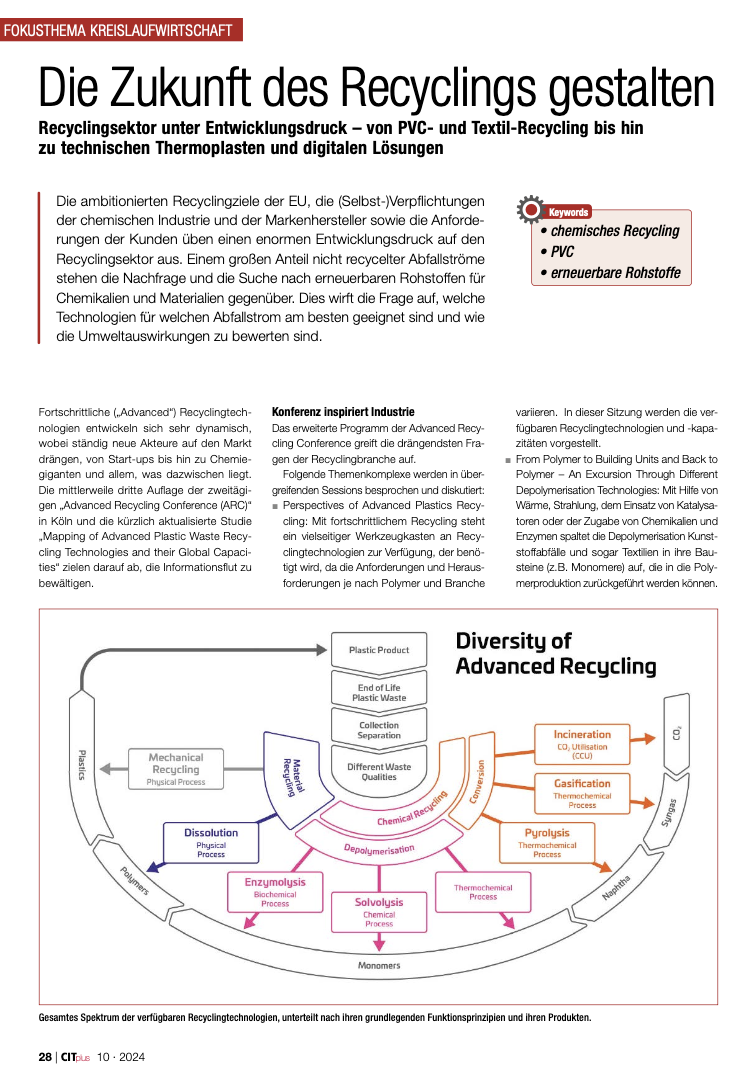
DownloadsDie ambitionierten Recyclingziele der EU, die (Selbst-)Verpflichtungen der chemischen Industrie und der Markenhersteller sowie die Anforderungen der Kunden üben einen enormen Entwicklungsdruck auf den Recyclingsektor aus. Einem großen Anteil nicht recycelter Abfallströme stehen die Nachfrage und die Suche nach erneuerbaren Rohstoffen für Chemikalien und Materialien gegenüber. Dies wirft die Frage auf, welche Technologien für welchen Abfallstrom am besten geeignet sind und wie die Umweltauswirkungen zu bewerten sind.
-
RCI’s position paper: “Swift implementation of EU biotech and biomanufacturing initiative is key to strengthen EU competitiveness and accelerate defossilisation (PDF)”
Markets & Economy, Policy, Sustainability & Health
3 Pages
474 Downloads
474 Downloads
2024-09
FREE
Free Shipping474
DownloadsThe Renewable Carbon Initiative’s position paper emphasizes that the EU must swiftly implement its biotechnology and biomanufacturing initiative to accelerate the shift from fossil carbon to renewable sources and boost competitiveness. The Renewable Carbon Initiative (RCI) highlights three key actions:
1.) Align with Circular Economy Policies: Ensure consistency across EU initiatives to promote renewable carbon from biomass, recycling, and CCU.
2.) Boost Market Demand: Address the lack of demand for renewable feedstocks by implementing policies to make fossil alternatives less competitive.
3.) Enable Fossil-to-Renewable Transition: Repurposing current fossil-based manufacturing to use renewable feedstocks. Clear sustainability criteria, access to various biomass sources, and broader definitions of biomanufacturing processes are essential to achieving this transition.
These actions are vital for achieving net-zero goals and strengthening EU industry.
-
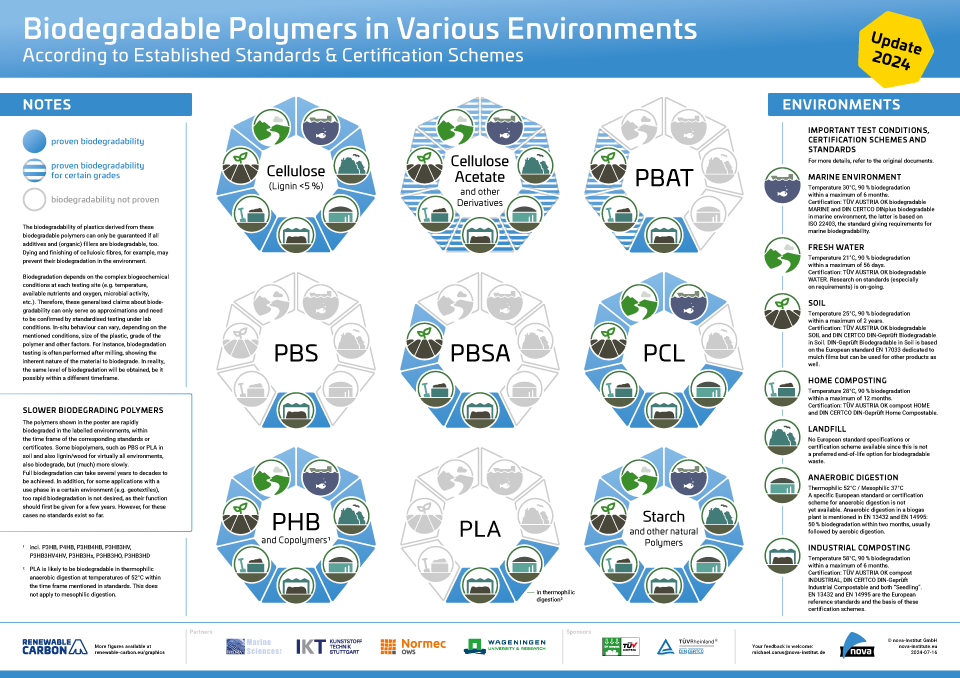
Biodegradable Polymers in Various Environments According to Established Standards and Certification Schemes – Graphic (PDF, current version)
Sustainability & Health
1 Page
1546 Downloads
1546 Downloads
2024-08
FREE
1546
DownloadsThird update of the well-known poster showing biodegradable polymers in different environments according to established standards and certification schemes.
The expert group met again this year to discuss the latest scientific evidence in the field of biodegradable polymers in order to make meaningful changes to the poster. The generic classification on the poster is only supported by tests performed in the context of certification. Therefore, the expert group decided to include the biodegradability of polycaprolactone (PCL) in additional environments: soil, freshwater, marine and anaerobic conditions. In addition, a new certification for marine biodegradability has been published by DIN CERTCO in 2023, based on ISO 22403, the standard that provides requirements for marine biodegradability, and is now mentioned on the poster. A new poster design and a more precise definition of biodegradation and biodegradability complete the update for this year.
-
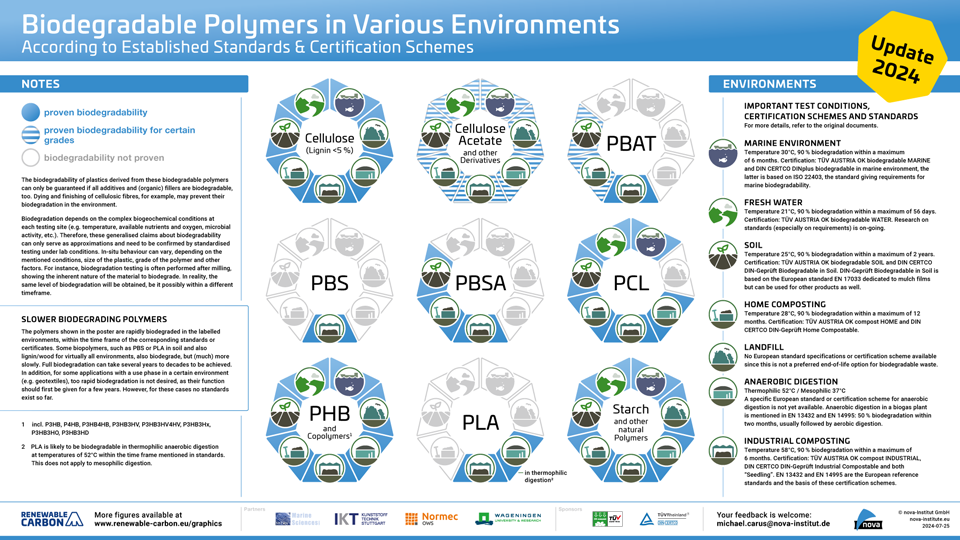
Biodegradable Polymers in Various Environments According to Established Standards and Certification Schemes – Graphic (PNG, current version)
Sustainability & Health
1 Page
709 Downloads
709 Downloads
2024-08
FREE
709
DownloadsThird update of the well-known poster showing biodegradable polymers in different environments according to established standards and certification schemes.
The expert group met again this year to discuss the latest scientific evidence in the field of biodegradable polymers in order to make meaningful changes to the poster. The generic classification on the poster is only supported by tests performed in the context of certification. Therefore, the expert group decided to include the biodegradability of polycaprolactone (PCL) in additional environments: soil, freshwater, marine and anaerobic conditions. In addition, a new certification for marine biodegradability has been published by DIN CERTCO in 2023, based on ISO 22403, the standard that provides requirements for marine biodegradability, and is now mentioned on the poster. A new poster design and a more precise definition of biodegradation and biodegradability complete the update for this year.
-
Renewable Carbon Initiative (RCI) Webinar slides – July 2024 (PDF)
Policy, Sustainability & Health, Technology
60 Pages
510 Downloads
510 Downloads
2024-07
FREE
Free Shipping510
DownloadsThis document contains a generic set of slides to introduce the concept of renewable carbon and the Renewable Carbon Initiative. The focus of this webinar is the work and impact of the RCI. Moreover, Arndt Scheidgen, Head of Product Stewardship at Henkel Consumer Brands joined the webinar to give insights as an industry leader.
-
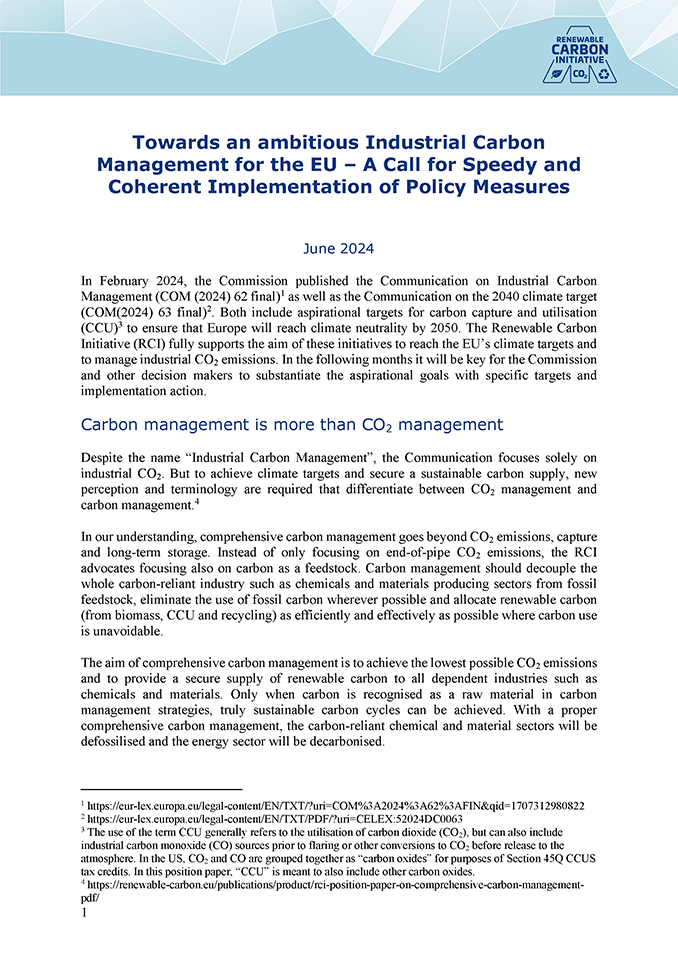
RCI’s position paper: “Towards an ambitious Industrial Carbon Management for the EU – A Call for Speedy and Coherent Implementation of Policy Measures (PDF)”
Markets & Economy, Policy, Sustainability & Health
3 Pages
497 Downloads
497 Downloads
2024-07
FREE
497
DownloadsThe Renewable Carbon Initiative’s position paper emphasizes the need for a comprehensive industrial carbon management strategy in the EU that goes beyond CO2 emissions to include all carbon sources, promoting the use of renewable carbon from biomass, CCU, and recycling. It calls for the establishment of a regulatory framework with specific sub-targets and incentives by 2025 to accelerate the adoption of circular carbon technologies and reduce dependence on fossil feedstocks. The paper argues that recognising carbon as a raw material is essential for achieving sustainable carbon cycles and meeting the EU’s climate neutrality goals by 2050.
-
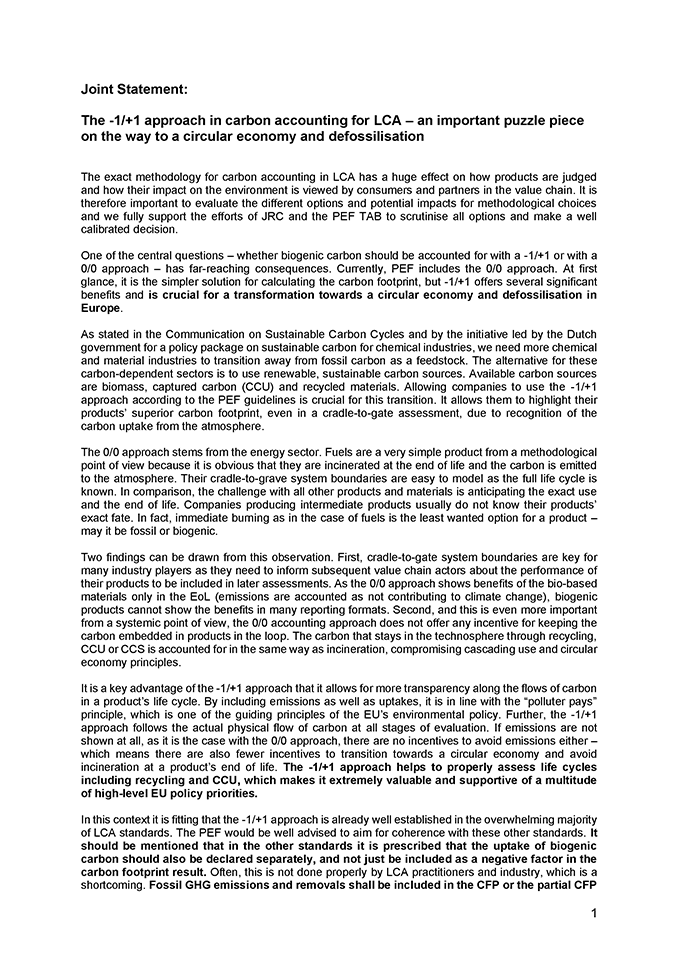
Joint Statement PEF TAB – biogenic carbon modelling (PDF)
Markets & Economy, Policy, Sustainability & Health
4 Pages
502 Downloads
502 Downloads
2024-06
FREE
502
DownloadsThe RCI along with the organisations APAG Oleochemicals Europe, Bio-based Industries Consortium, BioChem Europe, EuropaBio, GO!PHA, IKT Kunststofftechnik Stuttgart and Plastics Europe submitted this Joint Statement to the members of the Technical Advisory Boyard of the Product Environmental Footprint (PEF TAB). The purpose of this submission is to address the ongoing discussions on carbon modelling in the EF, which have been frequently discussed in recent PEF TAB meetings. With this joint statement we advocate for enabling -1/+1 accounting of biogenic and atmospheric carbon in the LCA methodology.
-
Renewable Materials Conference 2024 (Proceedings, PDF)
Markets & Economy, Policy, Sustainability & Health, Technology
2024-06
200 € ex. tax
Plus 19% MwSt.Press
release Add to
cartThe proceedings of the Renewable Materials Conference 2024 (11-13 June 2024, https://renewable-materials.eu) contain all released presentations, the conference journal, and the press release of the three winners of the Innovation Award “Renewable Material of the Year 2024″.
-
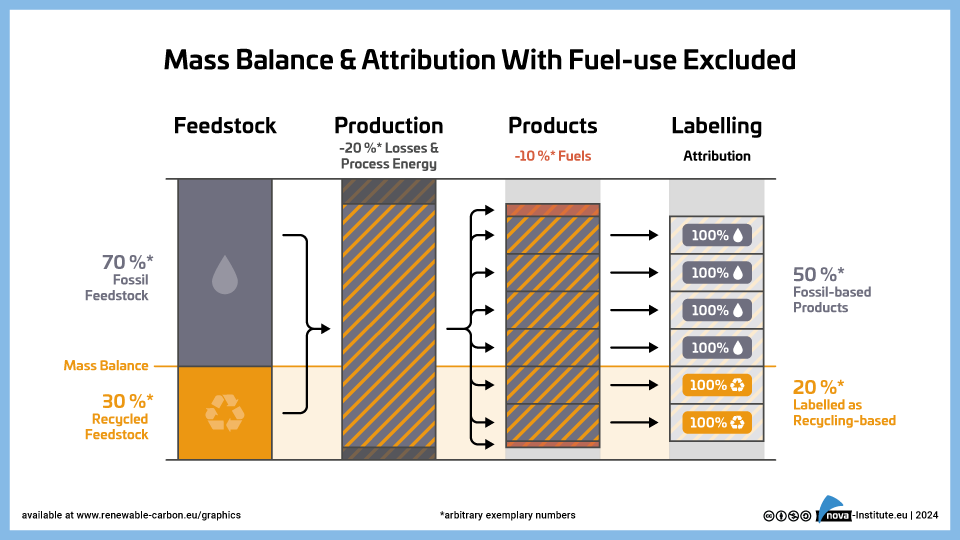
Mass Balance & Attribution With Fuel-use Excluded (PNG)
Markets & Economy, Policy, Sustainability & Health, Technology
1 Page
291 Downloads
291 Downloads
2024-06
FREE
291
DownloadsThe graphic shows the approach of mass balance and attribution with fuel-use excluded which allows to track the fossil and recycled share of feedstock. The recycled content can be attributed to products after deducting lossess and proess energy during production and, if applicable, produced energy carriers (fuel-use excluded). This approach ensures that a transparent amount of fossil feedstock is replaced by recycled feedstock in the production process and that only recycled feedstock that actually ends up in products can be attributed.

Renewable Materials Conference 2024 (Proceedings, PDF) [Digital]