Showing 21–40 of 150
-
Cellulose Fibres Conference 2025 (Proceedings, PDF)
Markets & Economy, Policy, Sustainability & Health, Technology
2025-03
150 € ex. tax
Plus 19% MwSt.Press
release Add to
cartThe Cellulose Fibres Conference 2025 – New with Biosynthetics! (https://cellulose-fibres.eu, 12-13 March 2025, Cologne, hybrid) covered the entire value chain of the sustainable textile industry, from lignocellulose, pulp, cellulose fibres such as rayon, viscose, modal or lyocell and new developments to a wide range of applications:
Textiles from renewable fibres, non-wovens such as wet wipes, as well as areas such as composites, hygiene, packaging or nano cellulose in the food industry. This year, for the first time, the conference included a dedicated session on biosynthetics – a promising area to complement the alternative for bio-based textiles. Deep insights have been offered into the future of cellulose fibres, which fits perfectly with the current shift towards circular economy, recycling and sustainable carbon cycles.The Cellulose Fibres Conference Proceedings include all released conference presentations, the conference journal, sponsor documents and the conference press release.
-
Evaluating LCA Approaches and Methodologies for Renewable Carbon Sources Report 1 of 3 – Renewable Carbon in LCA Guidelines (March 2025) (PDF)
Markets & Economy, Policy, Sustainability & Health
145 Pages
975 Downloads
975 Downloads
2025-03
FREE
Free Shipping975
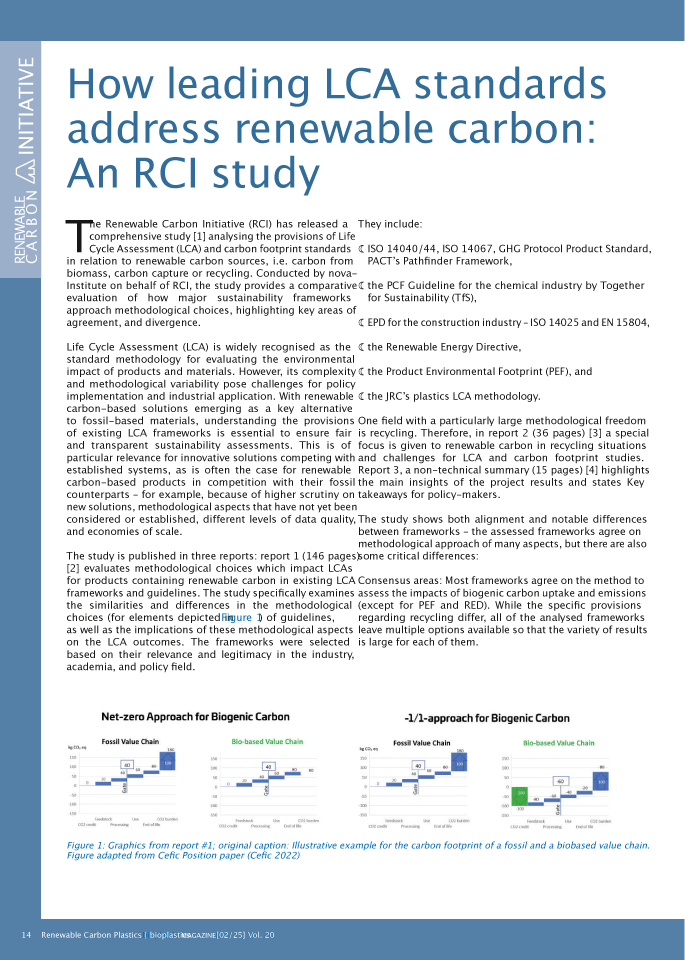
DownloadsRenewable Carbon in LCA Guidelines (146 pages) evaluates methodological choices which impact LCAs for products containing renewable carbon in existing LCA frameworks and guidelines. The study specifically examines the similarities and differences in the methodological choices of guidelines, as well as the implications of these methodological aspects on the resulting LCA outcomes.The frameworks were selected based on their relevance and legitimacy in the industry, academia and policy field, and include: ISO 14040/44, ISO 14067, GHG Protocol Product Standard, PACT’s Pathfinder Framework, the PCF Guideline for the chemical industry by Together for Sustainability (TfS), EPD for the construction industry – ISO 14025 and EN 15804, the Renewable Energy Directive, the Product Environmental Footprint (PEF) and the JRC’s plastics LCA methodology. One field with a particularly large methodological freedom is recycling.
This report is the first report of a larger RCI project on LCA methodology, which includes two additional publications:
Report 2 of 3 – Renewable Carbon in Recycling Situations
Report 3 of 3 – Non-technical SummaryPlease find these additional reports by following the respective links at the bottom of this page.
DOI No.: https://doi.org/10.52548/VCYM7822
-
Evaluating LCA Approaches and Methodologies for Renewable Carbon Sources Report 2 of 3 – Renewable Carbon in Recycling Situations (March 2025) (PDF)
Markets & Economy, Policy, Sustainability & Health
37 Pages
671 Downloads
671 Downloads
2025-03
FREE
Free Shipping671
DownloadsThis report focuses on renewable carbon in recycling scenarios and the key challenges in LCA and carbon footprint assessments. It examines system boundaries, allocation methods, and biogenic carbon accounting approaches, highlighting their influence on sustainability evaluations. The report emphasises the cut-off and avoided-burden approaches for recycling while recommending the -1/+1 method for biogenic carbon transparency. However, it also identifies contradictions between LCA results and broader sustainability goals, such as the EU waste hierarchy, which prioritises recycling. To address these inconsistencies, the report suggests integrating LCA with additional sustainability metrics like land use and recyclability. Ultimately, refining these methodologies will enhance the accuracy and reliability of environmental assessments for bio-based and recycled materials.
This report is the second report of a larger RCI project on LCA methodology, which includes two additional publications:
Report 1 of 3 – Renewable Carbon in LCA Guidelines
Report 3 of 3 – Non-technical SummaryPlease find these additional reports by following the respective links at the bottom of this page.
DOI No.: https://doi.org/10.52548/QTVU8642
-
Evaluating LCA Approaches and Methodologies for Renewable Carbon Sources Report 3 of 3 – Non-technical Summary (March 2025) (PDF)
Markets & Economy, Policy, Sustainability & Health
15 Pages
868 Downloads
868 Downloads
2025-03
FREE
Free Shipping868
DownloadsThis Non-technical Summary (15 pages),highlights main insights into the project results and states key take-aways for policy-makers.
It compares several frameworks, such as ISO 14040, Product Environmental Footprint (PEF), and GHG Protocol, finding both commonalities and critical differences in areas like biogenic carbon accounting and recycling assessment. The study identifies significant methodological flexibility in existing frameworks, leading to inconsistencies in LCA results and challenges in standardisation. Key issues include differing treatment of carbon capture and utilisation (CCU), direct air capture (DAC), and allocation of environmental burdens in multifunctional processes. Policy recommendations emphasise the need for harmonisation, improved biogenic carbon accounting, and clear guidance on emerging technologies like DAC and mass balance attribution. Overall, the study calls for refining LCA methodologies to ensure fair comparison between renewable and fossil-based carbon solutions.
This report is the third report of a larger RCI project on LCA methodology, which includes two additional publications:
Report 1 of 3 – Renewable Carbon in LCA Guidelines
Report 2 of 3 – Renewable Carbon in Recycling SituationsPlease find these additional reports by following the respective links at the bottom of this page.
DOI No.: https://doi.org/10.52548/ZEKY1803
-
Core Elements of LCA for Renewable Carbon Solutions (PNG)
Policy, Sustainability & Health
1 Page
114 Downloads
114 Downloads
2025-03
FREE
Free Shipping114
DownloadsSeveral methodological aspects are relevant for LCA and carbon footprints in general and for products containing renewable carbon in particular.
-
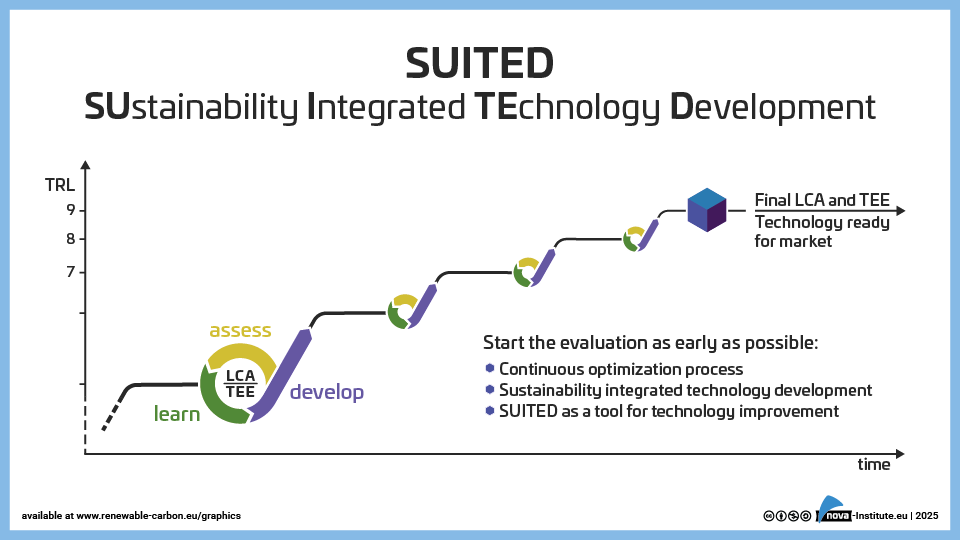
SUITED approach: SUstainable Integrated TEchnology Development (PNG)
Markets & Economy, Sustainability & Health
1 Page
20 Downloads
20 Downloads
2025-02
FREE
20
DownloadsStart the ecological and economic evaluation of your technology as early as possible:
- Continuous optimization process
- Sustainability integrated technology development
- SUITED as a tool for technology improvement
-
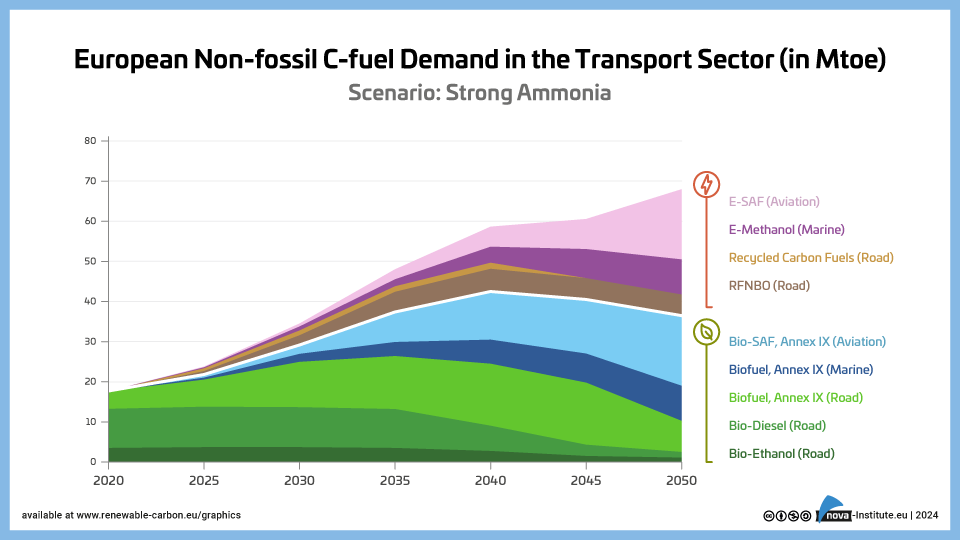
European Non-fossil C-fuel Demand in the Transport Sector – Strong Ammonia – Graphic (PNG)
Markets & Economy, Policy, Sustainability & Health
1 Page
8 Downloads
8 Downloads
2025-01
FREE
8
Downloads -
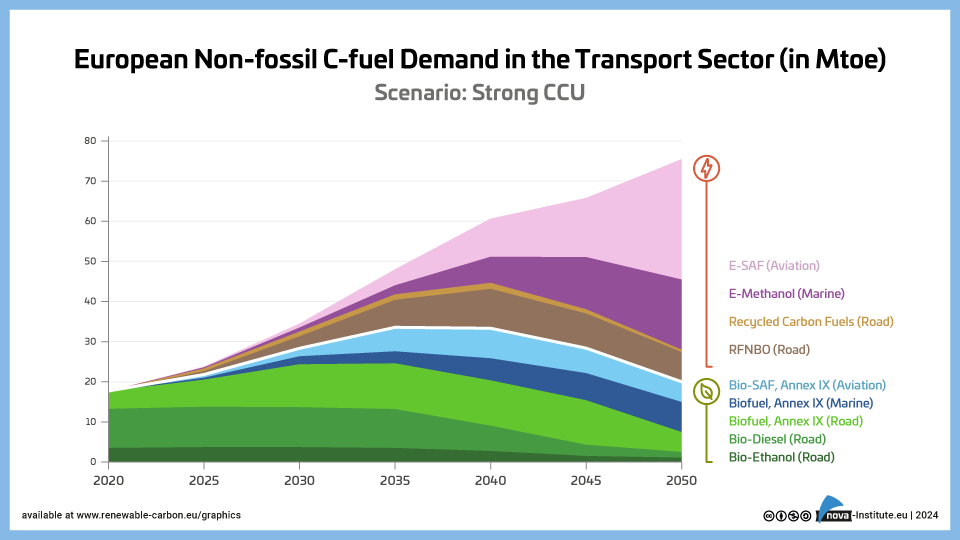
European Non-fossil C-fuel Demand in the Transport Sector – Strong CCU – Graphic (PNG)
Markets & Economy, Policy, Sustainability & Health
1 Page
19 Downloads
19 Downloads
2025-01
FREE
19
Downloads -
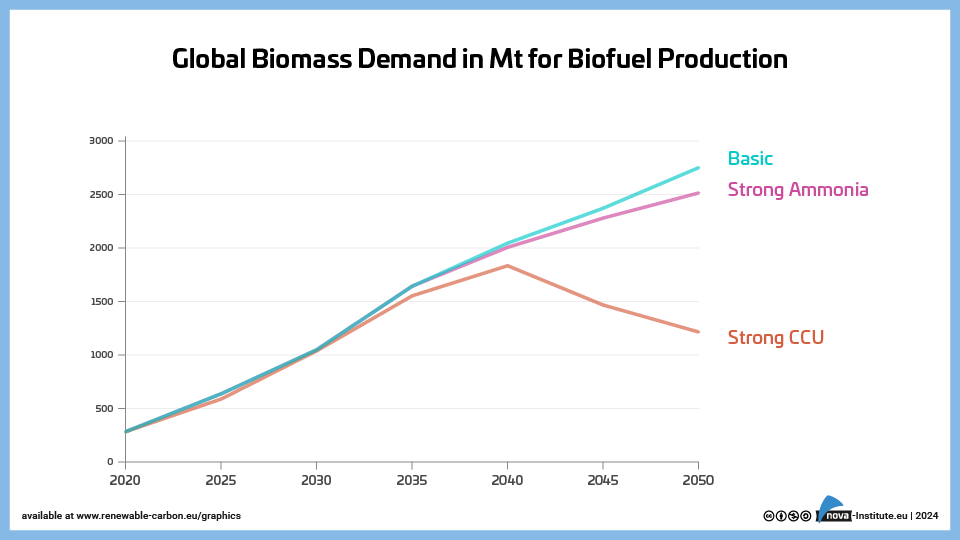
Global Biomass Demand in Mt for Biofuel Production – Graphic (PNG)
Markets & Economy, Policy, Sustainability & Health
1 Page
25 Downloads
25 Downloads
2025-01
FREE
25
Downloads -
Global Non-fossil C-fuel Demand in the Transport Sector – Basic – Graphic (PNG)
Markets & Economy, Policy, Sustainability & Health
1 Page
24 Downloads
24 Downloads
2025-01
FREE
24
Downloads -
Global Non-fossil C-fuel Demand in the Transport Sector – Strong Ammonia – Graphic (PNG)
Markets & Economy, Policy, Sustainability & Health
1 Page
15 Downloads
15 Downloads
2025-01
FREE
15
Downloads -
Global Non-fossil C-fuel Demand in the Transport Sector – Strong CCU – Graphic (PNG)
Markets & Economy, Policy, Sustainability & Health
1 Page
653 Downloads
653 Downloads
2025-01
FREE
653
Downloads -
EU and Global: Biomass Demand for Transport Fuels, Aviation and Shipping up to 2050 and Implications for Biomass Supply to the Chemical Sector (PDF)
Markets & Economy, Policy, Sustainability & Health
44 Pages
1269 Downloads
1269 Downloads
2025-01
FREE
Free Shipping1269
DownloadsThe Renewable Carbon Initiative’s Scientific Background Report explores three potential future scenarios for carbon-based fuel demand up to 2050 under current policy frameworks. It predicts a sharp rise in the demand for second-generation biomass biofuels, driven primarily by increasing quotas for aviation and shipping fuels. This growth raises concerns about ecological and resource sustainability and creates challenges for sectors like chemicals and materials, which rely on renewable carbon to reduce fossil dependency. Without similar regulatory incentives, these sectors may face limited access to critical feedstocks like biomass and captured carbon.
The report highlights that while bio-based and synthetic fuel production could indirectly benefit the chemical industry through by-products, competition with the fuel sector poses significant obstacles.The report includes 11 tables, 9 graphics, and a detailed overview of EU fuel regulations. Though focused on Europe, it also provides global insights, making it a valuable resource for stakeholders in biomass and CO2 utilisation sectors.
-
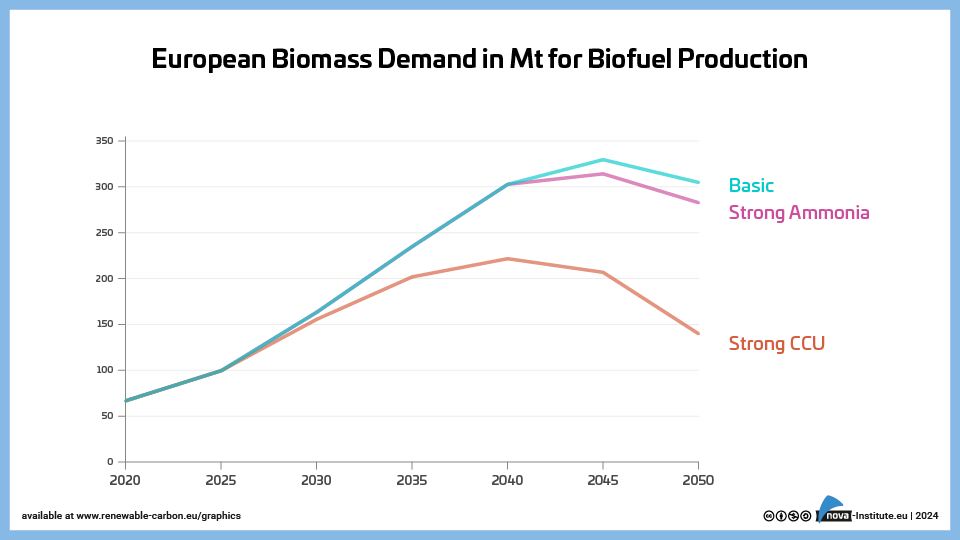
European Biomass Demand in Mt for Biofuel Production – Graphic (PNG)
Markets & Economy, Policy, Sustainability & Health
1 Page
31 Downloads
31 Downloads
2025-01
FREE
31
Downloads -
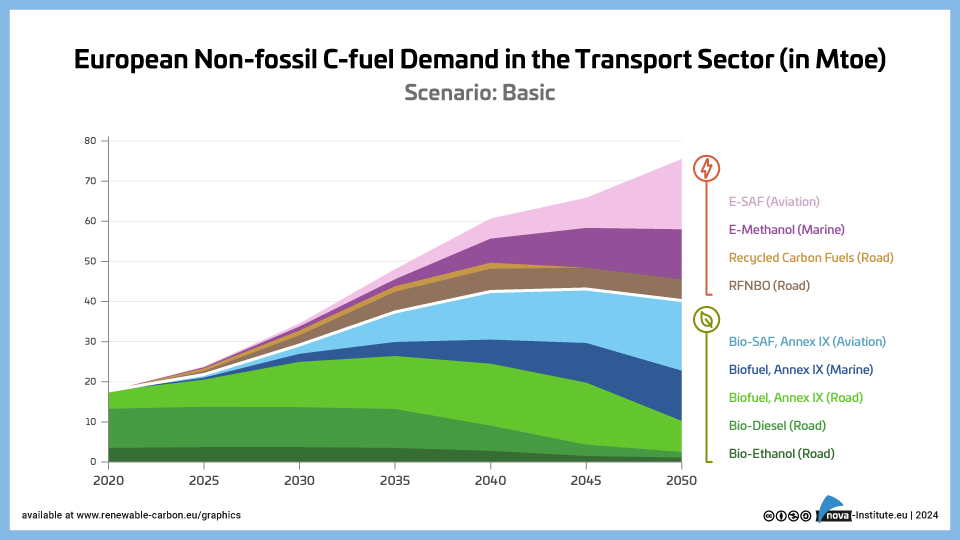
European Non-fossil C-fuel Demand in the Transport Sector – Basic – Graphic (PNG)
Markets & Economy, Policy, Sustainability & Health
1 Page
29 Downloads
29 Downloads
2025-01
FREE
29
Downloads -
Evaluation of Recent Reports on the Future of a Net-Zero Chemical Industry in 2050 (PDF)
Markets & Economy, Policy, Sustainability & Health
20 Pages
1795 Downloads
1795 Downloads
2024-11
FREE
Free Shipping1795
DownloadsThe Renewable Carbon Initiative’s Scientific Background Report assesses 24 scenarios from 15 studies to envision a net-zero chemical industry by 2050. The analysis anticipates continued growth in chemical production, projecting a 2.4-fold increase in global feedstock demand by 2050 compared to 2020 levels, with most expansion expected outside Europe while European feedstock volumes remain stable. To achieve net-zero emissions, the industry is projected to undergo a significant shift in feedstocks, with key renewable carbon sources identified as biomass (22%), carbon capture and utilisation (33%), and recycling (20%), while the remaining 24% comes from fossil sources with carbon capture and storage. For plastics specifically, recycling is expected to play an even larger role, accounting for 42% of feedstocks on average. This transition will require continued innovation and investment in renewable carbon technologies to meet ambitious defossilisation goals.
The report provides invaluable insights for industry leaders, policymakers, and researchers, highlighting the urgent need for action to achieve a net-zero future in the chemical sector by 2050.
DOI No.: https://doi.org/10.52548/SXWV6083
-
Net-Zero Plastics – Evaluation of Feedstock (%) Across 10 Scenarios from 7 Reports 2050 – Graphic (PNG)
Markets & Economy, Policy, Sustainability & Health
1 Page
114 Downloads
114 Downloads
2024-11
FREE
114
DownloadsThe graph illustrates feedstock projections specifically for the plastics sector by 2050, analysing 10 scenarios from 7 reports, where recycling emerges as the dominant feedstock at 42% (combining mechanical and chemical recycling), while biomass (21%), CCU (17%), and fossil with CCS (19%) play supporting roles. The data shows less variation in projections compared to the chemical industry overall, suggesting stronger agreement on the future role of recycling in plastics production.
-
Net-Zero Chemical Industry – Evaluation of Feedstock (%) Across 16 Scenarios from 9 Reports 2050 – Graphic (PNG)
Markets & Economy, Policy, Sustainability & Health
1 Page
97 Downloads
97 Downloads
2024-11
FREE
97
DownloadsThe graph shows the distribution of feedstock sources for the net-zero chemical industry by 2050, based on 16 scenarios from 9 reports, with CCU having the highest mean share at 33%, followed by biomass (22%), recycling (20%, split between mechanical and chemical), and fossil with CCS (24%). The data reveals significant variability across scenarios, particularly for CCU which ranges from near 0% to 90%, while both biomass and recycling show more moderate ranges, indicating a general consensus on their roles in the future chemical industry.
-
Net-Zero Plastics – Mean Feedstock Shares (%) Across 10 Scenarios From 7 Reports – Graphic (PNG)
Markets & Economy, Policy, Sustainability & Health
1 Page
81 Downloads
81 Downloads
2024-11
FREE
81
DownloadsThe graph presents the mean feedstock shares for the 2050 net-zero plastics sector, derived from 10 scenarios across 7 reports. In this projection, recycling dominates with a 42% share, followed by biomass (21%), fossil & CCS (19%), and CCU (17%), highlighting the increased potential for circularity in the plastics industry compared to the broader chemical sector.
-
Net-Zero Chemical Industry – Mean Feedstock Shares (%) Across 16 Scenarios From 9 Reports – Graphic (PNG)
Markets & Economy, Policy, Sustainability & Health
1 Page
62 Downloads
62 Downloads
2024-11
FREE
62
DownloadsThe graph illustrates the mean feedstock shares projected for the 2050 net-zero chemical industry, based on 16 scenarios across 9 reports. The chart shows a diverse mix of feedstocks, with CCU (33%) and recycling (20%) playing significant roles alongside biomass (22%), while fossil & CCS still account for 24% of the feedstock share.

![Cellulose Fibres Conference 2025 (Proceedings, PDF) [Digital]](https://renewable-carbon.eu/publications/wp-content/uploads/2020/05/21-01-07_RC-Publications-Cover-Proceedings_Cellulose-Fibres-100x141.png)