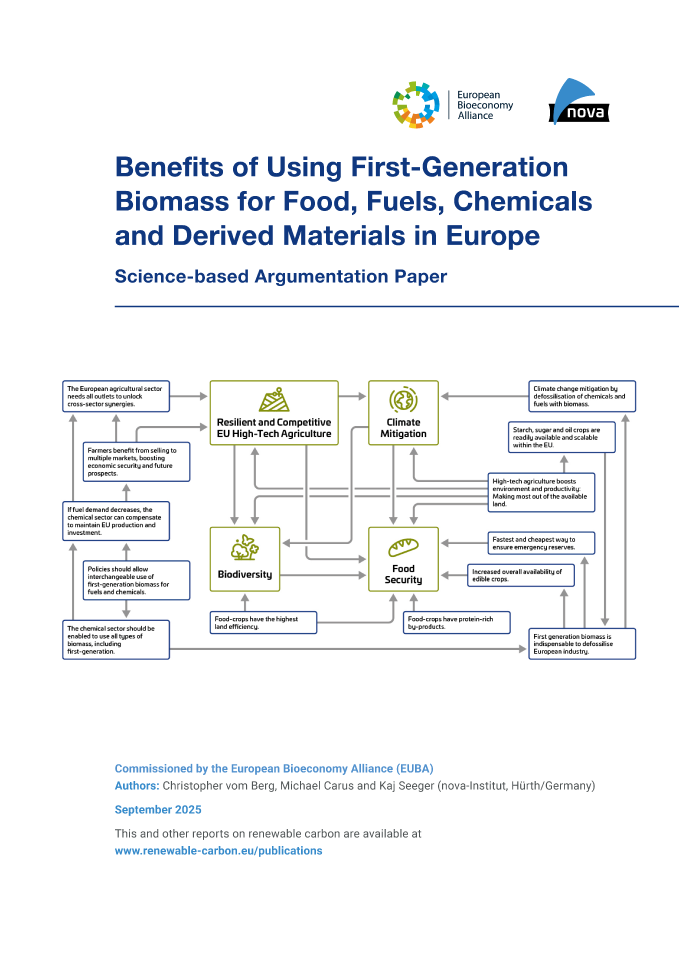
Benefits of Using First-Generation Biomass for Food, Fuels, Chemicals and Derived Materials in Europe (PDF)
FREE
Key messages – Benefits of using first-generation biomass for food, fuels, chemicals and derived materials
First-generation biomass in non-food applications increases food security.
Using first-generation biomass for non-food applications strengthens food security by increasing overall availability of feedstock and market stability. At the same time, it also delivers valuable protein-rich by-products addressing the most critical needs for human and animal nutrition. The ability to shift crops between the food, feed, and industrial markets enables the EU and market players to respond swiftly to changes in demand and mitigate the risks associated with supply chain disruptions. Most importantly, using first-generation biomass for non-food applications offers a fast and economical way to set up and ensure an emergency food reserve.
- First-generation biomass in non-food applications enhances a resilient and competitive EU agriculture
- First-generation biomass in non-food applications supports climate change mitigation
- First-generation biomass in non-food applications supports biodiversity protection
- High-tech agriculture further enhances the benefits of first-generation biomass.
DOI No.: https://doi.org/10.52548/GCJC4981

-
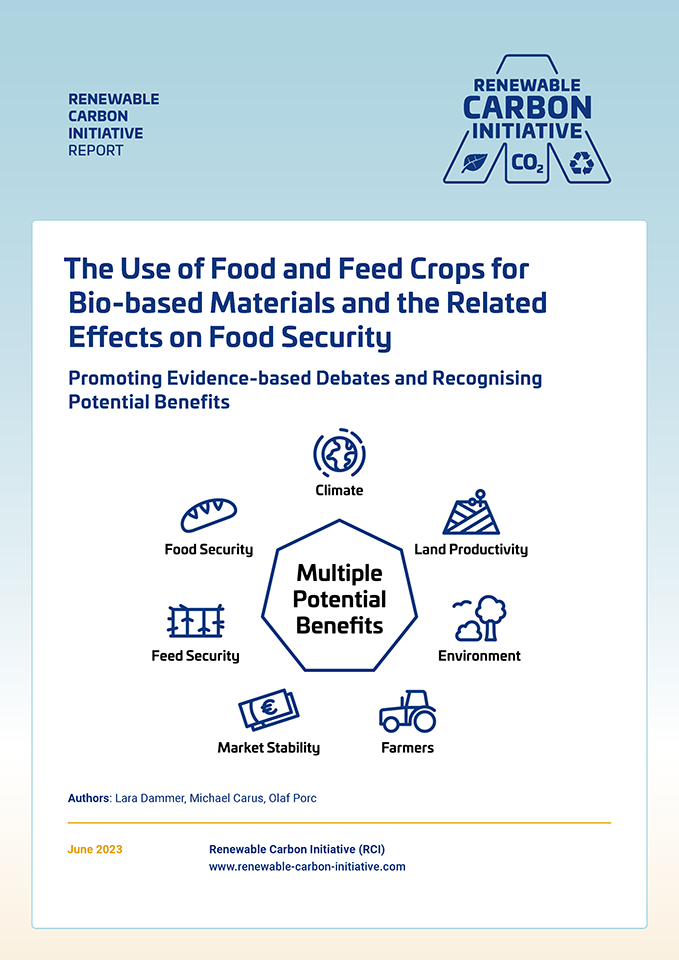
The Use of Food and Feed Crops for Bio-Based Materials and the Related Effects on Food Security: Promoting Evidence-Based Debates and Recognising Potential Benefits – RCI Report (Long Version) (June 2023)
Markets & Economy, Policy, Sustainability & Health, Technology
36 Pages
1774 Downloads
Related Products
-
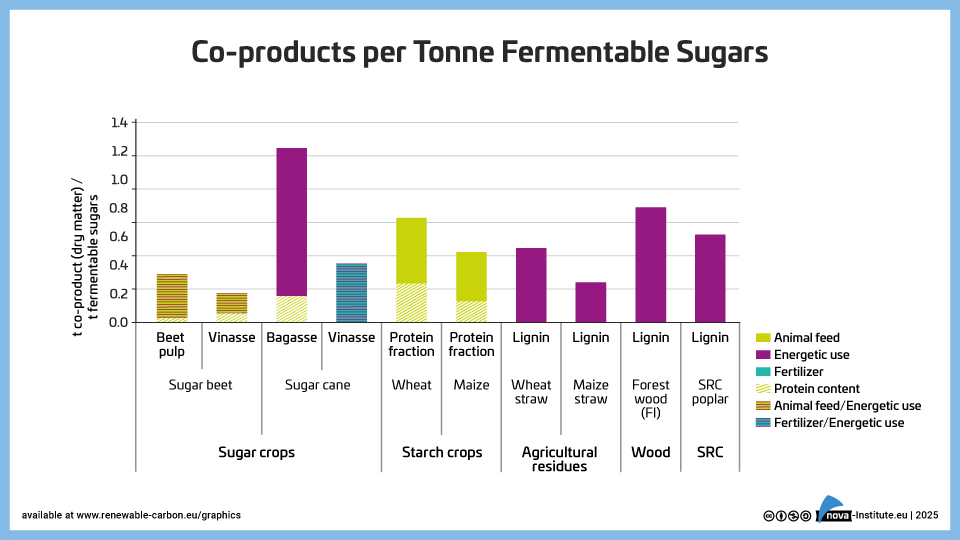
Co-production per Tonne Termantable Sugars (PNG)
Policy, Sustainability & Health
1 Page
25 Downloads -
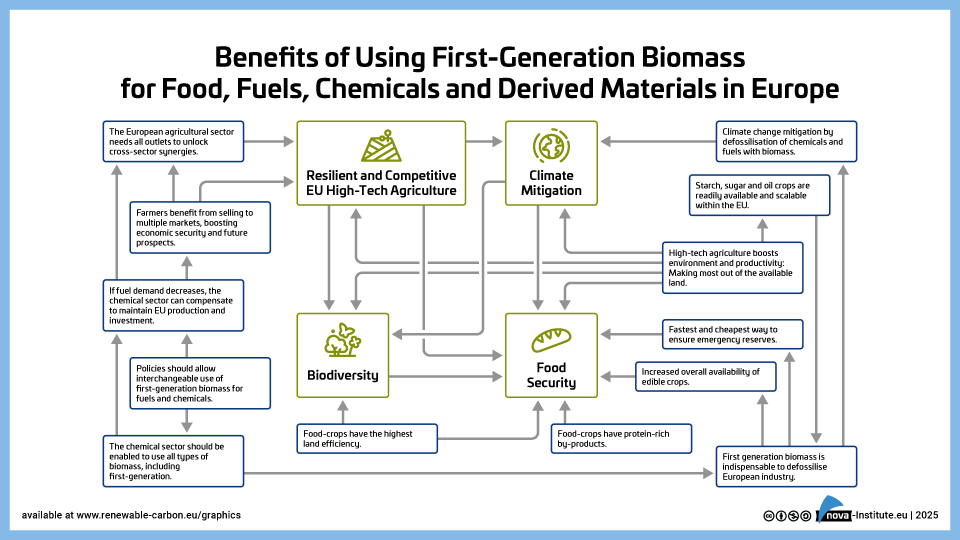
Benefits of Using First-Generation Biomass for Food, Fuel, Materials and Chemicals in Europe (PNG)
Policy, Sustainability & Health
1 Page
131 Downloads